
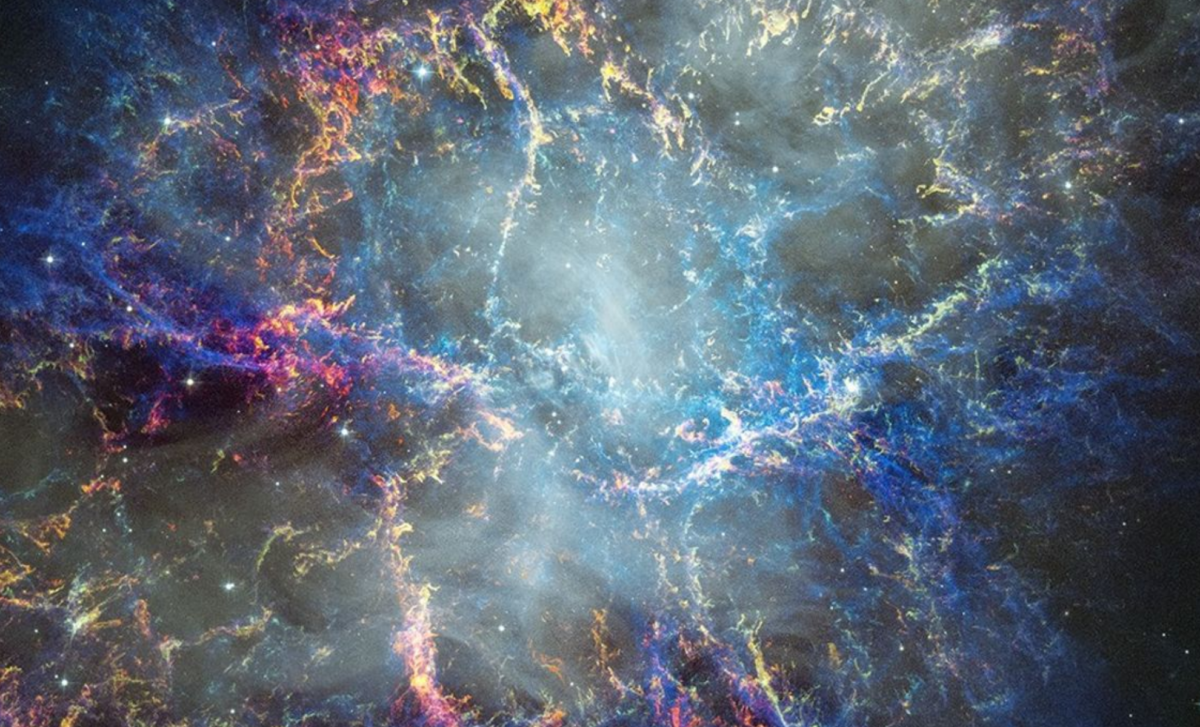
NASA scientists utilizing the Hubble Space Telescope have uncovered that the Crab Nebula, the aftermath of a supernova documented in 1054 AD, continues to expand at a rapid pace, providing an extraordinary glimpse into real-time cosmic evolution.
Tracking a Celestial Explosion Over 25 Years
The Crab Nebula has long been a focus of astronomical research, but fresh data reveal remarkable changes occurring before our eyes. By examining images spanning a quarter-century, researchers have mapped the outward movement of intricate gaseous filaments—debris left behind by the stellar explosion nearly a thousand years ago.
These filaments are not inert; they represent swiftly moving fragments propelled by the original blast. Each strand bears evidence of the explosive event, stretching and transforming as it interacts with the space around it. Such extended observational records are rare, as most astronomical phenomena evolve over periods far exceeding human lifespans.

“We tend to think of the sky as being unchanging, immutable,” said astronomer William Blair of Johns Hopkins University, who led the new observations. “However, with the longevity of the Hubble Space Telescope, even an object like the Crab Nebula is revealed to be in motion, still expanding from the explosion nearly a millennium ago.”
This discovery transforms the Crab Nebula from a fixed spectacle into a vibrant, evolving system, providing scientists with a unique laboratory to study supernova remnants as they age over centuries.
Hubble’s Enhanced Imaging Powers New Discoveries
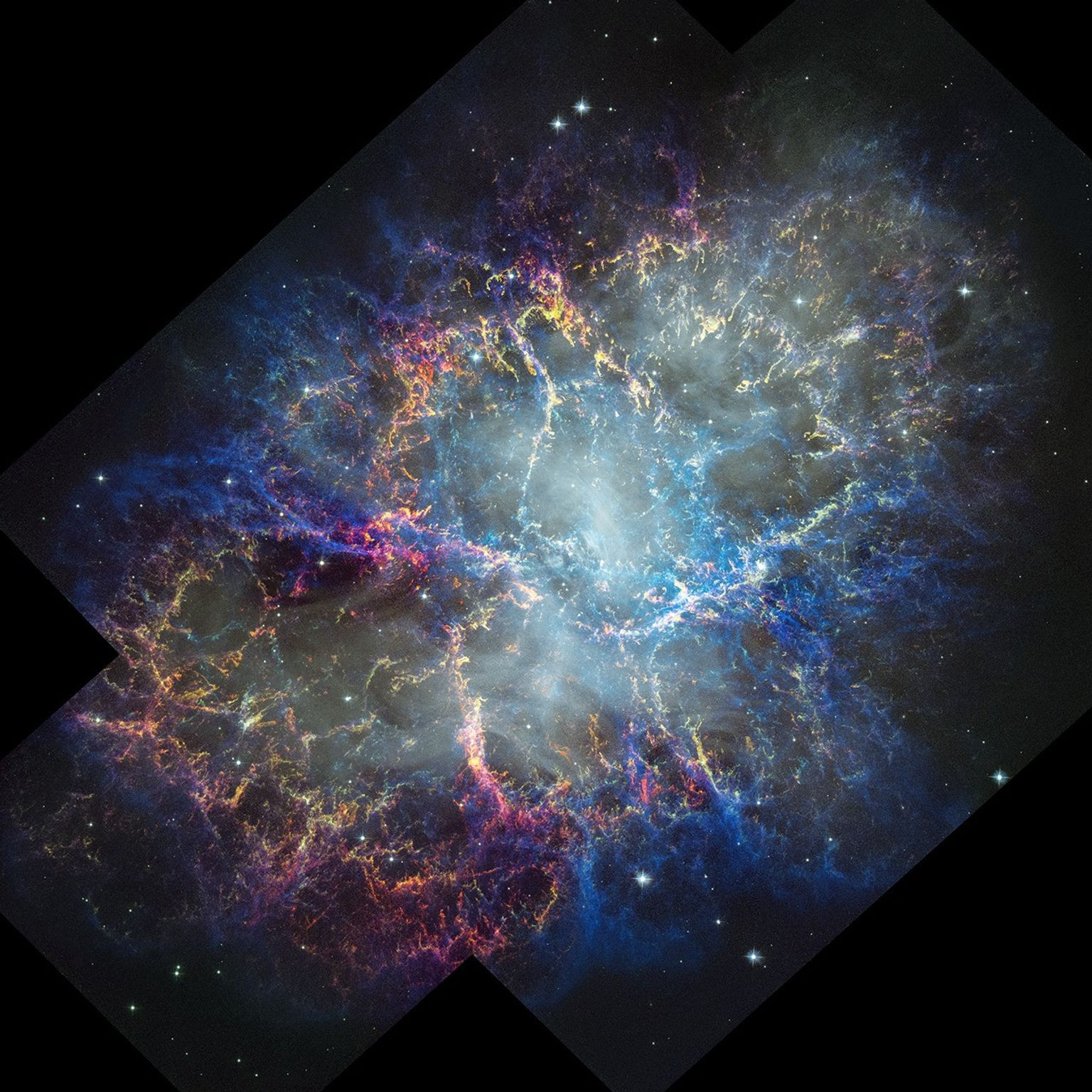
This breakthrough has been made possible by advancements in Hubble’s technology, especially the deployment of the Wide Field Camera 3 in 2009, which significantly improved the telescope’s ability to resolve detailed features within distant cosmic structures.
The upgraded camera allows astronomers to detect minute shifts and complex internal behavior previously unseen. Comparing new and historic images reveals not just the nebula’s expansion but also dynamic interactions among its filaments, as they twist, collide, and reshape over time.
“Despite my extensive experience with Hubble, I was amazed by the detailed structures visible with the Wide Field Camera 3 compared to images from 25 years ago,” Blair remarked. The instrument installation in 2009 was the last major upgrade to Hubble’s suite of observatory tools.
This leap in image resolution enables researchers to measure speeds, trace shockwaves, and better understand the underlying physics driving the nebula’s continuous evolution.
Understanding a Historic Supernova Remnant
Originating from the 1054 supernova event, the Crab Nebula remains one of the few remnants with a precisely recorded explosion date. It continues to expand rapidly, fueled partly by the energetic rotation of the Crab Pulsar, a neutron star at its core.
According to NASA, these updated observations refine models of how pulsars interact with their surroundings through powerful radiation and particle winds. This interaction sculpts the nebula’s intricate form and keeps it glowing across a wide range of wavelengths.
By monitoring the motion of different nebular sections, astronomers can reconstruct the original supernova event with improved accuracy, deepening insights into how star-forming materials disperse throughout the cosmos.
A Vibrant Remnant in an Ever-Changing Cosmos
What makes this observation especially fascinating is its immediacy. Unlike slow-moving galaxies or processes unfolding over eons, the Crab Nebula offers a rare opportunity to watch astrophysical changes unfold within human timeframes.
The expanding filaments serve as a powerful reminder that the universe is continually evolving. Objects that seem permanent are, in fact, constantly transformed by ongoing cosmic forces long after their initial formation.
Hubble’s long-term mission has made these insights possible, turning years of patient observation into one of astronomy’s most potent tools. As studies progress, the Crab Nebula remains a critical focus, yielding ongoing revelations about stellar lifecycles and the vibrant processes shaping our universe.
- Categories:
- News



0 comments
Sign in to Comment