
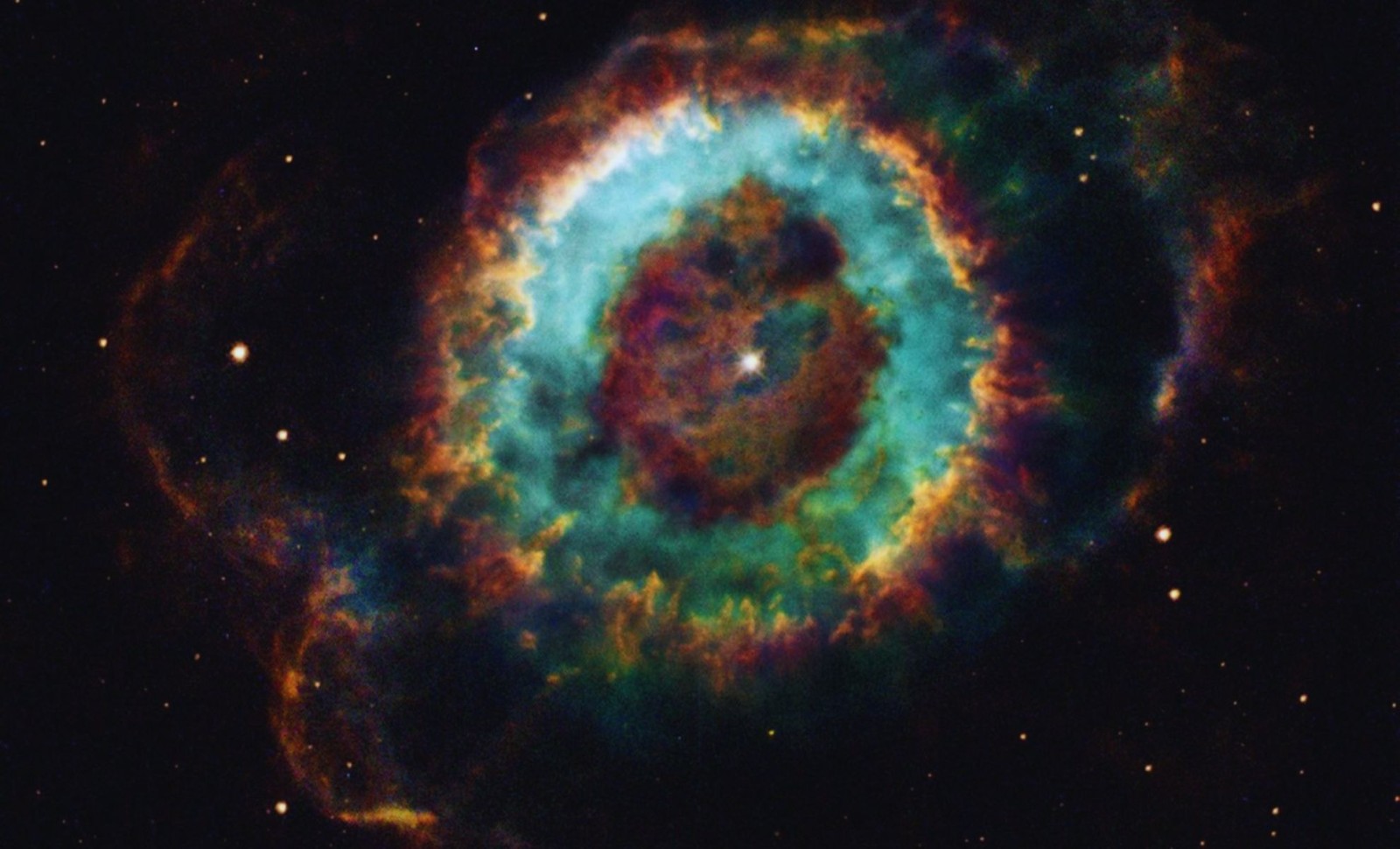
The Hubble Space Telescope has captured a stunning view of NGC 6369, better known as the “Little Ghost Nebula.” This planetary nebula, lying roughly 2,000 to 5,000 light-years away, is formed by the remnants of a dying star shedding its outer material into space. Its ghostly glow continues to fascinate both scientists and star enthusiasts.
Located within the boundaries of the Ophiuchus constellation, this nebula offers a rare glimpse into the late stages of stellar evolution. When stars similar to our Sun near the end of their lives, they expand into red giants and cast off their outer layers, resulting in planetary nebulae. Hubble’s detailed images allow astronomers to analyze these fleeting cosmic events with exceptional clarity.
Exploring the Little Ghost Nebula
The nebula NGC 6369 is nicknamed the “Little Ghost Nebula” because of its ethereal, cloud-like shape enveloping a faint, dying star at its core. This star’s expelled outer layers create the softly glowing gas cloud. NASA studies reveal that planetary nebulae like this are a brief but critical phase in the lifecycle of stars with masses comparable to that of our Sun. The name comes from the nebulae’s round appearance, which early astronomers mistook for planets through telescopes.

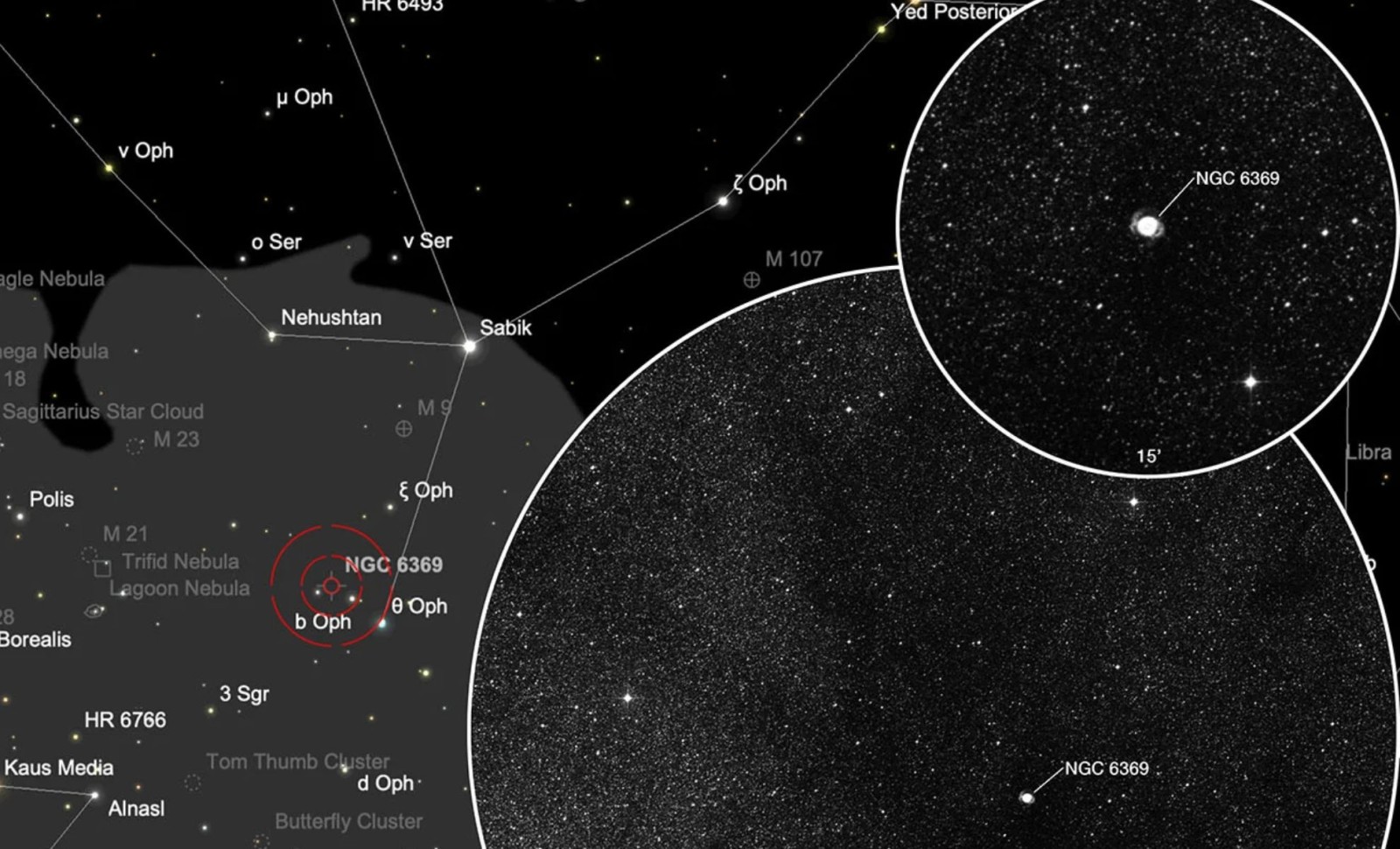
Situated towards the Ophiuchus constellation, this nebula’s distance ranges between 2,000 and 5,000 light-years from us. Hubble’s high-resolution imaging unveils the intricate structures formed by the ejected stellar material during this terminal evolutionary phase. Observing these faint emissions offers a preview of what our Sun might look like in about five billion years.
Hubble’s Precision in Cosmic Imaging
The high-definition images from Hubble, particularly through instruments like the Wide Field Planetary Camera 2 (WFPC2), have revolutionized the study of planetary nebulae. These detailed observations surpass the capabilities of terrestrial telescopes, enabling researchers to explore the nebula’s gas and ionization in greater depth. The U.S. space agency explains:
“The doughnut-shaped blue-green ring represents light from ionized oxygen atoms that have lost two electrons (blue) and from hydrogen atoms that have lost their single electrons (green). Red marks emission from nitrogen atoms that have lost only one electron.”
Beyond the dominant blue and green hues, the red emissions denote nitrogen atoms that have shed a single electron. This precise coloration reveals the varied ionization processes occurring during a star’s final breaths. Thanks to Hubble’s brilliant clarity, astronomers can delve deeper into these gas interactions and better understand the nebula’s dynamic chemistry.
Looking Ahead: Our Sun’s Destiny
According to a statement from NASA’s space program, stars like our Sun will one day undergo a similar evolution as they exhaust their fuel.
“Our own Sun may eject a similar nebula, but not for another 5 billion years. The gas will expand away from the star at about 15 miles per second, dissipating into interstellar space after some 10,000 years. After that, the remnant stellar ember in the center will gradually cool off for billions of years as a tiny white dwarf star, and eventually wink out.”
While this transformation won’t occur for billions of years, studying such nebulae today offers essential clues about the ultimate fate of our solar neighborhood.
- Categories:
- Astronomy




0 comments
Sign in to Comment