
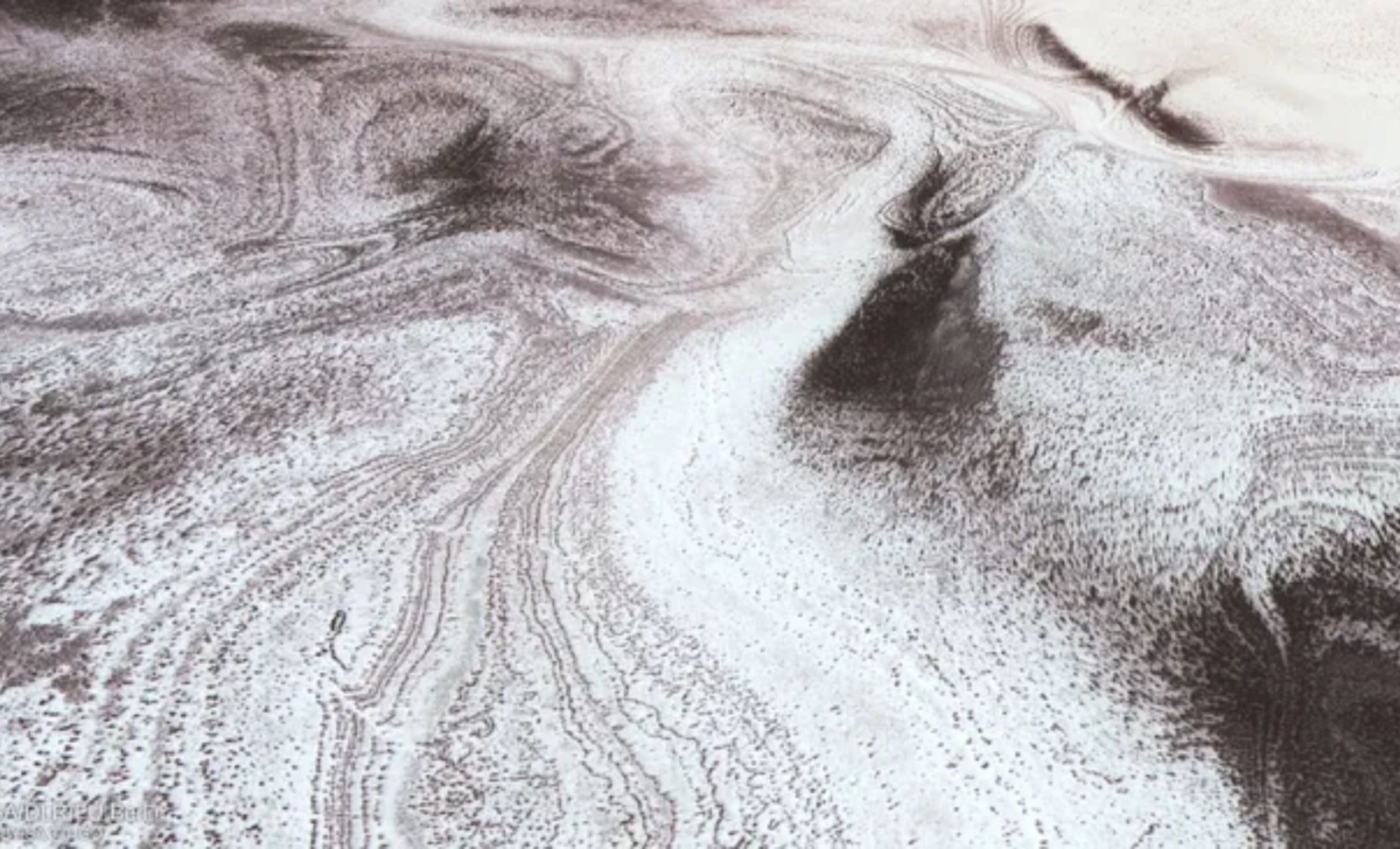
Fresh photographs captured by two orbiters have uncovered expansive carbon dioxide frost and intricate dark dust formations spread across Mars' southern hemisphere, crafting what looks like a frosty vista near its South Pole. These visuals, taken by the European Space Agency’s Mars Express and NASA’s Mars Reconnaissance Orbiter, reveal swirling patterns of white and brown across the Australe Scopuli area. Despite their serene appearance, these formations are the result of dynamic, energetic reactions triggered by sunlight interacting with CO₂ ice.
Understanding Carbon Dioxide Frost Versus Snow
Is this Martian phenomenon really snow? Not exactly. The white layer observed in images from ESA and NASA consists of carbon dioxide frost, not water ice. This type of frost is notably colder and more brittle than Earth’s snow and responds differently when exposed to sunlight.
“Martian snow comes in two varieties: water ice and carbon dioxide, or dry ice. Because Martian air is so thin and the temperatures so cold, water-ice snow sublimates, or becomes a gas, before it even touches the ground,” as stated by the NASA.
Add Cosmo Herald as a Preferred Source

The Mars Express mission, featuring a German-designed High-Resolution Stereo Camera, first documented these striking views in June 2022. NASA’s spacecraft followed with its HiRISE camera months later, concentrating on the Australe Scopuli region, close to Mars’ southern polar ice cap. According to the Economic Times, the CO₂ ice here may reach thicknesses of up to 8 meters and remains frozen throughout the Martian year.
A layer of dark dust overlays the frost, transported by persistent yet subtle Martian winds. This dust forms patterns that provide scientists clues about the seasonal transformations impacting the ice. The vivid interplay between light and dark elements delivers insight into these environmental shifts.
Gas Eruptions Underneath Shape Mars’ Surface Designs
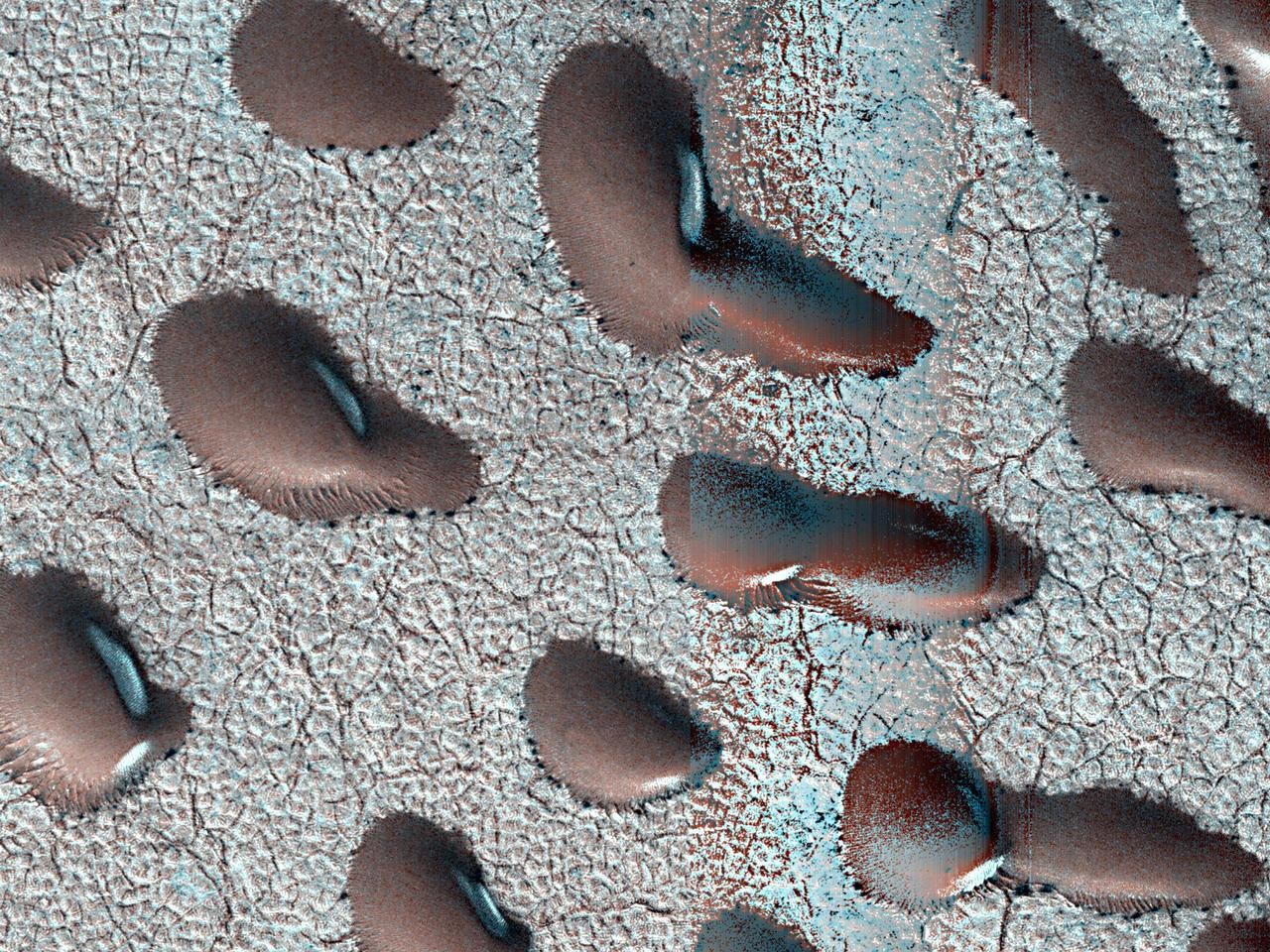
What appears to be a tranquil icy landscape is, in fact, sculpted by powerful gas eruptions beneath the surface. During the Martian summer, sunlight penetrates under the CO₂ ice, gently warming it from below.
“The CO2 ice does not melt. Instead, it goes back from solid to gas directly in the atmosphere. That leads to the formation of really unique surface features,” explained Sylvain Piqueux of NASA’s Jet Propulsion Laboratory.
As the gas pressure rises beneath the ice, it eventually escapes in bursts, propelling dust into Mars' thin atmosphere. When this dust settles, it creates the twisting dark streaks visible in the images. According to Space.com, these swirling markings evolve throughout the seasons as gas escapes vary by location and timing.
Seasonal Ice Plays a Crucial Role in Dune Stability
Further observations by NASA’s orbiter revealed a fine coating of seasonal frost on the slopes of Martian sand dunes. While subtle, this seasonal crust acts as a temporary adhesive, binding loose dust and sand grains together until spring returns. When temperatures rise, the frost sublimates, releasing material that is then reshaped by Martian winds.
These gradual processes demonstrate how Mars experiences slow-paced yet impactful geological transformations that help maintain dune structure, prevent erosion, and highlight how slight seasonal shifts can influence the planet’s surface over time.
- Categories:
- Astronomy





0 comments
Sign in to Comment