
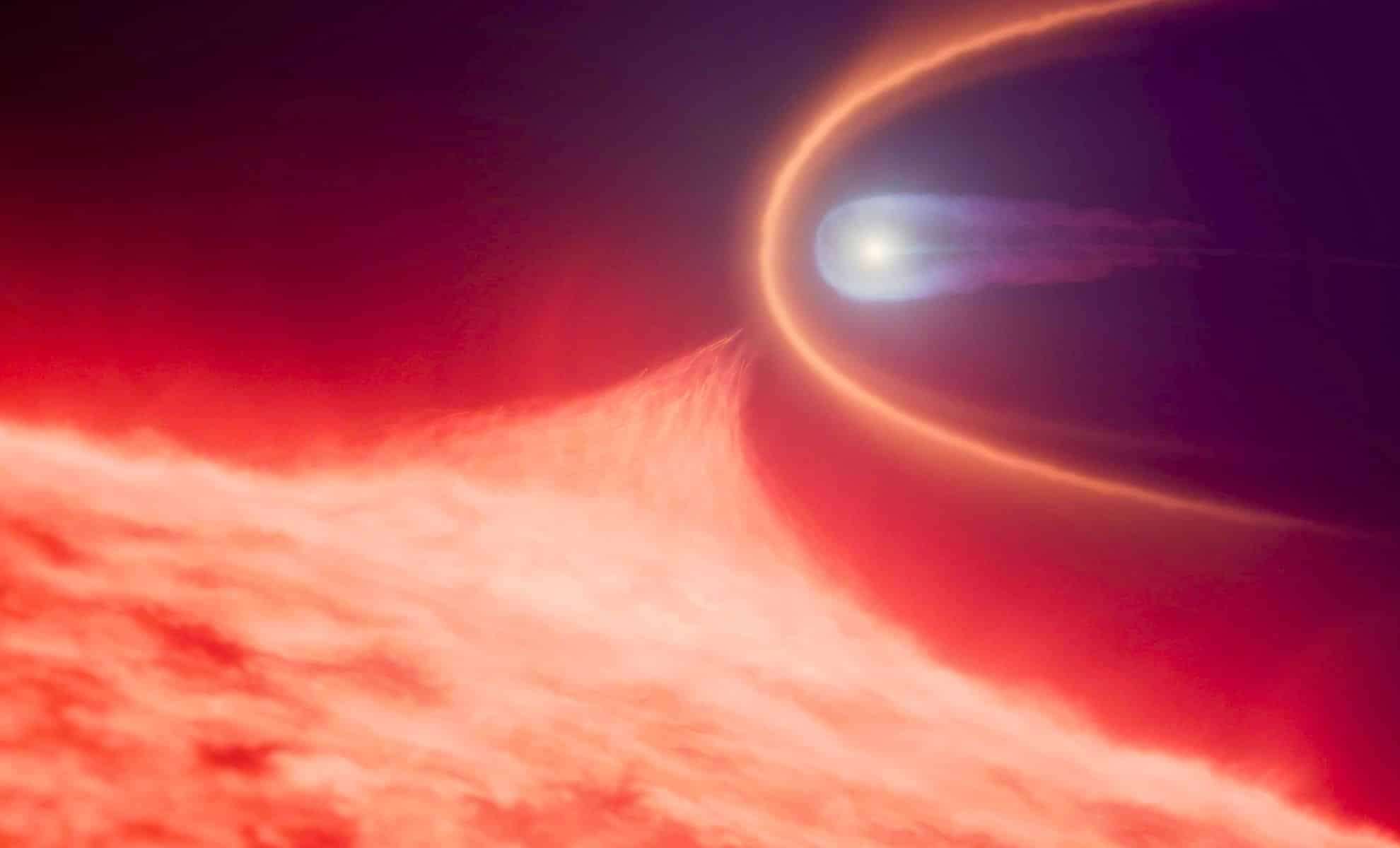
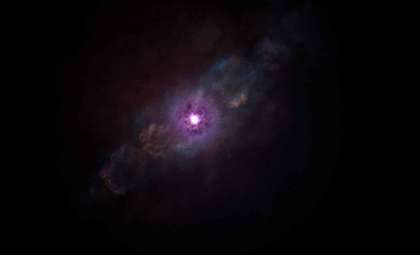
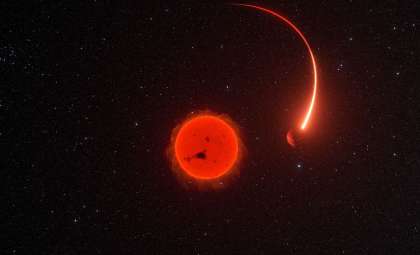
A recent publication in Nature Astronomy details how NASA’s Hubble Space Telescope has identified a remarkable white dwarf star, known as WD 0525+526. Unlike standard white dwarfs, which originate as single stars evolve and die, this particular star resulted from the dramatic fusion of two separate stars. Hubble’s ultraviolet observations detected unusual carbon within the star’s atmosphere, hinting at its tumultuous formation history.
Uncovering Stellar Secrets with Ultraviolet Spectra
White dwarfs are dense stellar remnants left behind by stars not massive enough to explode as supernovae. They contract into objects roughly the size of Earth. Traditionally, astronomers assumed these remnants formed from singular stars. However, WD 0525+526, located approximately 128 light-years from Earth, challenges this assumption.
At first glance, this object resembled a typical white dwarf, but ultraviolet spectral data from Hubble revealed unexpected carbon signatures in its atmosphere.

Such carbon presence is unusual in standard white dwarfs. "Until now, this seemed like a typical white dwarf, but Hubble’s ultraviolet observations exposed an entirely different backstory," said Boris Gaensicke, principal investigator from the University of Warwick.
Atmospheric Carbon Tells a Tale of Stellar Collision
The interior of a white dwarf chiefly consists of carbon and oxygen, but in single-star evolution, these elements remain hidden beneath a thick atmosphere dominated by hydrogen and helium. When two stars merge, these outer layers are stripped away, allowing core carbon to appear on the surface. This phenomenon is precisely what scientists observed in WD 0525+526.
Notably, WD 0525+526 stands out by being hotter and more massive than other white dwarfs known to be merger products. With a temperature close to 21,000 Kelvin (around 37,000°F) and a mass exceeding the Sun’s by more than 20%, this object marks a significant discovery. While the atmospheric carbon levels are lower than in cooler merger remnants, their presence unequivocally points to a violent stellar collision.
Hubble’s Ultraviolet Insights Unlock Hidden Clues
In hotter white dwarfs, spectral lines from heavy elements are weak in visible wavelengths but remain strong in ultraviolet light — a region where Hubble excels. “The Cosmic Origins Spectrograph aboard Hubble is uniquely capable of delivering the high-quality ultraviolet spectra needed to detect atmospheric carbon in this white dwarf,” explained lead author Snehalata Sahu of the University of Warwick.
Hubble’s superior ultraviolet capabilities have once again been crucial in decoding the complex stories of stellar evolution. Without its observations, the subtle traces revealing WD 0525+526’s explosive beginnings would have remained hidden. This finding suggests that many other seemingly ordinary white dwarfs might share similarly dramatic origins.
Researchers are now motivated to extend their investigations to identify additional white dwarfs formed through stellar collisions. “This research will enhance our understanding of white dwarf binary systems and help clarify the mechanisms leading to supernova events,” remarked study co-leader Antoine Bedard, also from the University of Warwick.
- Categories:
- News







0 comments
Sign in to Comment