
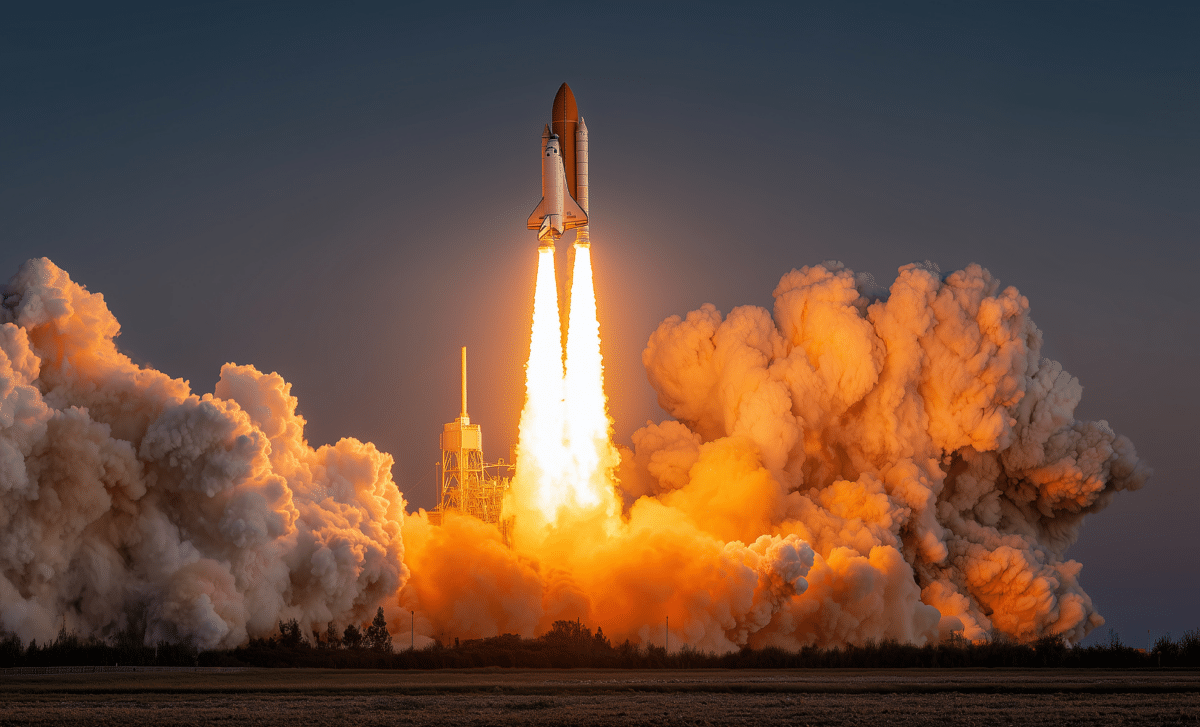
Ex-SpaceX engineer Halen Mattison and his company, General Galactic, are pioneering a bold initiative to create rocket fuel from water. Covered extensively by Wired, their groundbreaking approach aims to unlock new propulsion possibilities that could support extended space exploration missions. This piece explores their futuristic strategy, the obstacles they face, and the promising implications of water-based fuel for journeys to the Moon, Mars, and deeper space.
Envisioning a Mars Refueling Hub
Human spaceflight to the Moon and Mars has captivated researchers and explorers for decades, but the logistical challenge of fueling these expeditions remains formidable. A sustainable space program often involves setting up fuel stations capable of servicing spacecraft beyond Earth’s orbit. As detailed by Wired, Halen Mattison, CEO of General Galactic, has conceived a novel plan: converting water into rocket propellant. As Mattison states, “Everybody wants to go build a moon base or a Mars base or whatever. Who’s going to pay for it? How does it actually work?” His mission includes establishing a Martian refueling outpost that uses water as its primary resource. This concept could revolutionize mission logistics, enabling spacecraft and astronauts to reach farther destinations while minimizing supply constraints.
The key idea involves extracting water on Mars or the Moon and employing electrolysis to separate it into hydrogen and oxygen gases. These gases serve as effective rocket propellants. Success in this field could lead to an interplanetary network of refueling stations linking Earth, the Moon, and Mars. Mattison’s vision extends beyond a lone Mars depot to a comprehensive “refueling network” spanning multiple locations in space. This could drastically lower exploration expenses and simplify mission planning, potentially opening space travel to more actors, including commercial ventures.

This meaningfully changes the economics of spaceflight and space operations. We're talking about Billions of dollars in savings (today!), and soon to be Trillions of new economic growth opportunity as we build complete mission services and dedicated full-stack operations on top… pic.twitter.com/QVt3PKB6wx
— Halen Mattison (@HalenMattison) February 9, 2026
How Water-Powered Propulsion Works
The technology for transforming water into rocket fuel primarily relies on electrolysis combined with plasma propulsion techniques. By splitting water molecules into hydrogen and oxygen, General Galactic plans to utilize these gases in conventional chemical rockets as well as in electrical propulsion systems. In chemical propulsion, combusting hydrogen and oxygen produces thrust, similar to traditional rocket engines. For electrical propulsion, ionized oxygen is accelerated by magnetic fields into plasma, generating precise, low-thrust maneuvering power. In Mattison's words, “it’s very, very low thrust. People jokingly like to call it a burp in space.” Such propulsion could handle delicate spacecraft path adjustments, while chemical propulsion would provide larger bursts of speed when needed.
Despite its promise, challenges remain in using water as rocket fuel. Purifying and electrolyzing water in space, along with safely compressing and storing hydrogen and oxygen, requires lightweight and reliable equipment. Additionally, ionized oxygen might interfere with satellite electronics, a concern raised by General Galactic advisor and ex-NASA expert Ryan Conversano. Nevertheless, Mattison's team remains confident that water-fueled propulsion is a practical and transformative technology for space travel's future.
The Financial and Logistical Complexities of Mars Missions
Besides technical hurdles, financing space infrastructure such as Martian refueling stations poses a significant barrier. Mattison acknowledges the central challenge: “Who’s going to pay for it?” For a sustainable space program, collaboration among governments, private industry, and international partners will be essential. General Galactic aims to build a commercially viable model for water-fueled refueling, attracting investment by proving cost-efficiency and scalability.
The concept also raises critical questions about sustainable resource utilization beyond Earth. How will explorers extract and process materials from celestial bodies? How can spacecraft reliably dock and refuel to complete lengthy missions home? While these remain open questions, Mattison’s vision marks an important step toward addressing them. General Galactic’s efforts will test whether water can serve as a renewable fuel source in the extreme conditions of outer space.
2026 Satellite Launch to Demonstrate Technology
To validate their concept, General Galactic is preparing to launch a test satellite in October 2026. This 1,100-pound spacecraft will hitch a ride aboard a SpaceX Falcon 9 rocket, marking the first practical investigation of water-based propulsion in orbit. The mission will assess the efficiency of converting water into hydrogen, oxygen, and plasma for use in chemical and electrical thrusters, respectively. Successfully proving the technology would represent a major breakthrough that could redefine rocket fueling strategies for decades to come.
A positive outcome from this launch could accelerate the adoption of in-situ resource utilization, where spacecraft harvest water from other planetary bodies to support long-range travel. This innovation holds transformative potential for agencies like NASA and commercial ventures aiming for manned missions to Mars, by reducing reliance on Earth-supplied fuel.
- Categories:
- Space





0 comments
Sign in to Comment