
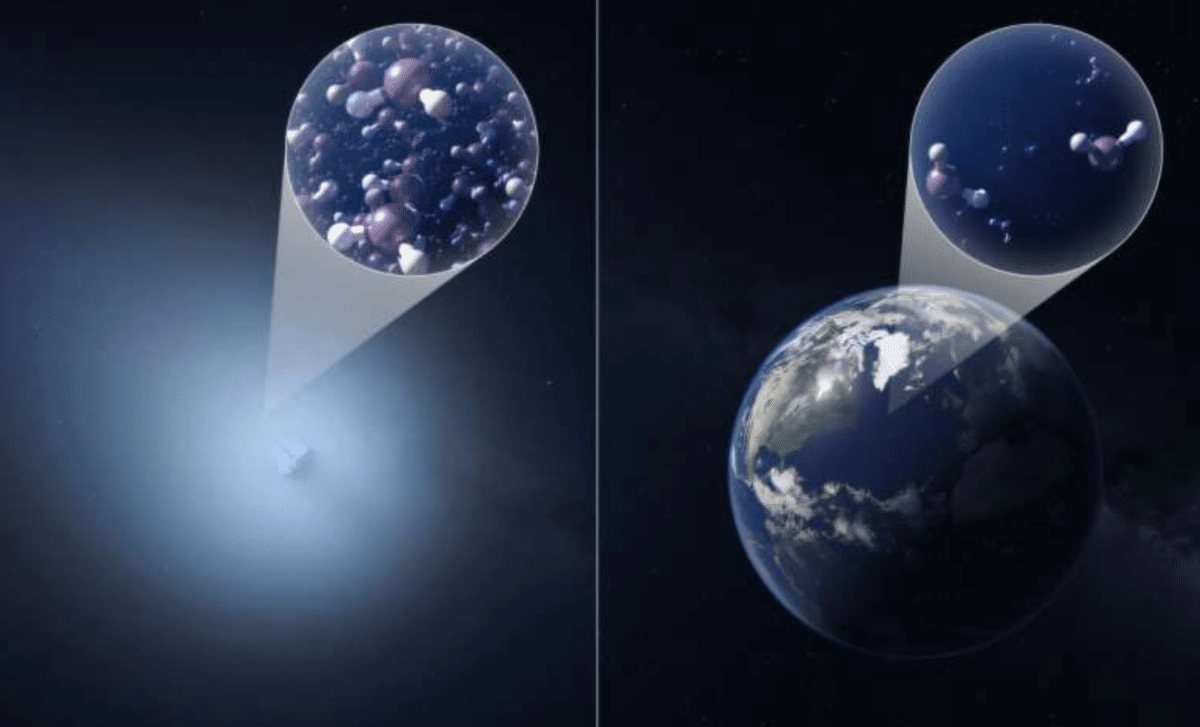
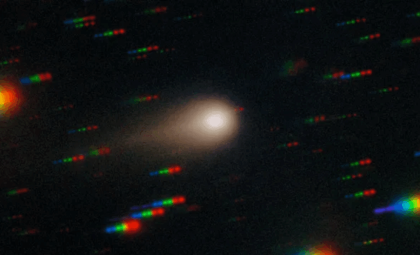
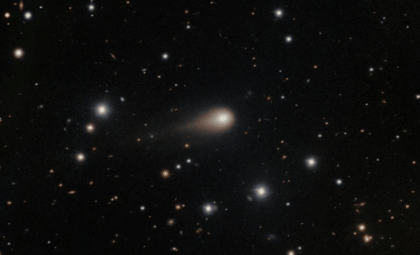
Recent analysis of an interstellar object has provided compelling chemical evidence illuminating how planetary systems beyond our own may form. Published in Nature Astronomy, the findings highlight 3I/ATLAS as containing an exceptionally elevated amount of deuterium-enriched water, suggesting it originated in a far colder environment than any within our solar neighborhood.
Unveiling Exotic Chemistry From Afar
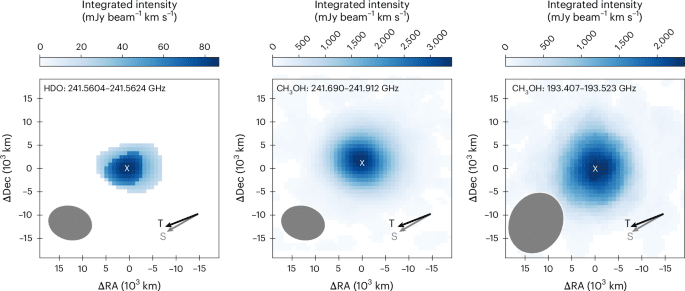
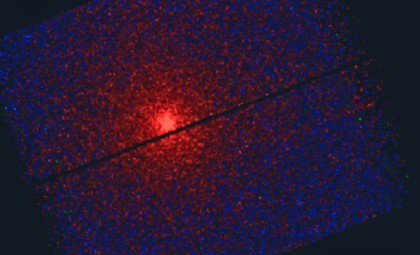
The identification of semi-heavy water (HDO) in 3I/ATLAS represents a pivotal advancement in understanding interstellar visitors. Utilizing the Atacama Large Millimeter/submillimeter Array (ALMA), astronomers led by Luis E. Salazar Manzano from the University of Michigan were able to detect this chemical signature shortly after the comet’s closest approach to the Sun. This narrow observational window was critical, as many instruments cannot safely monitor objects so close to intense solar radiation.
“Our observations reveal that the formative conditions of our solar system differ greatly from those shaping planetary systems elsewhere,” said Salazar Manzano. This observation highlights that planetary formation varies considerably depending on local factors like temperature, radiation exposure, and chemical processes.

As reported in Nature Astronomy, the team reveals that interstellar comets are more than pointless debris; they carry the untarnished chemical footprints of their natal environments. For 3I/ATLAS, that environment was distinctly colder and chemically unique compared to the birthplace of our own planetary system.
ALMA’s Advantage in Near-Solar Observations
Gathering these measurements relied on a specialized combination of timing and technology. Unlike optical telescopes, radio arrays like ALMA can safely target areas close to the Sun, enabling observations of otherwise hidden objects during critical phases. This capability allowed the team to investigate the comet’s makeup precisely when volatile elements were sublimating.
“While most instruments avoid pointing near the Sun, ALMA’s radio wavelengths provided this rare observational edge. Observing 3I/ATLAS just days post-perihelion let us constrain molecular abundances not otherwise possible,” Salazar Manzano noted.
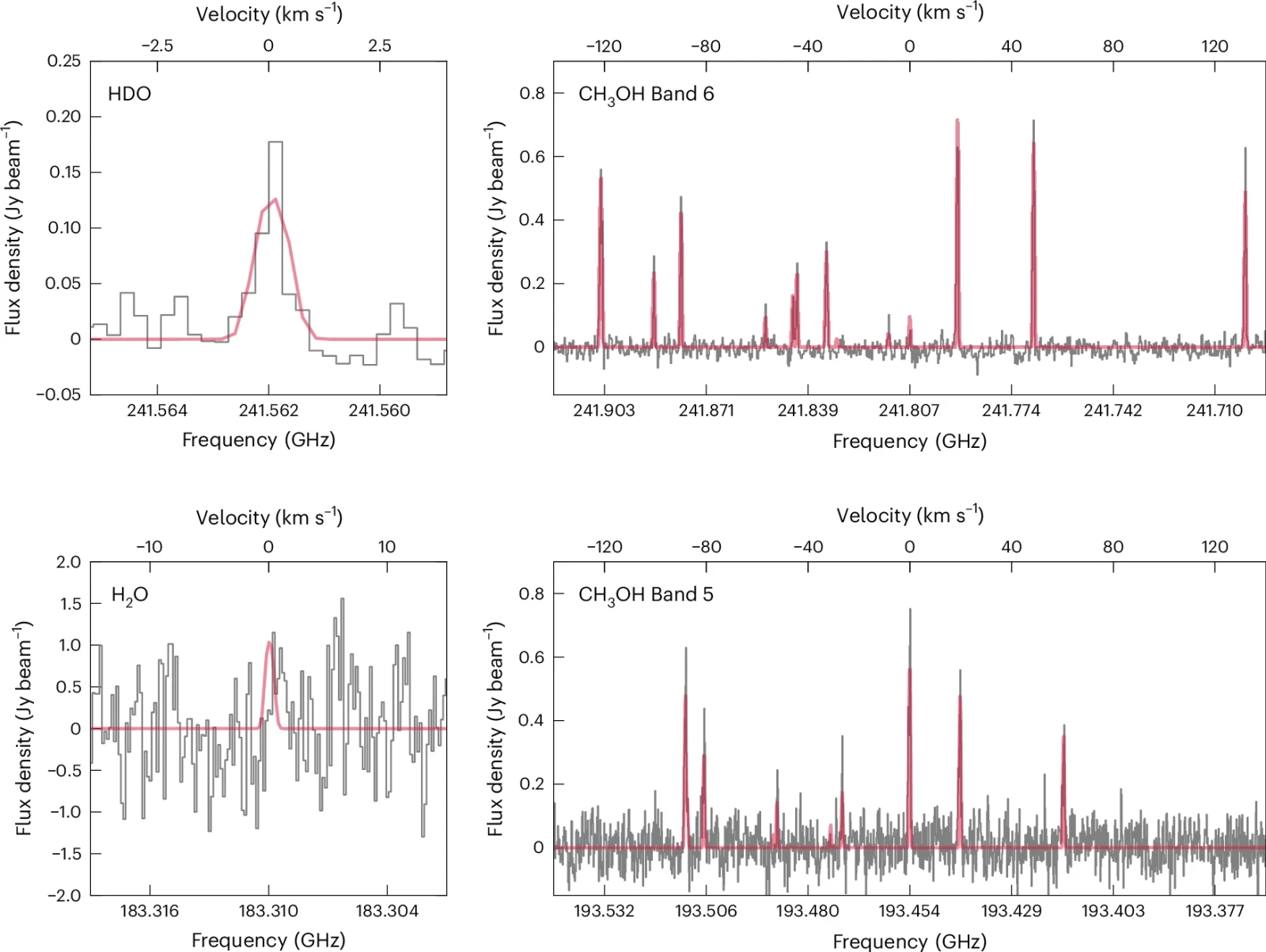
This precision made it possible to quantify the ratio of HDO to H2O, a crucial astrochemical indicator. ALMA’s sensitivity uncovered that the comet exhibits over 30 times the amount of deuterated water commonly found in solar system comets. Such detailed data transforms a brief observation into a rich resource for retracing the physical conditions of the comet’s origin.
Deuterated Water: A Cosmic Thermometer
Water molecules serve as chemical archives, preserving clues about the temperature and radiation conditions present during their formation. Solar system comets typically exhibit relatively low levels of deuterated water, reflecting the milder conditions of the early solar nebula. However, the significant deuterium enrichment in 3I/ATLAS reveals a radically different formative environment.
Salazar Manzano explained, “Our results indicate that the gas cloud where 3I/ATLAS originated was exceedingly cold and distinct from the environment that produced our solar system. These ultra-low temperatures promoted the buildup of molecules rich in deuterium.”
The detected deuterium-to-hydrogen ratio surpasses that found in Earth’s oceans by more than forty times, emphasizing this comet’s uniqueness. Given that hydrogen and deuterium abundances trace back to the Big Bang, such chemical measurements forge a direct link between early cosmic history and the building of planetary systems.
Evidence for Temperatures Below 30 Kelvin
The chemical formation pathways enhancing deuterated water depend strongly on extremely low temperatures. For 3I/ATLAS, this suggests birth conditions colder than 30 Kelvin (around -406°F) — far below temperatures typical in our solar system’s infancy.
Salazar Manzano comments, “These deuterium enrichments require environments colder than roughly 30 Kelvin, equivalent to about minus 406 degrees Fahrenheit.” Such frigid conditions likely prevailed in dense, well-shielded zones within molecular clouds, where slow chemical reactions can accumulate distinct molecular signatures over long periods.
What makes this discovery striking is the preservation of these chemical clues despite the comet’s long journey through interstellar space. Maintaining its original molecular makeup, 3I/ATLAS acts as a time capsule, allowing astronomers to explore otherwise inaccessible cold environments and enhancing understanding of the variety of planetary birthplaces across our galaxy.
- Categories:
- News




0 comments
Sign in to Comment