
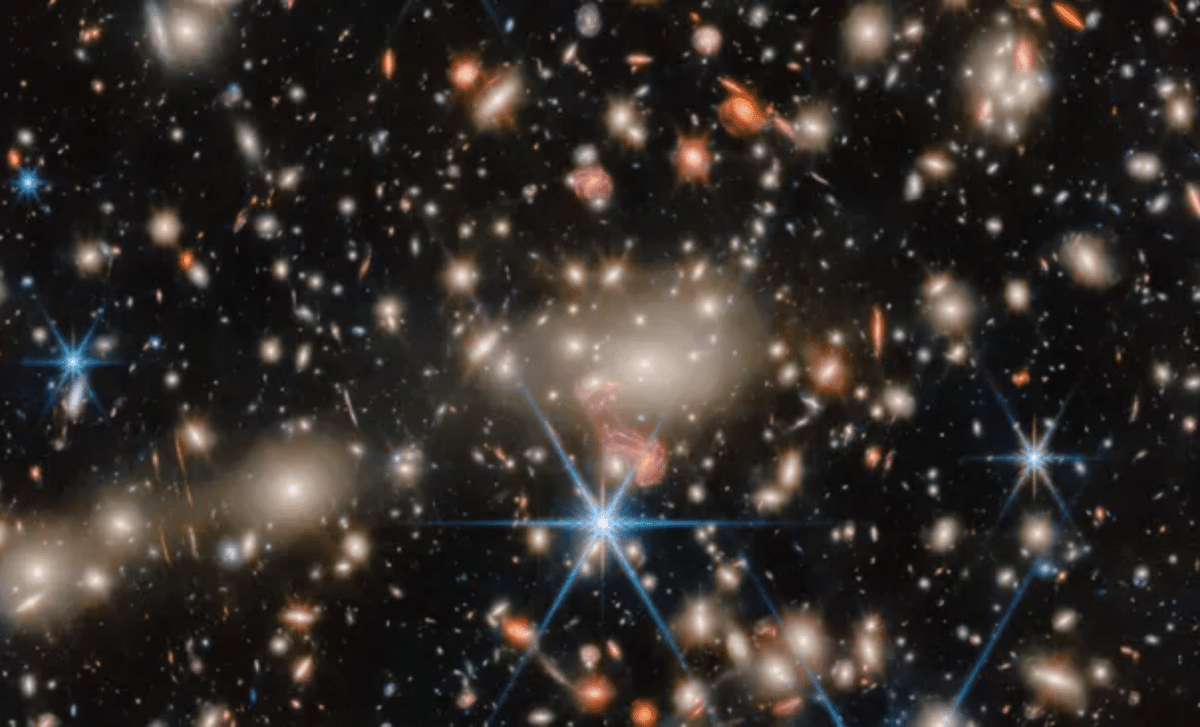
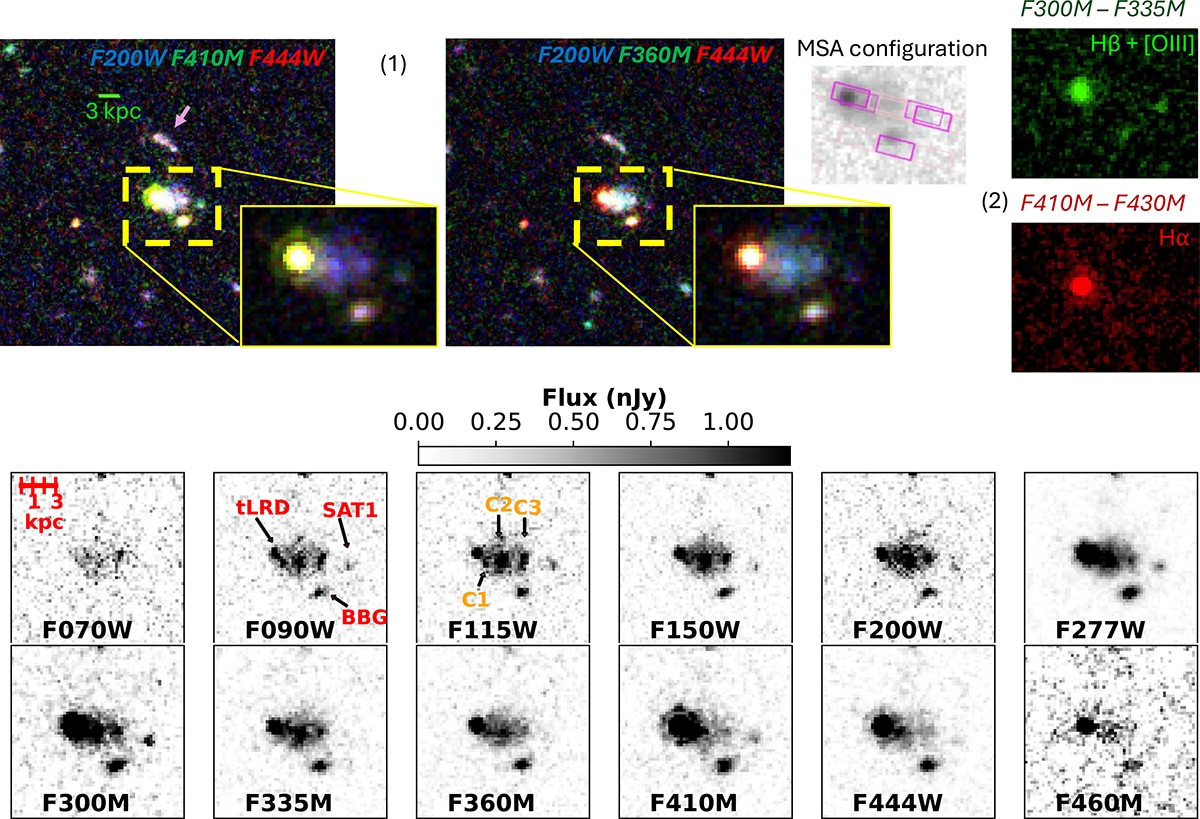
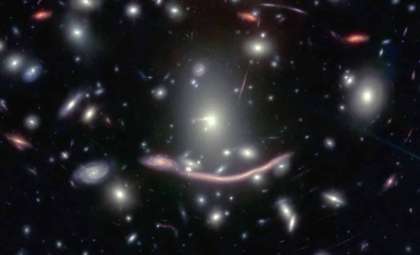
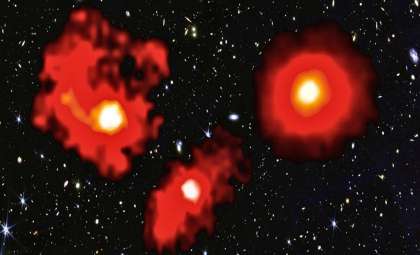
A recent discovery made with NASA’s James Webb Space Telescope could redefine our understanding of a longstanding cosmic enigma: the peculiar little red dots. This remarkable galaxy, dubbed the "stingray" galaxy for its distinctive shape, is detailed in a publication in Astronomy and Astrophysics. It appears to occupy a vital evolutionary stage, providing the clearest indication yet that these puzzling objects aren’t separate galaxy types but rather transitional phases in their developmental cycle.
A Galaxy Bridging Two Mysterious Populations
This newly examined galaxy is noteworthy because it defies simple classification. It shows characteristics merging both compact active galactic nuclei (AGN) and little red dots (LRDs), two classes that have eluded clear explanation since Webb’s deep-field explorations first detected them. Its compact formation and spectral data imply it’s undergoing rapid changes, driven by complex internal and external forces.
“This galaxy is strategically in between the little red dot population and compact Type I AGN,” Mérida said. “Therefore, tLRD is part AGN and part LRD, but it’s unclear whether it is entering or exiting the LRD phase.”
Add Cosmo Herald as a Preferred Source

This uncertainty enhances the discovery’s importance, as it offers a rare observational window into a transitional stage previously only hypothesized. Evidence suggests the galaxy is engaged in a gravitational dance with a nearby neighbor, an event known to spark star formation surges and potentially accelerate black hole growth. Its warped, stretched appearance further supports that these cosmic interactions are actively reshaping the system.
Evidence Suggests a Transient Galactic Phase
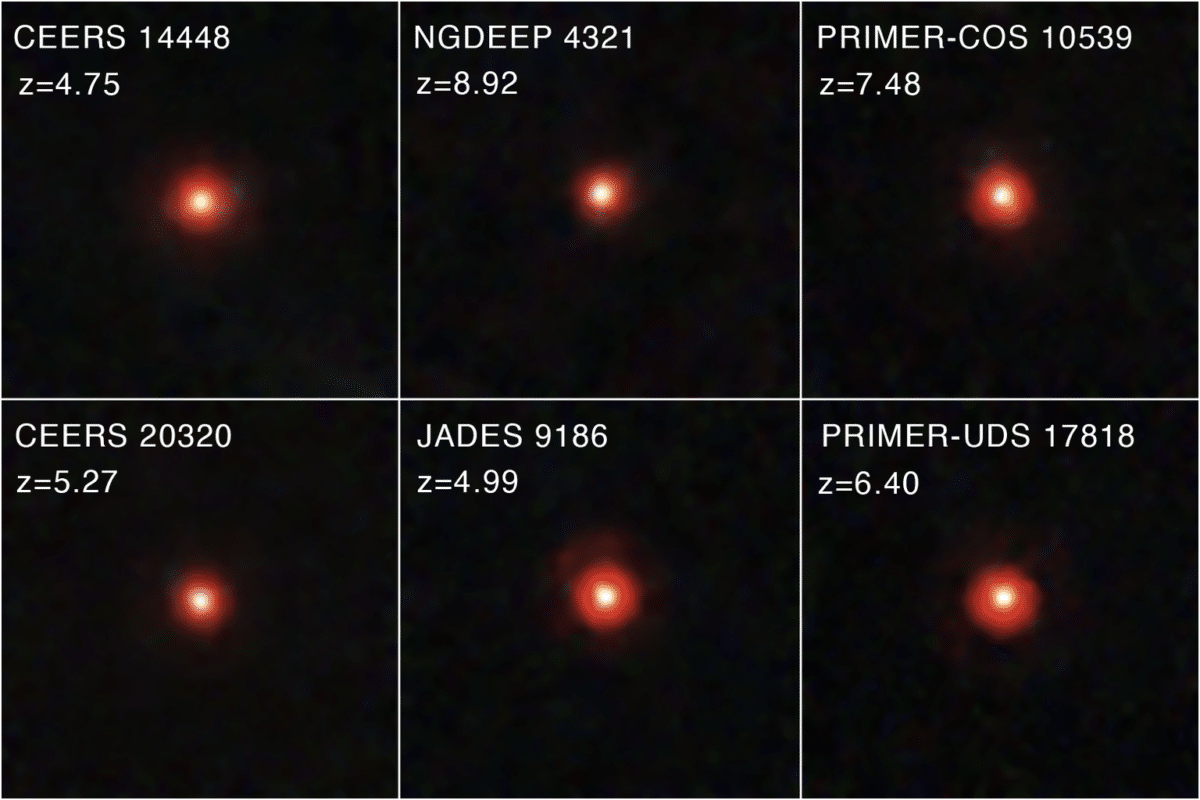
As outlined in the Astronomy and Astrophysics study, these findings reinforce the growing idea that little red dots represent temporary stages in the lifecycle of galaxies. First spotted by Webb, these compact, highly luminous red objects often correlate with swiftly feeding black holes in the young universe. Their true nature has been debated, with ideas ranging from obscured quasars to entirely novel galaxy types.
“The paper supports the idea that at least some little red dots are evolutionary phases rather than a wholly distinct class,” Devesh Nandal, a postdoctoral researcher at the Harvard and Smithsonian Center for Astrophysics who was not involved in the study, told Live Science in an email.
“The system’s compact nature, spectroscopic confirmation, and inferred enhanced growth in both the tLRD and its satellite galaxy surpass expectations from just internal processes, making the interaction-driven scenario quite plausible. This assessment underscores an essential point: their accelerated growth is likely driven by their mutual gravitational interaction.”
Central Black Hole Growth Remains a Mystery
Despite these advances, critical questions persist, particularly regarding the mass of the central black hole and what this means for existing theories of galaxy formation. While galactic encounters can spark both starbursts and black hole feeding, they do not fully explain the extreme features exhibited by little red dots. The newly examined system shows signs of elevated activity, but its full set of characteristics continues to challenge theoretical models.
Researcher Nandal emphasized that although interactions might trigger or conclude the LRD phase, they cannot alone explain the extraordinary black hole growth implied by the data. This hints at additional, perhaps early universe-specific phenomena or unknown feedback mechanisms. Thus, rather than offering definitive answers, the discovery narrows possibilities while igniting fresh avenues for inquiry.
Revealing Dynamic Processes in the Early Cosmos
This finding holds special significance given its timing. The James Webb Space Telescope offers a unique window into the infant universe, exposing galaxies that were once beyond our observational reach. Uncovering a transitional object like the “stingray” galaxy provides tangible proof of cosmic processes previously theoretical.
As new candidates emerge, astronomers anticipate constructing a more comprehensive narrative of galactic evolution, interactions, and black hole growth. This discovery suggests that the early cosmos was a turbulent environment marked by frequent collisions and swift transformations. The stingray galaxy, straddling two mysterious categories, may serve as a vital snapshot of a grander evolutionary storyline, in which the enigmatic little red dots mark pivotal moments rather than anomalies.
- Categories:
- Astronomy



0 comments
Sign in to Comment