
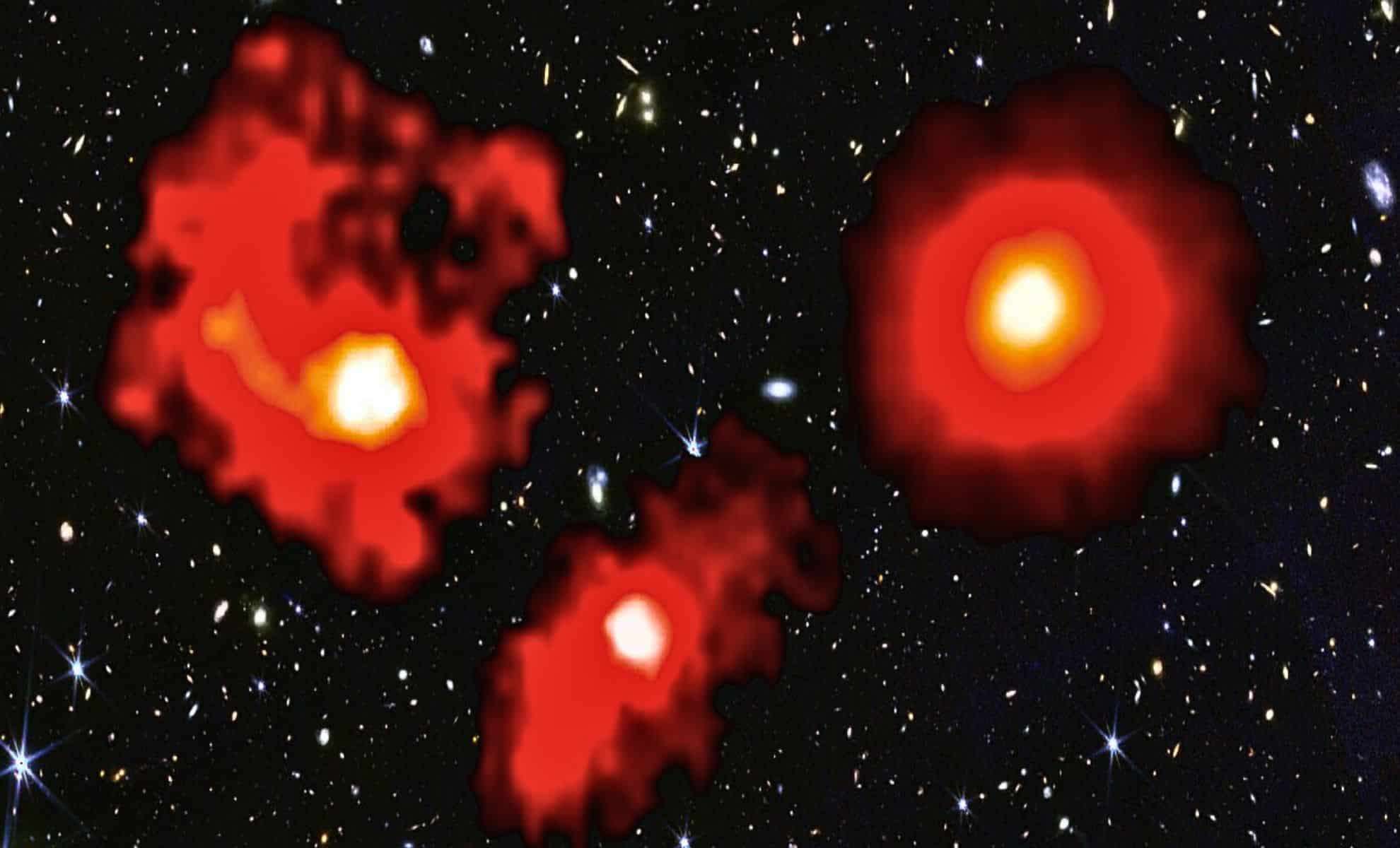
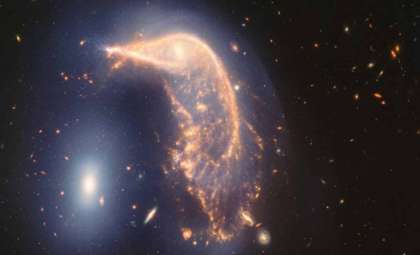
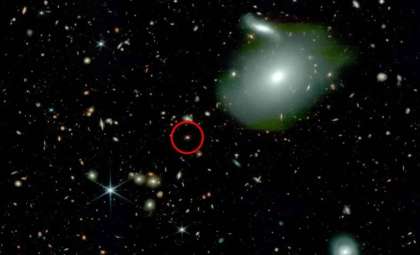
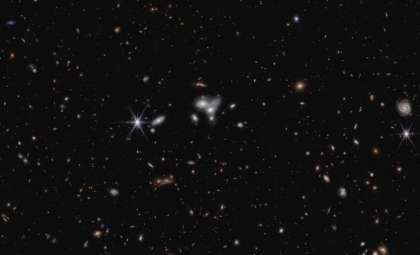
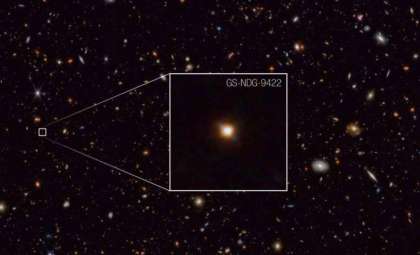
The James Webb Space Telescope (JWST) has uncovered an astonishing class of colossal, dust-rich galaxies known as “red giants,” which upend long-held beliefs about galaxy formation soon after the Big Bang. These enormous galaxies, detected within the universe’s first billion years, rival the Milky Way in mass but grew far faster than scientists previously expected. This landmark discovery may compel astronomers to reconsider prevailing theories about how galaxies evolved in the early cosmos.
Giant Galaxies from the Infant Universe Defy Conventional Wisdom
Prevailing models of cosmic development propose that early galaxies evolved gradually, typically converting about 20% of their interstellar gas into stars due to suppressive mechanisms that regulate star formation rates. In a surprising contrast, JWST observations have shown that these “red giants” reached nearly twice the expected efficiency. Researchers suggest these galaxies evaded normal star-forming constraints, enabling rapid accumulation of immense mass within a fraction of the universe’s first billion years.
Comparison of traditional galaxy models with newly observed “red giants”:

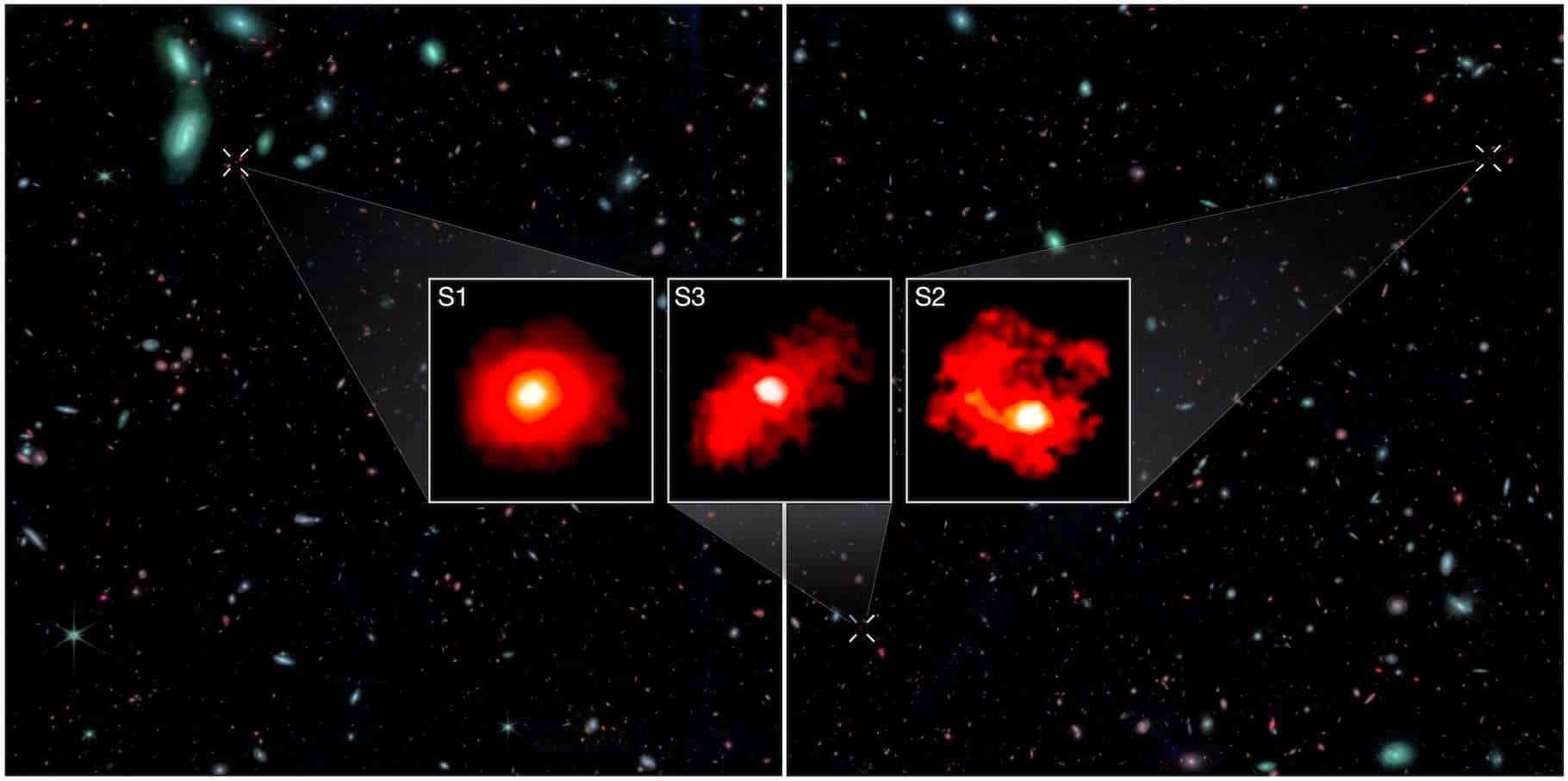
Could Additional “Red Giants” Be Awaiting Discovery?
The identification of these initial three ultra-massive galaxies prompts the question of whether many more similar “red giants” exist from the universe’s formative epochs. To explore this, astronomers plan to extend their observations utilizing JWST alongside the Atacama Large Millimeter Array (ALMA) in Chile. Uncovering further examples could revolutionize existing frameworks of galaxy growth and evolution.
Upcoming observational strategies and tools:
- JWST: Will continue infrared surveys to pinpoint other massive, dust-heavy galaxies.
- ALMA: Provides millimeter-wave data that reveal cold gas distributions, crucial for analyzing early large galaxy structures.
Launching a New Chapter in Cosmic Exploration
This breakthrough involving “red giants” raises fresh questions, ushering in a novel era for astronomy. These galaxies may unveil hidden influences shaping early cosmic history, such as the impact of dark matter or dense interstellar regions on star formation speed.
Future studies targeting more of these enormous early galaxies might dramatically alter our knowledge of the primitive universe’s architecture, potentially uncovering unknown cosmic phenomena that accelerated galaxy growth.
Significant implications for understanding the universe:
- Galaxy Formation Theories: Models must adapt to accommodate rapid, large-scale star formation events.
- Dark Matter Insights: These galaxies may shed light on the role of dark matter halos in fostering fast stellar growth.
- Chronology of Cosmic Evolution: Finding more “red giants” could shift the timeline of galaxy formation to earlier, more intense growth phases.
As exploration continues, these massive early galaxies provide a fresh vista into cosmic origins, pushing scientists toward a profound rethinking of how the universe’s earliest structures emerged.
- Categories:
- Astronomy



0 comments
Sign in to Comment