
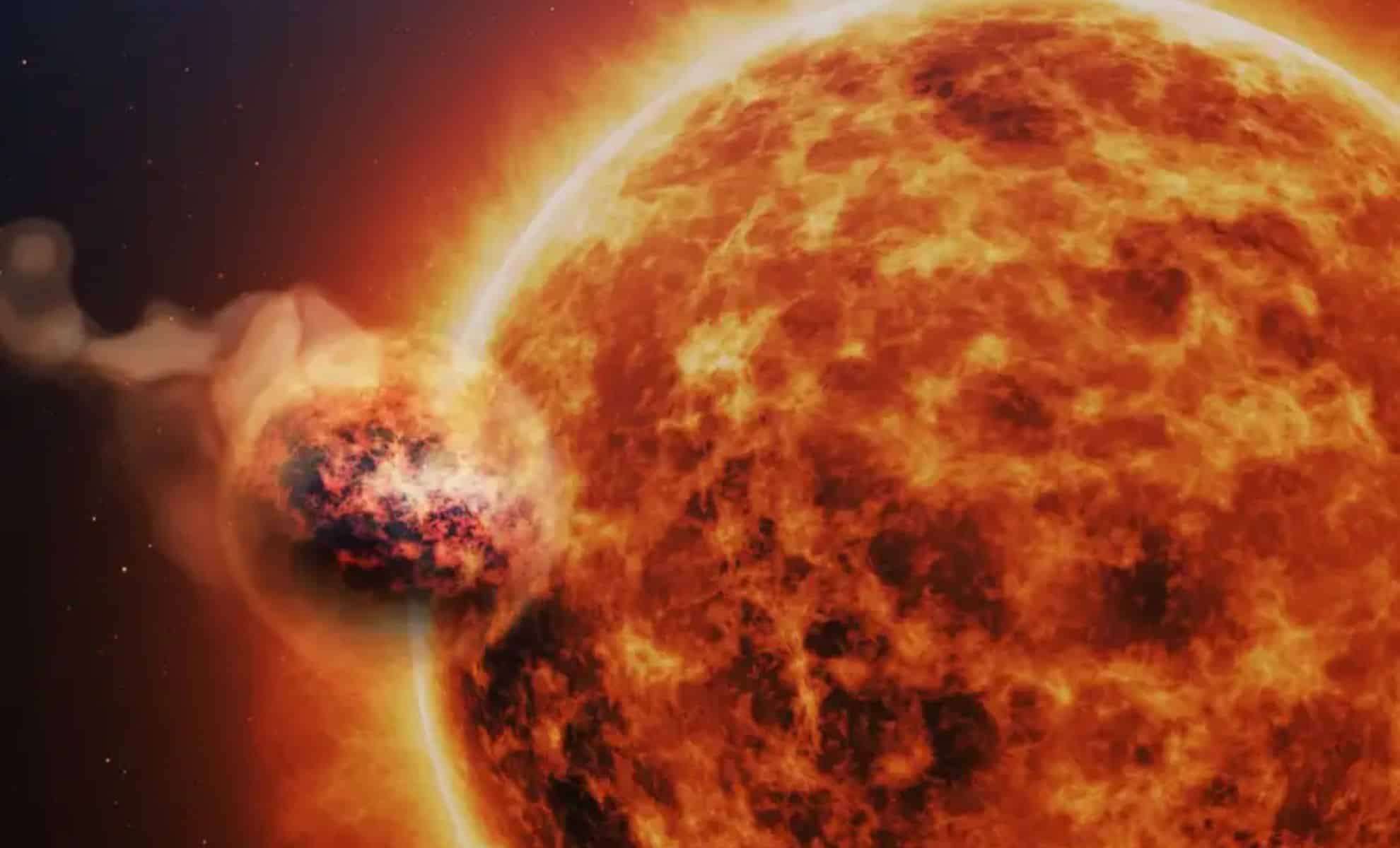
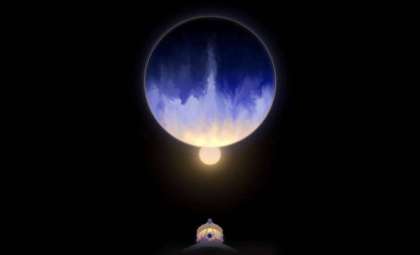
The James Webb Space Telescope (JWST) has made an extraordinary revelation about the exoplanet WASP-107b through a groundbreaking observation. This planet stands out for its extremely low density, which gives it a soft, airy appearance caused by an unusual atmosphere filled with silicate sand clouds. Scientists uncovered the astonishing phenomenon of sand falling like rain on this distant world—a first in planetary science.
A Unique World with Exceptional Density
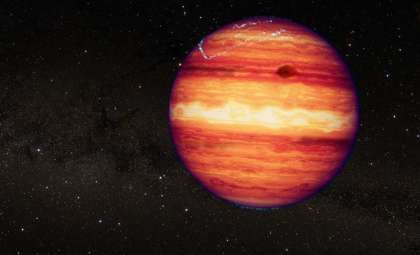
WASP-107b defies characteristics typical of any known planet in our solar neighborhood. Bearing a size similar to Jupiter’s, it only holds about 12 percent of Jupiter’s mass, classifying it among the lowest-density planets ever discovered. This low mass provides astronomers an exceptional chance to probe its atmosphere in remarkable detail, much deeper than is possible with denser giant planets.
Thanks to its rarefied makeup, WASP-107b allows observation of atmospheric layers that are typically inaccessible, enabling light to travel further and reveal its secrets.

Unusual Weather: Sand Shows and Unexpected Chemicals
The research team behind JWST reported an unprecedented weather system: sand precipitation on WASP-107b. Its upper atmosphere contains clouds composed of tiny silicate particles. According to Decin, “The clouds resemble hazy dust, with sand particles whipping around at incredible speeds, reaching several kilometers per second.”
These silicate clouds produce a striking weather cycle where sand droplets form, descend, and then evaporate back into clouds, mimicking Earth’s rain cycle but with sand. This breakthrough may recalibrate our views on atmospheric dynamics and the potential climate conditions on other planets.
Besides the sand clouds, the atmosphere of WASP-107b also revealed traces of water vapor and sulfur dioxide. The detection of sulfur dioxide surprised scientists because the host star emits only a modest amount of energetic photons. Yet, the planet’s tenuous atmosphere permits these photons to penetrate deeply, enabling chemical reactions that create sulfur dioxide. This finding challenges existing ideas about atmospheric chemistry beyond our solar system.
New Horizons in Planetary Science
The discovery of this extraordinary atmosphere on WASP-107b marks a pivotal development in exoplanet studies. Lead author Leen Decin from Katholieke Universiteit Leuven emphasized that JWST is transforming how planets are analyzed by delivering detailed insights at unprecedented speeds.
“The cosmos holds endless surprises,” Decin said. “I believe life could arise in ways very different from Earth’s model. Expanding our scientific imagination is essential.”
Observing clouds composed of sand, water, and sulfur dioxide on this gaseous, fluffy planet not only broadens our understanding of exoplanet atmospheres but also offers fresh clues about the origins and evolution of planets, including those in our solar system.
- Categories:
- News





0 comments
Sign in to Comment