

A landmark archaeological revelation has transformed our view of ancient Amazonian civilizations. Recently published in Science journal, research in Ecuador’s Upano Valley reveals a vast and intricate civilization dating back over 2,500 years. Utilizing advanced LiDAR technology, the study overturns the idea that the Amazon Rainforest was incapable of sustaining large, complex societies. These discoveries indicate the rainforest once supported a highly developed and organized culture, offering a fresh lens on pre-Columbian history. Spearheaded by Stéphen Rostain of France’s National Centre for Scientific Research, the findings highlight both environmental and cultural richness of the region.
This discovery delves deep into the history of indigenous Amazonian communities and their remarkable engineering achievements. It reveals that these ancient populations not only endured but flourished in an environment once thought unsuitable for major civilizations.
Revolutionizing Archaeology with LiDAR
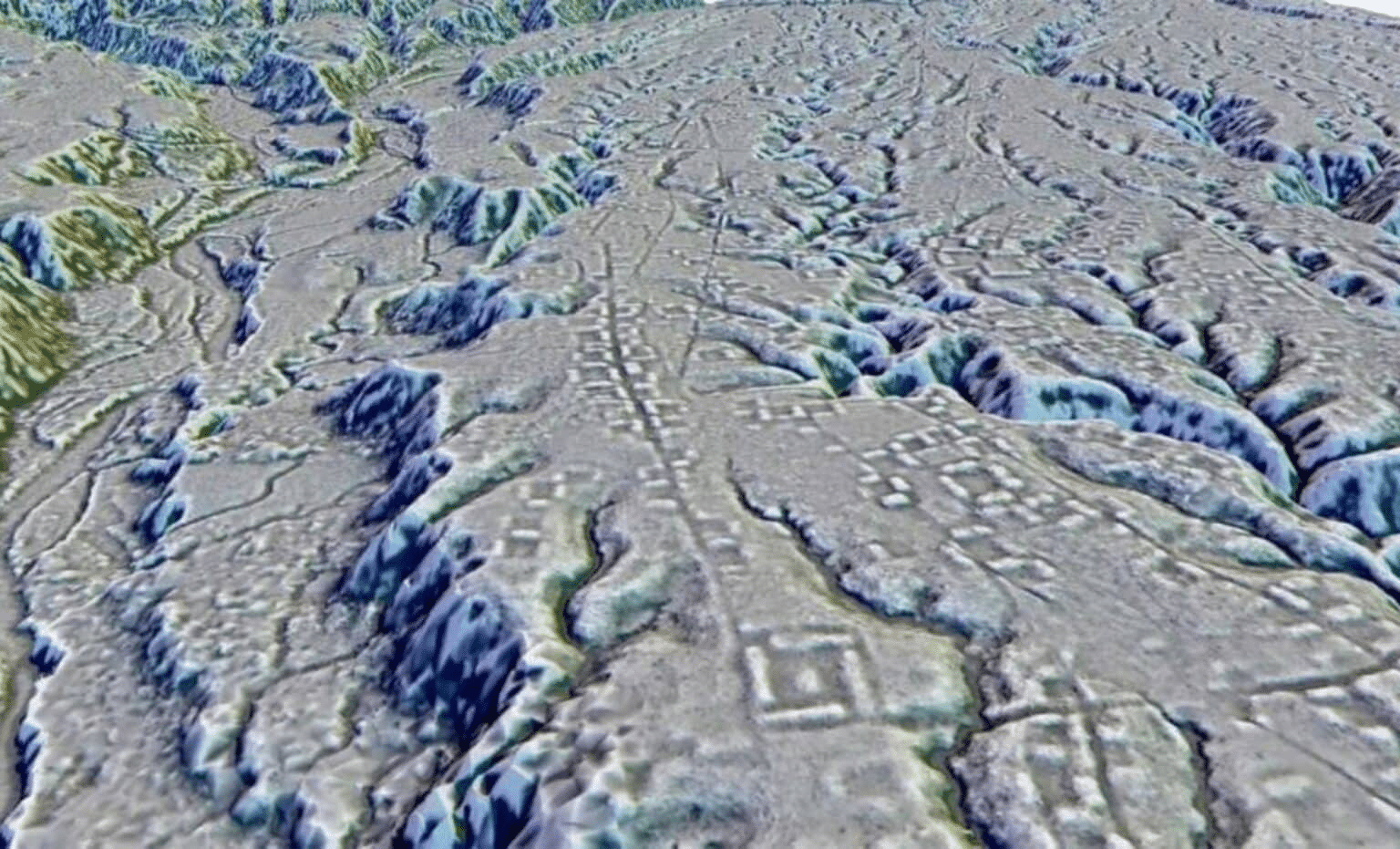
Central to this breakthrough is the application of Light Detection and Ranging (LiDAR), a remote sensing tool that penetrates the thick forest canopy to reveal hidden structures. In the Upano Valley, researchers mapped over 6,000 artificial mounds across fifteen distinct sites. Previously mistaken for natural landforms, these features are now identified as parts of a sophisticated urban network, reshaping our knowledge of Amazonian civilizations.

Stéphen Rostain emphasized the significance of this method, stating, “This site predates any we’ve previously found in the Amazon. Our Eurocentric perspective on civilization must evolve to recognize what truly defines culture and society.” His remarks underscore how LiDAR is unveiling long-hidden ancient settlements, challenging established views about early human development.
An Intricate Network of Urban Centers
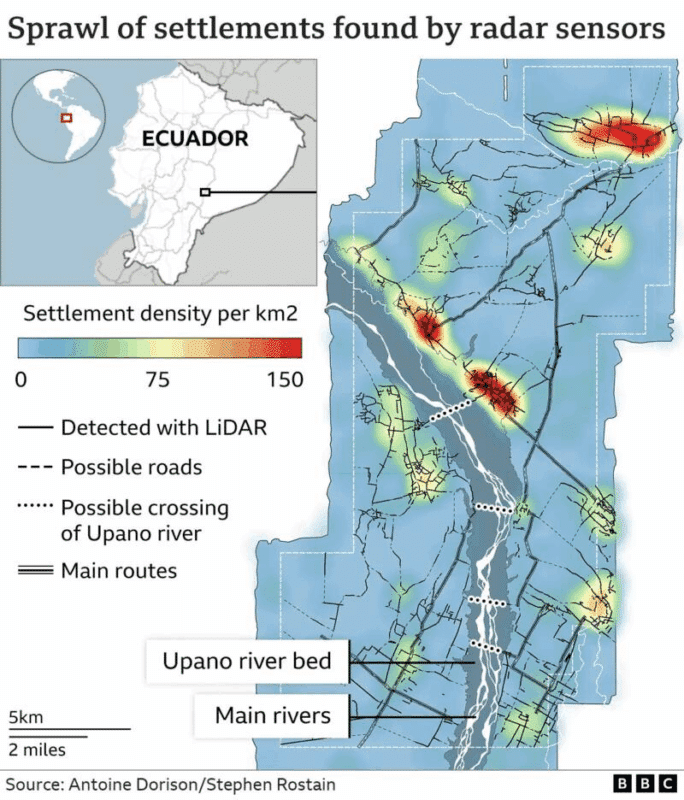
Beyond the mounds, the LiDAR scans revealed an elaborate network of roads interconnecting various urban hubs throughout the Upano Valley. This expansive road system includes sharp right angles and meticulously planned routes linking each settlement. Such engineering sophistication suggests these ancient societies were far more advanced than previously understood.
Co-author Antoine Dorison described the roads as “exceptionally well-designed, covering great distances with all communities interconnected. The presence of right angles is particularly notable.” These carefully constructed pathways indicate a highly organized society capable of complex infrastructure development.
The advanced transportation network also provides insight into how these urban societies managed trade, communication, and governance. It supports the idea that Amazonian populations were large and thriving, not isolated or primitive.
Transforming Our View of Amazonian Peoples
Until now, Amazonian cultures were often portrayed as small, nomadic groups inhabiting simple shelters. This new evidence tells a different story: LiDAR data reveals monumental architecture and urban infrastructure indicative of complex societal organization.
Antoine Dorison remarked, “This discovery reshapes our understanding of Amazonian peoples. Instead of small, rudimentary communities, it reveals highly developed urban societies.” This finding overturns long-held stereotypes of the Amazon as wilderness devoid of large civilizations, presenting it instead as a sophisticated cultural and technological landscape with dense population centers and advanced management systems.
- Categories:
- News











0 comments
Sign in to Comment