
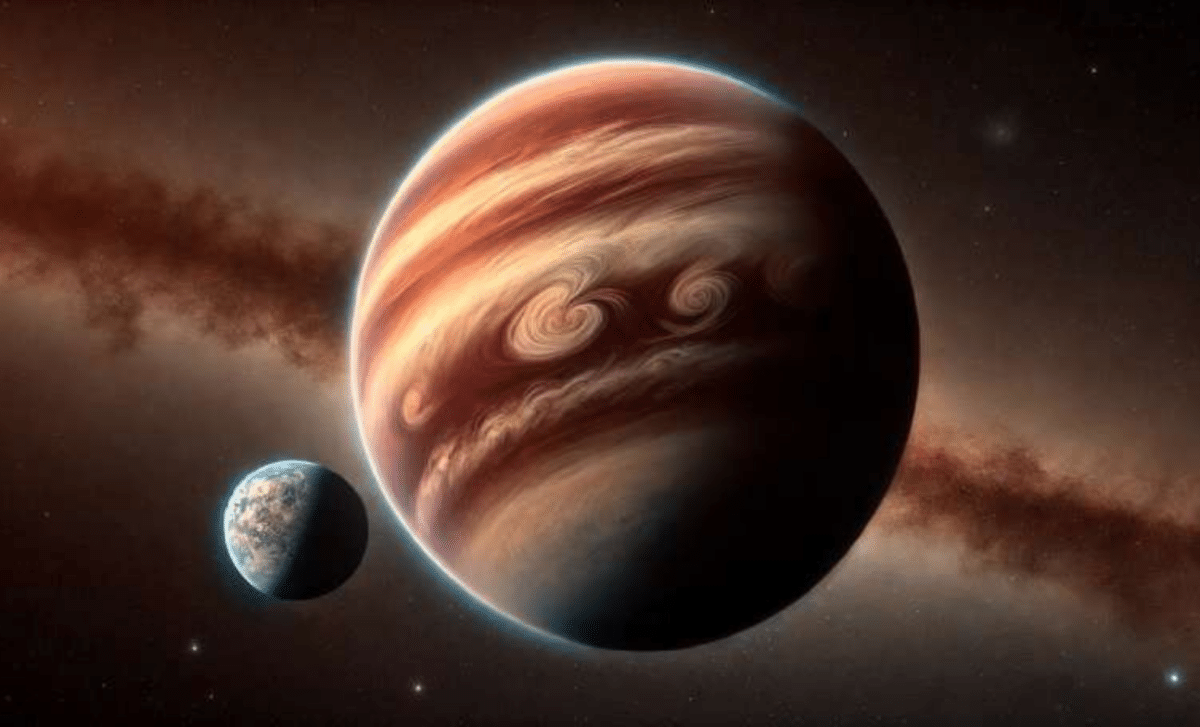
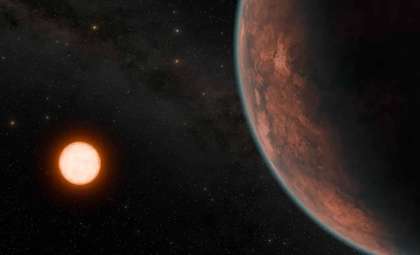
Moons orbiting rogue planets—planets wandering through space without a host star—may seem unlikely habitats for life. Yet, new research published in the Monthly Notices of the Royal Astronomical Society reveals that these moons could sustain life-friendly environments for billions of years. Powered by tidal heating and enveloped in thick hydrogen-rich atmospheres, they might preserve liquid water and maintain stability, even in the coldest, dark regions far from any star. This insight dramatically widens our understanding of where life could exist in the cosmos.
Tidal Forces: Generating Heat to Preserve Oceans
While interstellar space is frigid and seemingly inhospitable, the research team found that tidal heating—caused by the elliptical orbits of moons around their rogue planets—can generate enough warmth to keep subsurface oceans from freezing solid. Free-floating planets are often tossed out of original solar systems, drifting through space without stellar warmth. However, gravitational interactions between these planets and their moons cause continual flexing of the moons’ interiors, producing friction and heat. This mechanism may provide the necessary warmth to maintain liquid water, a critical ingredient for life as known on Earth.
Unlike Earth, whose oceans are kept liquid by sunlight, these moons rely on internal heating rather than external energy from stars. This phenomenon indicates that life-supporting habitats could exist well beyond traditional star-bound habitable zones, raising the possibility of life in some of the coldest corners of the galaxy.

Hydrogen-Dense Atmospheres: Trapping Heat in Harsh Conditions
Another essential element contributing to habitability is the composition of these moons’ atmospheres. On Earth, greenhouse gases like carbon dioxide trap heat, but in the extreme cold of free-floating systems, CO2 would condense and lose its greenhouse properties. Instead, the scientists investigated the role of molecular hydrogen, which remains gaseous at very low temperatures and can effectively trap heat under high pressure.
Though hydrogen is transparent to infrared radiation in normal conditions, it exhibits collision-induced absorption in dense atmospheres. Colliding hydrogen molecules temporarily form complexes that capture and hold thermal radiation, creating an insulating layer that prevents heat from dissipating into space. This process, combined with tidal heating, enables these moons to sustain stable, warm enough environments for liquid water despite their freezing, starless surroundings.
These findings shift our perspective on atmospheric conditions necessary for life, highlighting hydrogen as a vital component for creating and maintaining habitable environments under extreme extraterrestrial conditions.
Links Between Hydrogen Atmospheres and Life’s Emergence
The study also reveals fascinating similarities between these distant moons and Earth’s primordial environment. The researchers propose that early Earth might have obtained significant hydrogen concentrations through asteroid impacts—processes that could similarly influence life-supporting chemistry on exomoons. “Working with Prof. Braun’s team helped us see that life’s birthplace doesn’t always require a sun,” says David Dahlbüdding, the study’s lead author from LMU. “We identified a clear connection between these moons and early Earth conditions, where hydrogen-rich environments created by asteroid impacts may have fostered life’s origins.”
This parallel suggests life could arise in settings independent of sunlight, with hydrogen playing a crucial role in molecular complexity needed for living systems. Such moons might not only shelter liquid water but also provide a nurturing chemical foundation for the emergence of life, offering exciting new possibilities in astrobiology.
Exomoons in the Cosmic Dark: Expanding the Realm of Habitability
An astonishing implication of this research is that exomoons orbiting rogue planets could host stable, life-friendly habitats in the isolated, pitch-black regions of space. Studies estimate that free-floating planets may be as numerous as stars in the Milky Way. This study demonstrates that moons of these nomadic planets can remain habitable for billions of years, potentially long enough to develop complex life. Tidal heating combined with hydrogen-rich atmospheres generates the conditions for life even without any stellar energy.
This challenges conventional wisdom that life-supporting environments must exist within a star’s habitable zone. The existence of such moons opens vast new frontiers for astrobiological exploration, greatly expanding the horizons for where humanity might search for signs of life beyond Earth.
Revolutionizing the Hunt for Extraterrestrial Life
The implications of this work are transformative for extraterrestrial life research. By identifying exomoons around rogue planets as long-term habitable environments, scientists now have a broader array of targets to consider in the quest to find life. These moons, buffered by hydrogen atmospheres and warmed internally, could harbor life in some of the darkest, most distant reaches of the galaxy.
As future telescopes and detection methods improve, identifying these elusive free-floating planets and their moons may become feasible, potentially leading to groundbreaking discoveries. This new understanding profoundly shifts the scope of astrobiology, suggesting life could flourish in more diverse and unexpected settings than previously imagined.
- Categories:
- News



0 comments
Sign in to Comment