
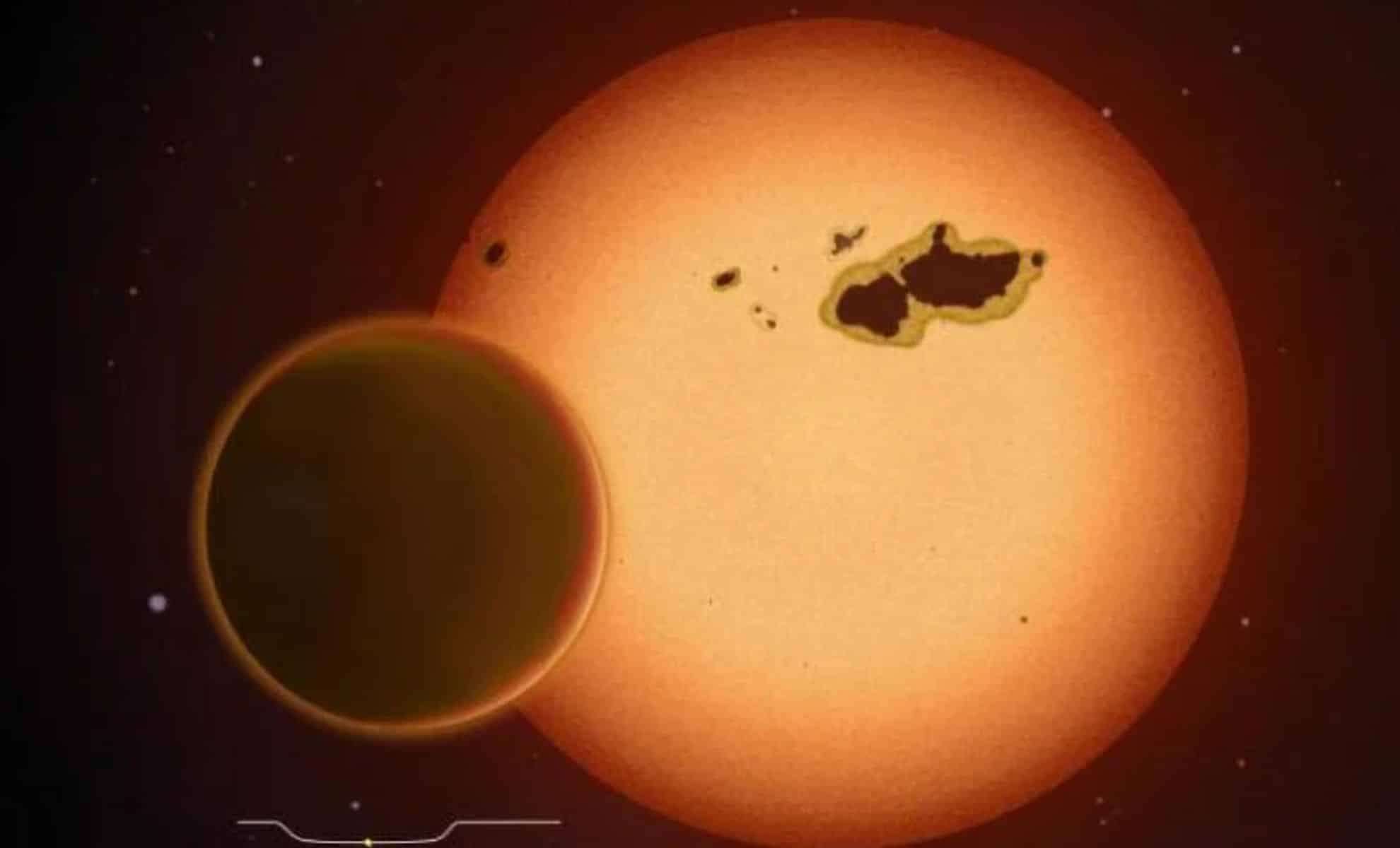
Scientists have announced a remarkable find that could greatly influence the quest to identify life-supporting planets beyond our solar system. The spotlight is on Kepler-725c, a super-Earth orbiting within the habitable zone of a star similar to our Sun, known as Kepler-725. This finding stands out due to the innovative application of the Transit Timing Variation (TTV) technique, which made it possible to detect this planet despite its extended orbit and the fact that it does not transit its star from our point of view. The results, published in the journal Nature Astronomy , open fresh pathways for astronomers pursuing a true Earth analogue.
A New Era of Exoplanet Discovery Enabled by TTV
The hunt for Earth-like planets has largely depended on methods such as the transit approach and radial velocity (RV) observations. While effective at identifying smaller, habitable zone planets, these methods face challenges, especially with planets that have lengthy orbital periods or low mass. Transits require an almost perfect alignment between the planet’s orbit and the observer, a condition seldom met by distant planets. Radial velocity measurements demand extremely sensitive instruments, making detection of faint planetary influences difficult.
A breakthrough was achieved by employing TTV, which detects shifts in a planet’s transit timing caused by gravitational pulls from neighboring celestial bodies. This enabled the identification of Kepler-725c, a super-Earth roughly ten times Earth's mass, whose orbit is not observable through conventional detection methods. The team analyzed timing variations of the nearby gas giant Kepler-725b to infer the presence of this elusive planet, showcasing TTV’s capacity to discover hidden worlds within complex planetary systems.

Assessing the Habitability of Kepler-725c
Kepler-725c lies within its star’s habitable zone, receiving about 1.4 times the solar energy Earth does. This positioning suggests it could harbor life, assuming it has a supportive atmosphere and liquid water. Its mass and orbital period of 207.5 days categorize it as a super-Earth—larger than Earth but smaller than ice giants such as Uranus and Neptune—capturing the imagination of researchers focused on habitability.
The discovery ignites interest because being in the habitable zone implies that liquid water might exist on its surface, a crucial element for life. Though further investigation is essential to determine its atmosphere and exact composition, Kepler-725c ranks among the prime candidates for detailed exploration in the quest for potentially life-bearing worlds.
Transforming Exoplanet Exploration Through Transit Timing Variation
The TTV method represents a transformative advancement in exoplanet detection. Unlike traditional approaches that rely on spotting dips in starlight or subtle stellar motion shifts, TTV can unveil planets that do not transit their stars relative to Earth. By studying the gravitational interplay within planetary systems, astronomers can identify smaller or longer-orbiting planets previously undetectable.
TTV is poised to greatly benefit upcoming space missions like the European PLATO mission and China’s ET (Earth 2.0) mission, both focused on cataloging Earth-analog planets within habitable zones. The capability to spot non-transiting worlds will likely expand the roster of promising candidates, accelerating efforts to answer the persistent question: “Is there life elsewhere in the universe?”
Kepler-725c’s Importance in the Pursuit of Earth-Like Worlds
The concept of “Earth 2.0” refers to planets resembling Earth in size, make-up, and potential habitability. Kepler-725c fits this description well due to its mass and suitable location within the habitable zone. While it remains to be studied in greater depth, this planet enriches the collection of promising locations for future astrobiological investigation.
Thanks to advanced detection strategies such as TTV, astronomers are progressing closer than ever to discovering a true Earth analogue. Such findings have profound implications beyond pure scientific interest, potentially informing future interstellar exploration or colonization. The ongoing search for worlds capable of sustaining life marks one of the most thrilling scientific frontiers today, with each new discovery edging us nearer to uncovering whether we are alone in the cosmos.
- Categories:
- News








0 comments
Sign in to Comment