
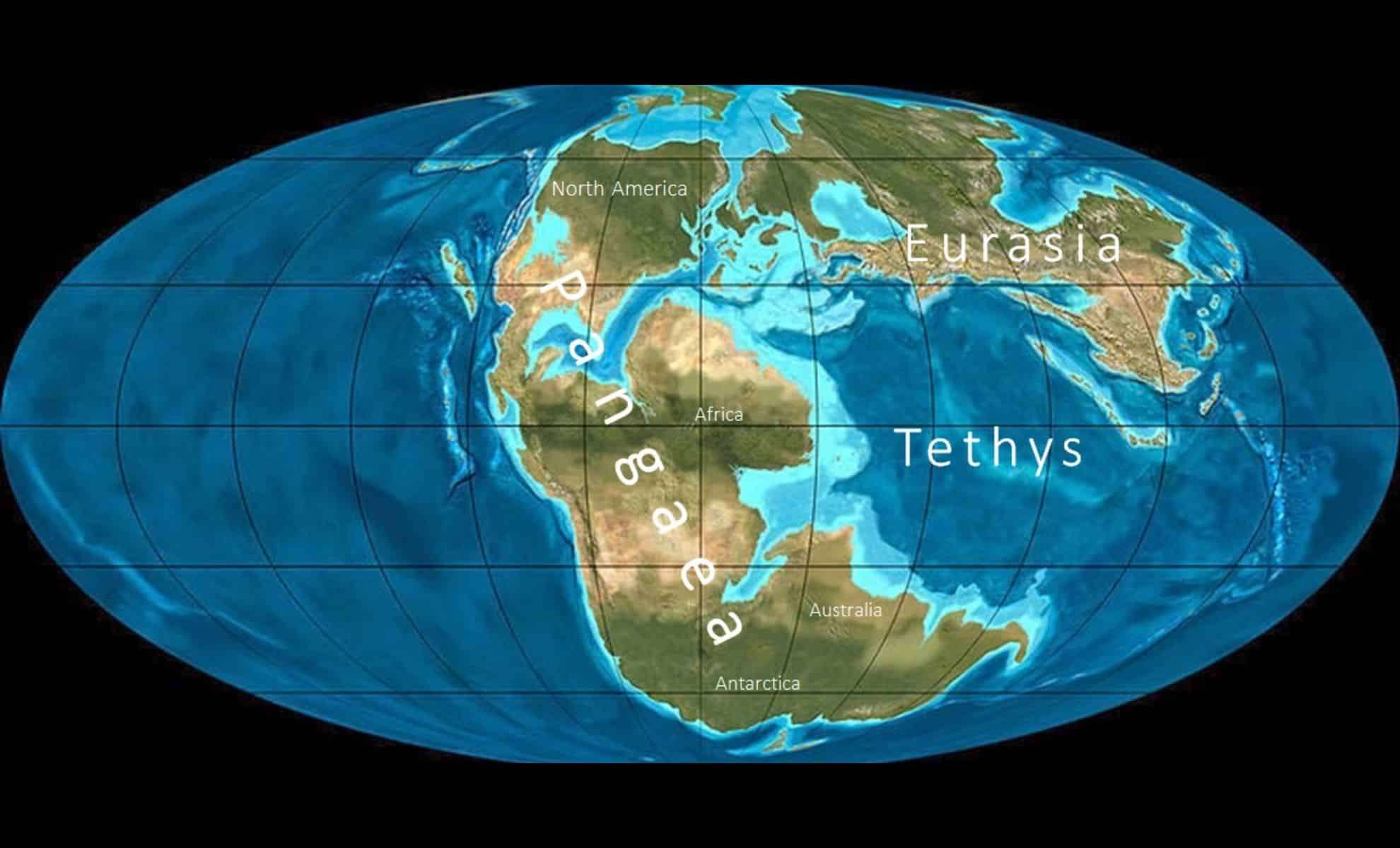
The disappearance of the ancient Tethys Seaway profoundly influenced Earth’s geological and biological history. Over millions of years, tectonic movements altered the planet’s layout, causing this ocean to vanish and triggering shifts in climate, the emergence of new deserts, and pathways for animal and human migration. These monumental changes, driven by the drifting of continental plates, transformed ecosystems, species development, and today's continental arrangement. Recent research detailed in Nature Reviews Earth & Environment delves deeper into how this vanished ocean shaped the trajectory of our planet.
The Tethys Seaway: An Ancient Oceanic Corridor
Once a vast stretch of water connecting the Atlantic Ocean to the Indo-Pacific, the Tethys Seaway played a key role in Earth’s past geography. Beginning in the Late Cretaceous around 100 million years ago, tectonic shifts prompted continents to move, gradually closing this ocean. As Africa converged with Eurasia, the Tethys Seaway steadily diminished, initiating tectonic collisions that transformed landscapes, climates, and life forms.
This transformation unfolded over millions of years, with landmasses such as India, Arabia, and Adria drifting toward Eurasia and remodeling Earth’s topography. The shrinking seaway disrupted global ocean currents and weather systems, triggering widespread environmental changes.

Emergence of Land Bridges and Migration Routes
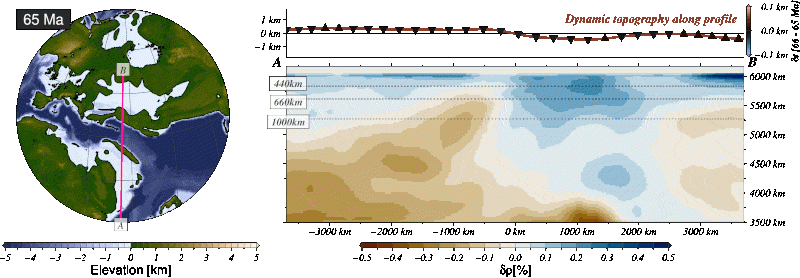
By roughly 30 million years ago, intense mantle activity uplifted regions beneath East Africa and Arabia. This geological uplift produced the Gomphotherium Land Bridge across today’s Arabian Peninsula and Anatolia, facilitating animal migrations. Species such as elephants, giraffes, and cheetahs expanded from Africa into Asia. Notably, this corridor also permitted early human ancestors to traverse new routes, influencing evolutionary pathways.
The interplay of land uplift and the seaway’s closure generated novel ecogeographic dynamics. Geoscientist Thorsten Becker from the University of Texas explained the connections between these geologic processes and life’s evolution: “How did our planet change, in general? What are the connections between life and tectonics?” These shifts in continents and corridors carried long-term impacts on life’s history, including human origins.
Climate Evolution and Desert Formation
The Tethys Seaway’s closure spurred major climate upheavals beyond migration pathways. Rising land and modified ocean currents led to drastic environmental shifts. For example, North Africa, once verdant and fertile, gradually transformed into the vast Sahara Desert. Changes in ocean circulation, driven by the uplift of the Arabian Peninsula, rerouted warm currents and elevated regional temperatures, fostering arid conditions.
Concurrently, the Asian monsoon system intensified as tectonic uplift increased, producing heavier seasonal rains in areas like Southeast Asia. These tectonically driven climate changes reshaped ecosystems worldwide and altered global biodiversity patterns.
From Ancient Ocean to Modern Geography
The Tethys Seaway’s disappearance ultimately gave rise to present-day bodies of water such as the Mediterranean Sea and the Arabian Sea. The Neotethys Ocean, spanning the divide between Indian and Atlantic Oceans, was permanently closed, affecting how heat and moisture circulates on Earth. The collision of Africa and Eurasia forged towering mountain ranges including the Alps and Himalayas, sculpted by these ongoing tectonic forces.
This tectonic convergence continues today, keeping the region highly seismically active. Earthquakes and rising mountain peaks reveal the Earth's deep and dynamic internal forces that persistently mold the planet’s surface.
- Categories:
- News






0 comments
Sign in to Comment