
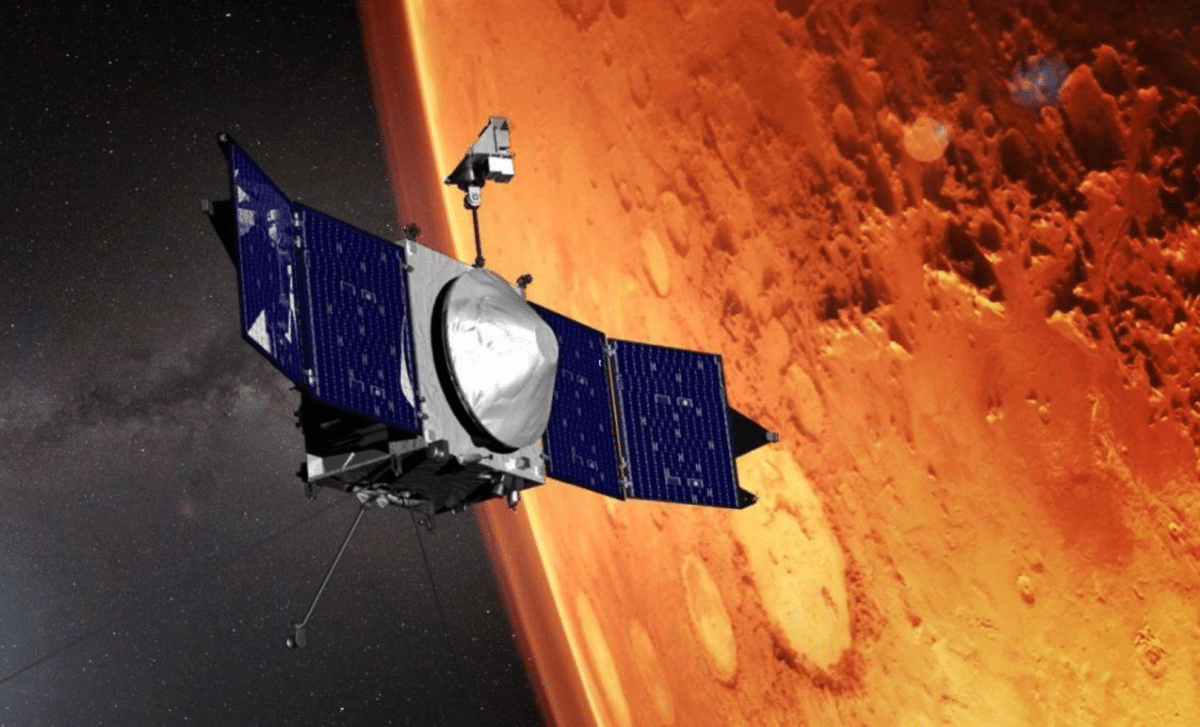
Since arriving in orbit around Mars in 2014, NASA’s MAVEN spacecraft has been a vital tool for studying the Red Planet’s atmosphere. On December 6, 2025, however, it unexpectedly ceased communications while passing behind Mars, prompting an urgent investigation as the signal has yet to be restored, despite previously normal operations.
What Led to MAVEN’s Sudden Loss of Communication?
As a cornerstone in Mars exploration, MAVEN has offered invaluable data since its launch in 2013. Designed to analyze how Mars’ atmosphere changed over billions of years, the spacecraft has helped explain the planet’s shift from a potentially habitable world to its current arid state. On December 6, while executing a routine orbital pass behind the planet, MAVEN went silent and has not reconnected with mission controllers since.
Normally, being occluded by Mars causes temporary signal loss, but the subsequent failure to regain communication is puzzling experts. According to NASA’s update,

“The spacecraft and operations teams are investigating the anomaly to address the situation. More information will be shared once it becomes available.”
The Crucial Contributions of MAVEN’s Research
MAVEN’s mission focuses on unraveling the mysteries behind atmospheric escape on Mars, investigating how solar wind strips away gases and alters the planet’s environment. These studies have been essential to understanding Mars’ water loss and the disappearance of conditions favorable for life.
Beyond atmospheric measurements, MAVEN uncovered an invisible magnetic tail trailing Mars, reshaping knowledge about the planet’s interaction with solar particles. The spacecraft also revealed how dust storms elevate water vapor, which is then carried away by solar winds, deepening insights into Mars’ climate dynamics and long-term habitability.
MAVEN’s Operational Role in Mars Communications
MAVEN is also integral to NASA’s Mars network, acting as a relay station that facilitates data transfer between Earth and surface missions like Curiosity and Perseverance. This function ensures ongoing scientific and navigational data flow, making communication interruptions a significant concern for Mars exploration continuity.
NASA’s teams are exploring enhanced technologies and protocols to avoid or mitigate future communication disruptions in deep space missions, underscoring how crucial reliable contact is for managing spacecraft millions of miles away. Losing MAVEN’s data link highlights the complexities of maintaining long-term operations in space.

Possible Causes Behind the Communication Disruption
Several factors could explain MAVEN’s sudden silence. The spacecraft endures extreme space conditions including intense radiation, temperature swings, and dust storms, any of which might impact onboard systems. Issues such as antenna malfunction, power glitches, or solar wind interference remain plausible, but no definitive cause has yet emerged.
NASA’s engineering teams are leveraging advanced diagnostic tools and their prior mission experience to identify the fault. Although resolving the anomaly may take time, their efforts will provide critical insights into managing risks inherent in planetary exploration.
Lessons for Future Missions to Mars
The MAVEN communication failure highlights the unpredictable hurdles of exploring another world and points to the need for enhanced resilience in space mission design. As NASA looks toward establishing sustained human presence on Mars, ensuring robust, fail-safe communication systems will be key to mission success.
In addressing this incident, NASA can refine strategies to safeguard future missions, boosting capabilities to troubleshoot and maintain contact even in the challenging Martian environment.
- Categories:
- News









0 comments
Sign in to Comment