
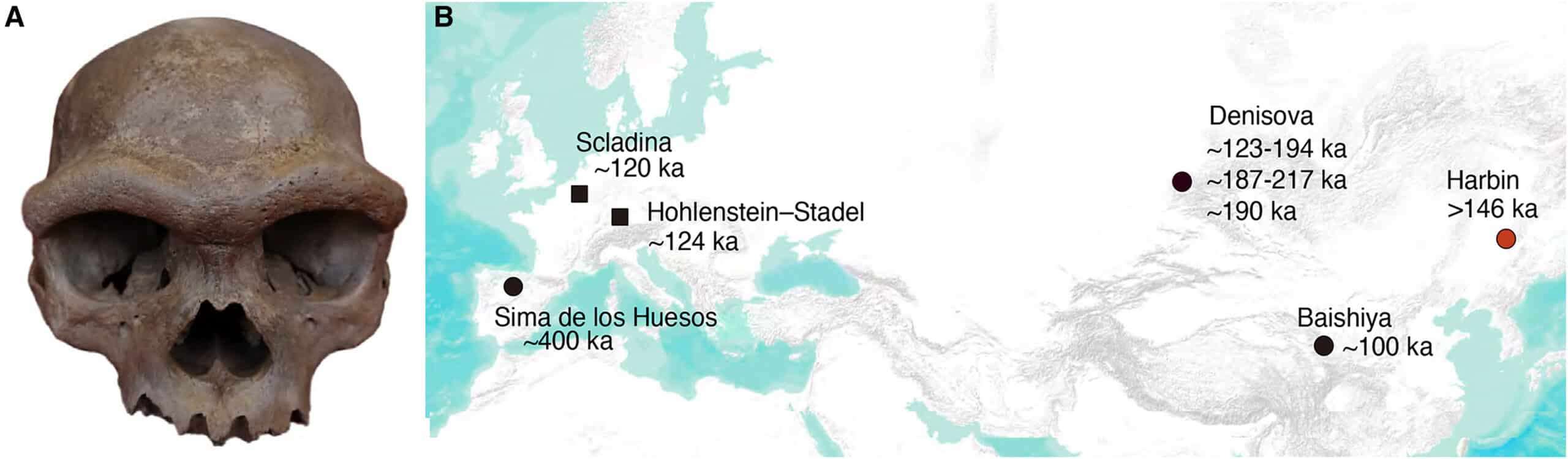
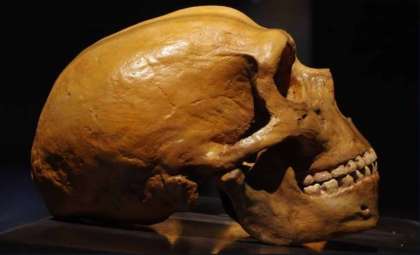
For decades, a 146,000-year-old skull known as the dragon man has captivated researchers. Found in the 1930s in Harbin, China, it was initially thought to represent a previously unidentified ancient human species. However, new research published in Science and Cell proposes that it might actually be linked to the Denisovans, a little-understood group of ancient humans known chiefly from limited remains.
The Story Behind the ‘Dragon Man’ Skull
The skull, which was discovered accidentally by a construction worker during the 1930s, remained concealed inside a well for many years until it was handed over to Hebei GEO University in 2018. This extraordinary specimen sparked considerable interest and was initially classified as a possible new species, Homo longi, due to its notable characteristics, such as pronounced brow ridges and an elongated back part of the skull. Early interpretations suggested it was distinct from both Neanderthals and modern humans.
Yet, this identification was mainly based on the skull's shape. Although morphological analysis has been instrumental in species identification, it can sometimes lead to misinterpretations because physical differences may reflect environmental effects or lifestyle variations rather than distinct species differences. As it turns out, this skull's identity had been misunderstood.

Advances in Ancient Biomolecular Techniques
Recent investigations led by paleontologist Qiaomei Fu at the Chinese Academy of Sciences have transformed our understanding of the dragon man skull. The team applied state-of-the-art methods to retrieve molecular evidence from the fossil, including protein sequences and mitochondrial DNA. These innovative approaches have been crucial in clarifying the skull’s true lineage, revealing its affiliation with the Denisovans, a mysterious group of archaic humans spread across parts of Asia and Europe.
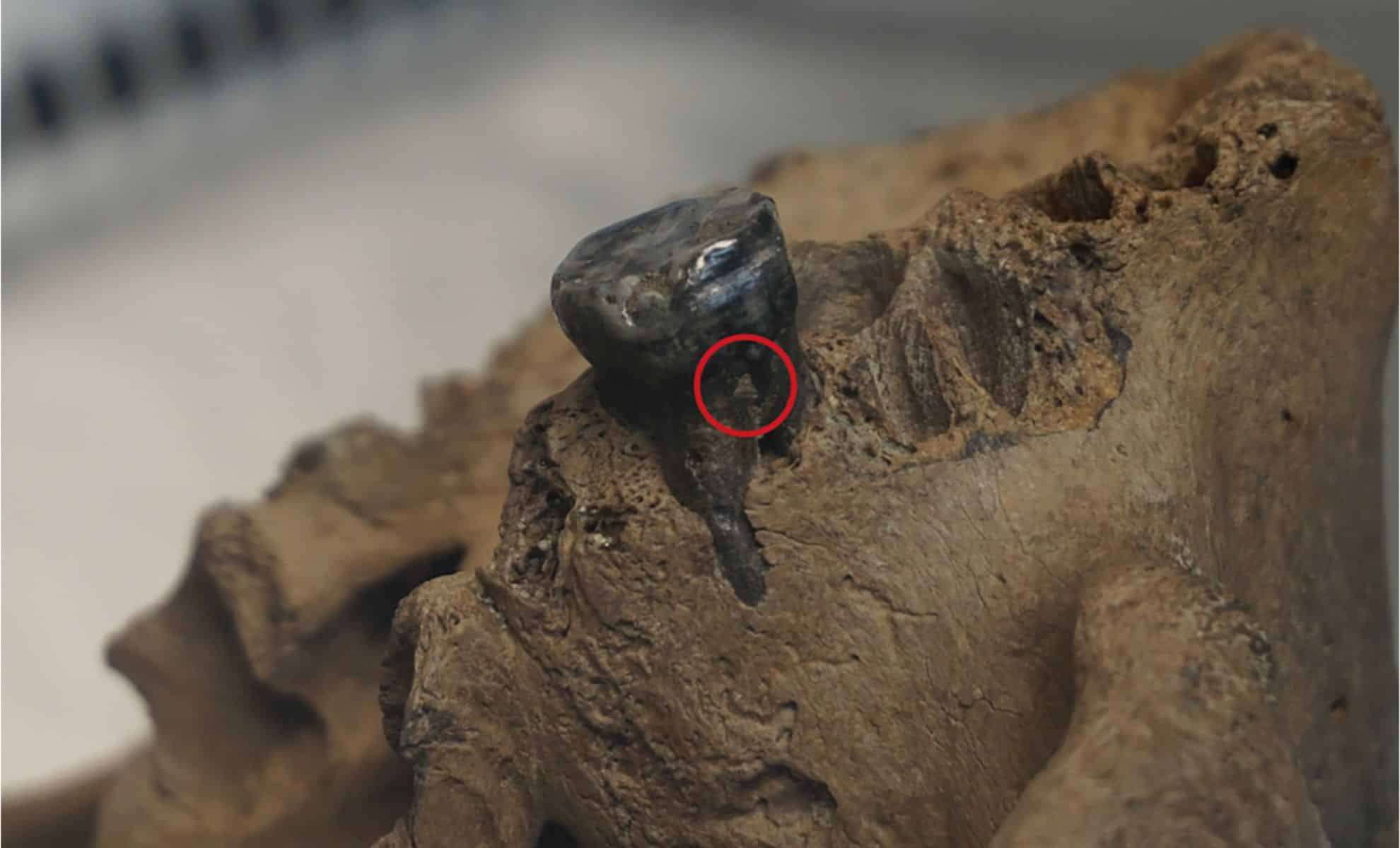
For the first time, researchers managed to extract mitochondrial DNA from plaque on the dragon man’s teeth, an exceptional achievement given the age of the specimen and the fragility of ancient genetic material. Additionally, protein sequences were successfully obtained from the petrous bone of the skull, one of the densest skeletal elements.
Redefining Denisovan Evolutionary Insights
The evidence suggests that the dragon man is far from an isolated find; rather, it belongs to the wider Denisovan lineage. Prior to this revelation, Denisovans were mostly known through sparse fossil fragments such as teeth and jaw pieces, providing limited insight into their full anatomy or evolutionary role.
This study demonstrates that the dragon man shares mitochondrial DNA with several other Denisovan individuals. Protein analysis further confirmed Denisovan traits, with some protein fragments matching known sequences from this group. This discovery marks the first discovery of a nearly complete Denisovan skull, giving scientists an unprecedented glimpse into this enigmatic population.
Bridging Gaps in Human Ancestry
While some limitations remain in the employed methodologies, the accumulated molecular evidence strongly supports the classification of the dragon man as a Denisovan. This is a notable milestone, delivering the first fully intact skull from this ancient human branch, which paleoanthropologists have long sought.
Hidden in obscurity for nearly a century, the dragon man skull may indeed represent the pivotal piece previously missing from the puzzle of human evolution.
- Categories:
- News






0 comments
Sign in to Comment