
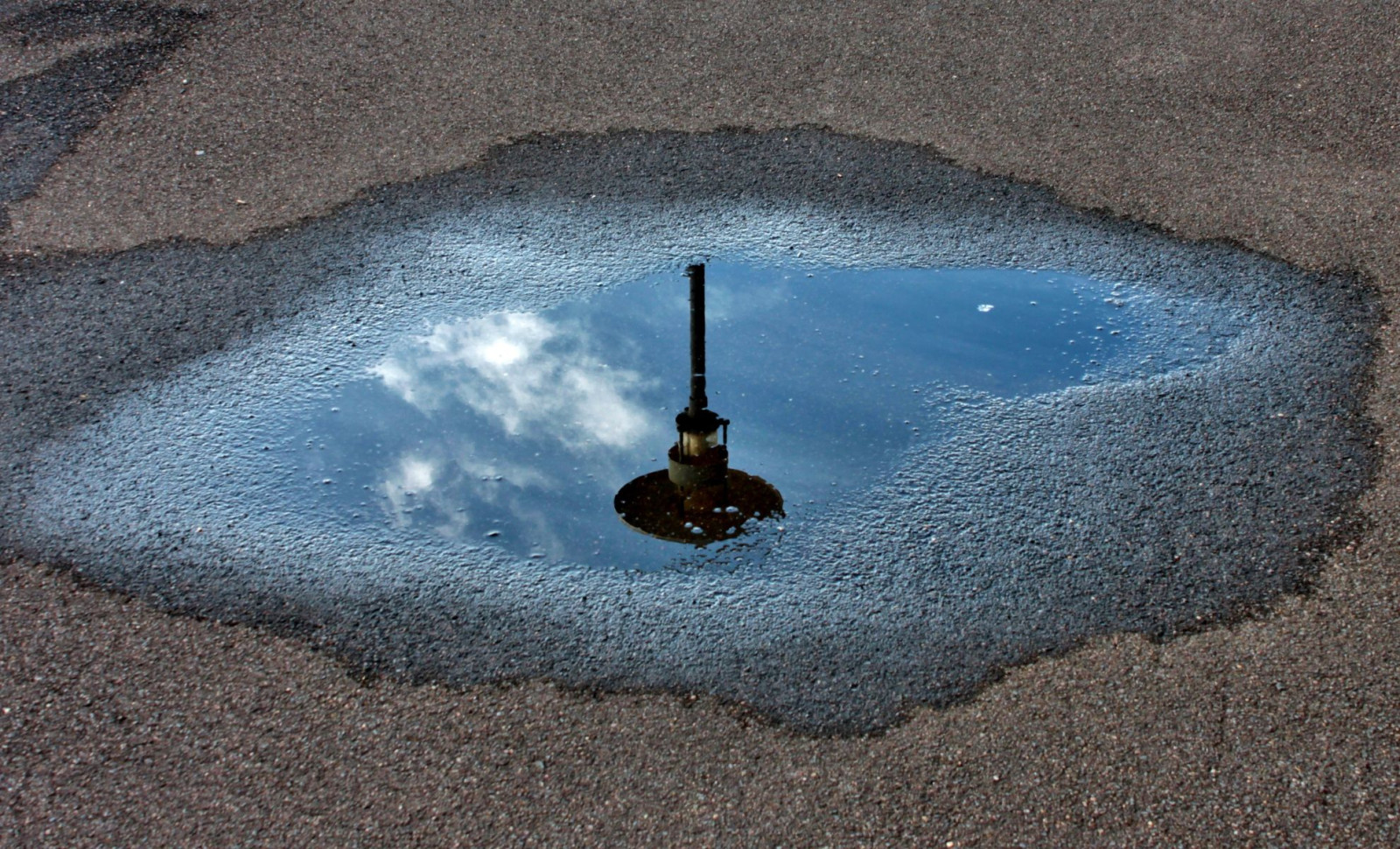
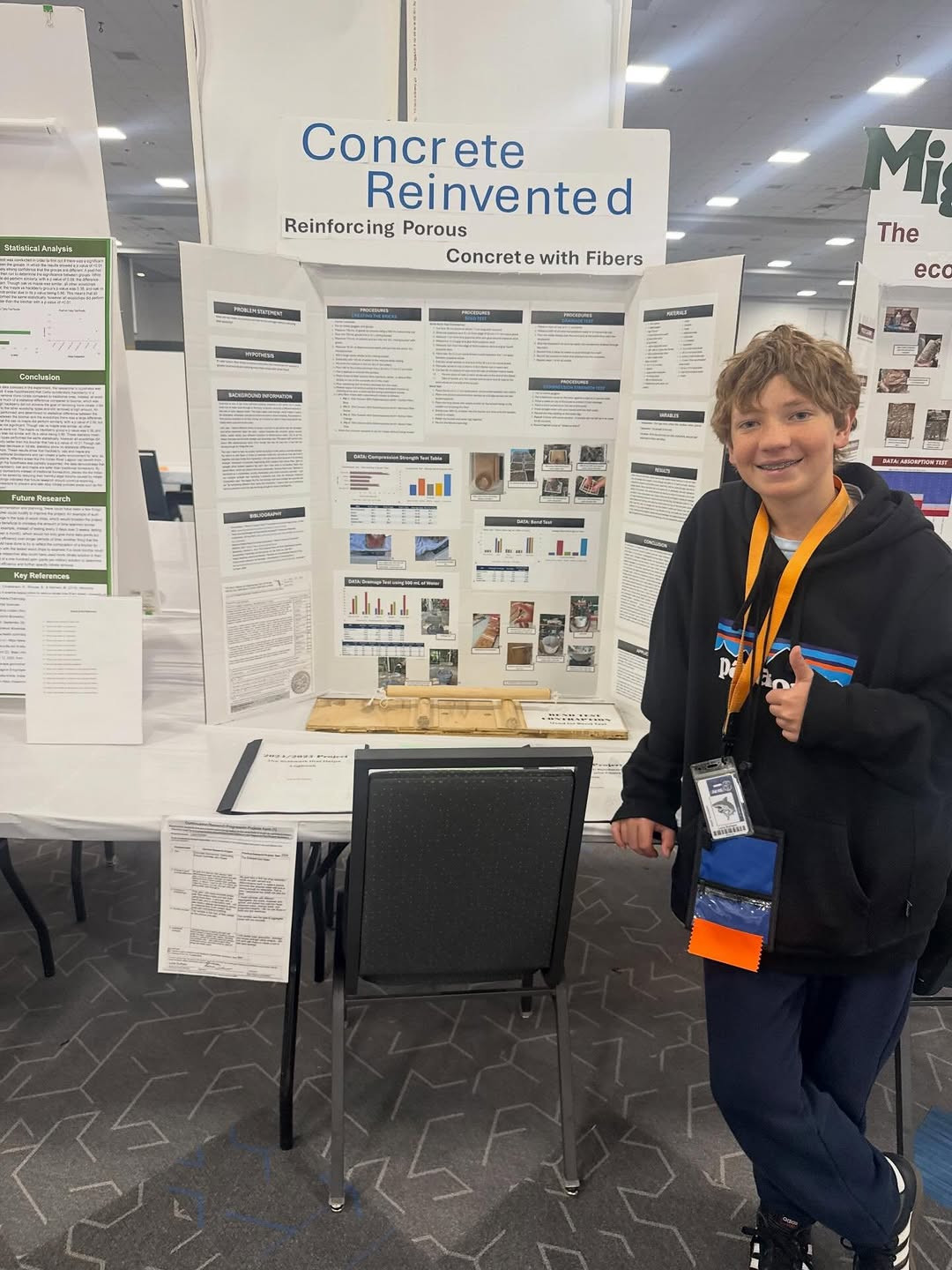
Inspired by flooding he witnessed on a Miami driveway, sixth grader Luca Durham set out to design a type of concrete that soaks up water instead of repelling it. Through trials with porous substances and repurposed waste, he crafted a novel concrete blend that secured him the prestigious Lemelson Early Inventor Prize at the South Florida Science and Engineering Fair.
According to a statement released by the Society for Science on September 29, 2025, Luca’s project sought to enhance porous concrete — a material intended to allow water flow but often hampered by clogging and fragility. His goal was to develop a durable, eco-conscious alternative by integrating sustainable additives that improve drainage and repurpose waste materials.
A Common Bathmat Inspired the Breakthrough
The journey began with a simple daily observation. When stormwater flooded a neighbor’s driveway and spilled onto the street, Luca questioned how sidewalks and driveways could be adapted to handle runoff better. His curiosity led to an encounter with an everyday household item that sparked a new idea.

As detailed by the Society for Science, Luca became fascinated by diatomaceous earth after seeing how quickly his stone bathmat absorbed water. He researched and discovered this material originates from fossilized algae and is prized for its absorbency.
“One day, after taking a shower, I stepped on my stone bathmat and noticed how fast it absorbed the water from my feet,” he explained. “It was kind of like a sponge, and I wanted to know what it was made from. I found out it was made from diatomaceous earth, which comes from tiny, fossilized algae.”
This observation fueled his idea to incorporate diatomaceous earth into concrete to boost water absorption without compromising strength. This concept shaped the next stage of his experiments.
“I wanted to find additives that could help concrete drain water but still be strong. I also looked for materials that were sustainable or things people usually throw away, because I wanted my project to help both people and the environment,” he added.
Experimenting With Shells, Charcoal, and Gravel
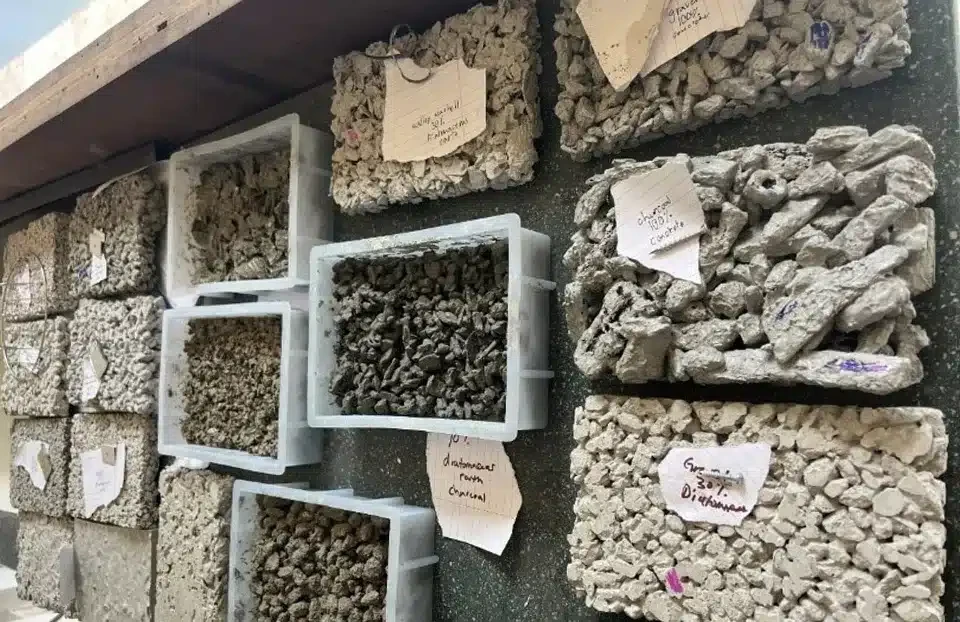
Luca proceeded to test various materials known for their different textures and traits. He selected crushed oyster shells and seashells since their shapes create tiny voids in the concrete, enabling better water movement. He also introduced charcoal due to its porous nature and filtering ability. Commonly used gravel was added for its known benefits in improving both concrete endurance and drainage.
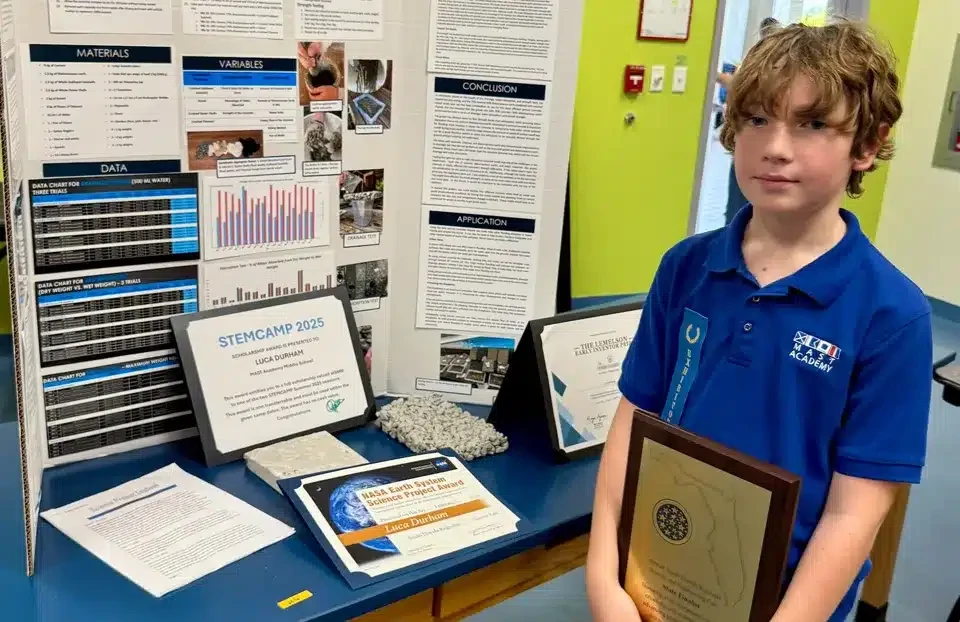
As described by his source, each mixture was evaluated for water permeability, absorption capacity, and structural strength. Though Luca initially expected a blend of 30% diatomaceous earth with 70% cement and shells to be optimal, the best-performing formula actually paired 30% diatomaceous earth with 70% cement and gravel.
“This project shows that using sustainable materials in concrete can help reduce flooding, improve water drainage and create a more environmentally friendly infrastructure.”
Learning Through Challenges
Not every attempt yielded success. Luca encountered problems such as improper cement-to-additive ratios and inconsistency caused by varying sizes of shell and charcoal fragments, which affected test reliability. Yet, he found the process rewarding, as it revealed how various substances influenced concrete performance.
“I loved seeing the science in action and figuring out which materials made the biggest difference,” Luca said, according to Society for Science. “But the best part was realizing that I might have created something no one has ever tried before.”
The aspiring inventor plans to enhance his mixture further by incorporating carbon fiber strips to increase load-bearing strength without sacrificing drainage.
“My dream is to create a sidewalk material that is strong, eco-friendly, and helps keep streets from flooding,” he concluded.
- Categories:
- Science




0 comments
Sign in to Comment