

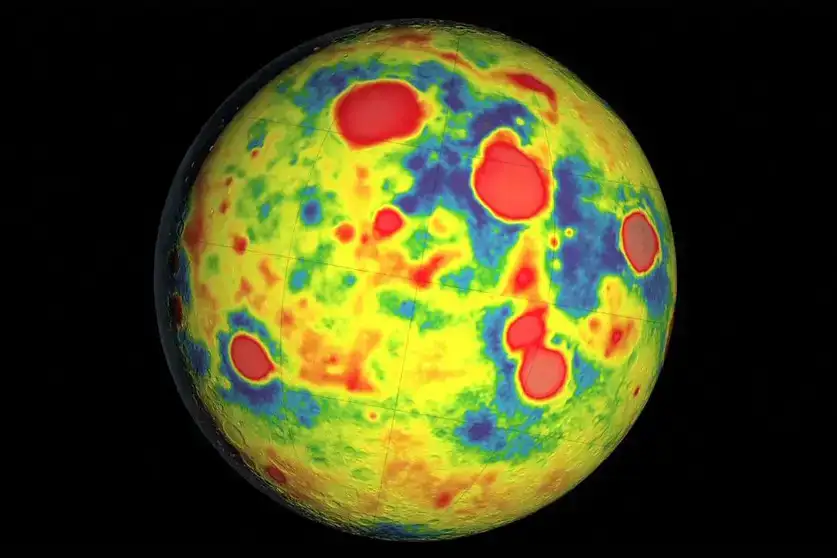
New findings published in Science Advances highlight a temperature disparity inside the moon, revealing that the hemisphere facing Earth is notably warmer than the opposite side. These insights emerged from NASA’s GRAIL mission data, which provided an exceptionally detailed gravitational map of the lunar surface.
Gravitational Data Uncovers Thermal Variations
NASA’s GRAIL (Gravity Recovery and Interior Laboratory) mission, conducted between 2011 and 2012, used a pair of orbiting spacecraft to detect minute shifts in the moon’s gravity. By observing the effect of Earth’s gravity on their trajectories, scientists were able to generate a precise model of lunar gravitational variations.
Research led by Ryan Park at NASA’s Jet Propulsion Laboratory focused on how Earth’s tidal forces cause deformation in the moon's structure. Their results showed the moon’s near side—the hemisphere locked toward Earth—is approximately 72 percent more flexible than expected under the assumption of an even internal temperature. This greater elasticity implies a warmer, softer interior beneath the near side, making it more affected by tidal stretching.

“Our study shows that the moon’s interior is not uniform: the side facing Earth – the nearside – is warmer and more geologically active deep down than the farside,” said Park, the lead author of the study.
Implications of the Lunar Temperature Contrast
The temperature imbalance corresponds with existing knowledge about the moon’s volcanic history and the uneven distribution of radioactive materials like uranium and thorium, which are more abundant near the surface on the Earth-facing side. Sean Solomon from Columbia University explained that this asymmetry supports theories of internal heating through radioactive decay and volcanic processes on the lunar near side.
The discovery prompts further questions regarding how the moon developed such a thermally uneven interior. One hypothesis is that massive impacts over billions of years disrupted its internal heat distribution and structure, resulting in the observed imbalance.
This research sheds light on the moon’s cooling and solidification timeline following its formation, portraying it as a dynamic, evolving body rather than a simple, uniform sphere.
Upcoming Seismic Missions to Enhance Lunar Insight
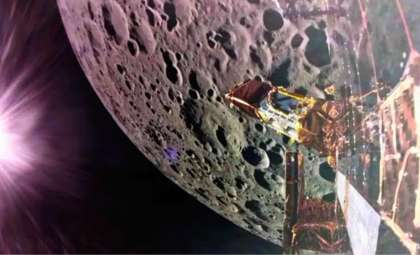
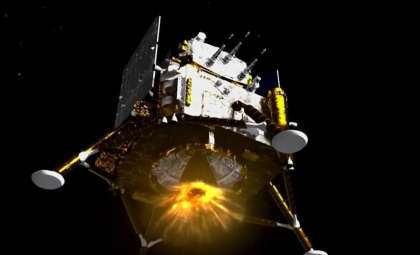
NASA plans to expand knowledge of the moon’s internal makeup by placing seismometers on its far side. The forthcoming Farside Seismic Suite mission, slated for a 2026 launch, will record moonquakes and deliver direct measurements of temperature and structure beneath the lunar surface.
When combined with GRAIL’s gravitational findings, these seismic observations will clarify the extent and origins of thermal variations inside the moon. This work promises to enrich our understanding of lunar geology and the geological evolution of rocky planets throughout the solar system.
This breakthrough advances lunar science by revealing the complex, uneven character of our satellite’s interior, with significant consequences for planetary science and the study of Earth’s nearest neighbor.
- Categories:
- Space







0 comments
Sign in to Comment