
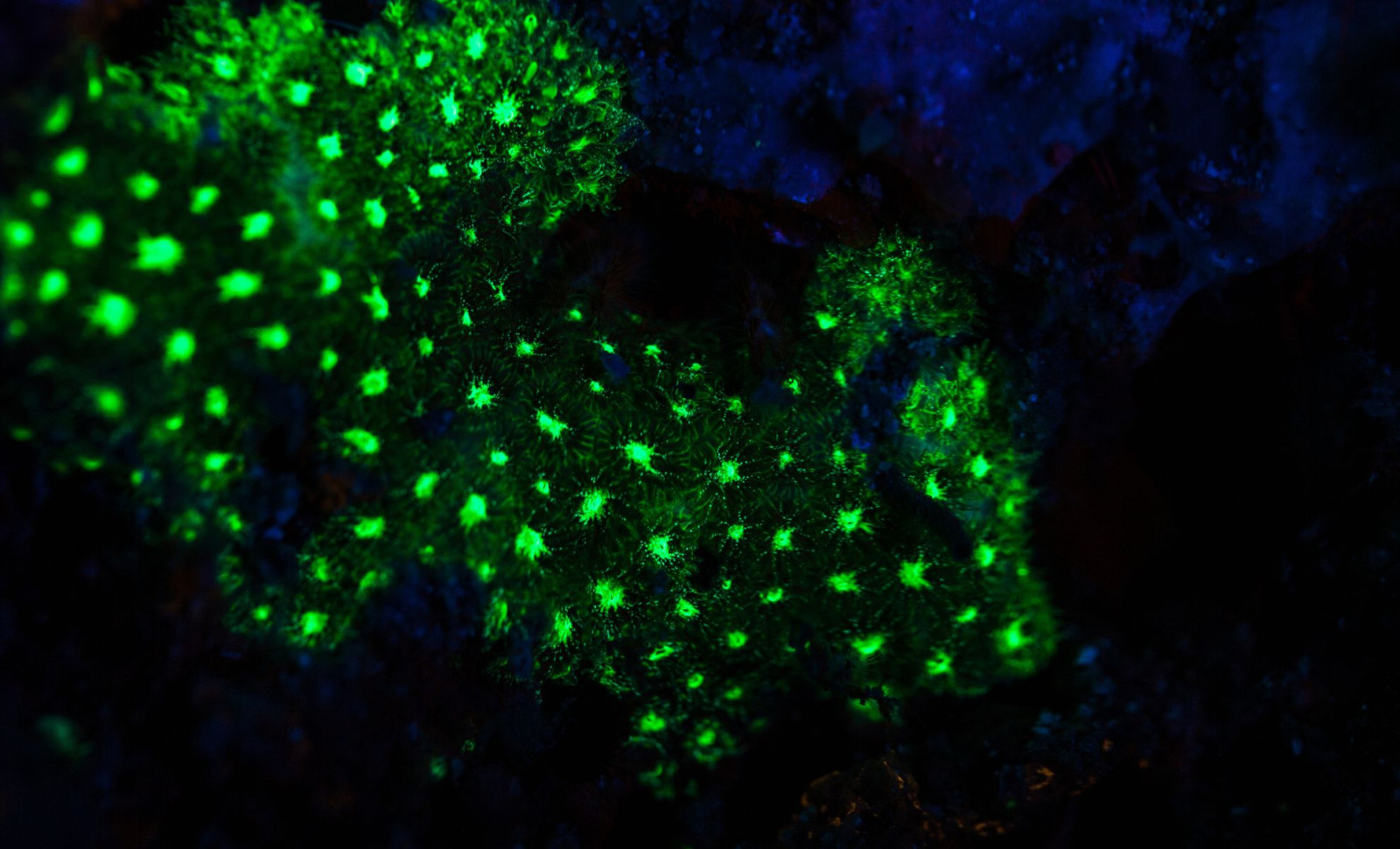
At nearly 400 meters deep beneath the ocean surface, an underwater drone exploring a submerged cave recorded a fleeting green illumination. This rare light emission led scientists to identify a previously unknown type of bioluminescent coral. Named Corallizoanthus aureus, this coral only emits light when disturbed, a behavior that researchers believe functions as a defensive mechanism.
The breakthrough discovery occurred during a May 2024 mission by JAMSTEC (Japan Agency for Marine-Earth Science and Technology) near Minamidaito Island. The findings have been officially published in Royal Society Open Science.
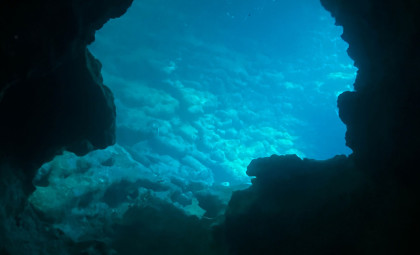
Exploration of deep-sea caves is notoriously challenging due to their tight entrances, steep interiors, and limited visibility, leaving many such ecosystems largely unmapped. Scientists have suspected these isolated habitats could harbor unusual species.

This coral stands out because unlike many bioluminescent marine creatures, it does not glow continuously. Instead, its light activates only when agitated, prompting questions about the biological purpose of this reaction.
Robotic Submersible Uncovers the Luminescent Coral
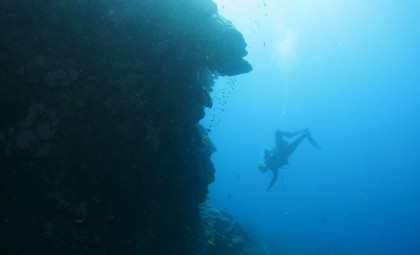
Researchers targeted submerged limestone caves near Minamidaito Island, a secluded location roughly 360 kilometers east of Okinawa in the Pacific Ocean. They deployed a remotely operated vehicle designed to navigate steep underwater walls and restricted spaces that are inaccessible to human divers.
At a depth of 385 meters, the drone discovered precious coral colonies belonging to the genus Pleurocorallium. Attached to these were groups of small yellow polyps that puzzled the research team.
The pivotal moment, described in the report in Royal Society Open Science, occurred when the robotic arm touched the coral colony, triggering a swift but brief green light flash.
The glow was localized only to the tentacles, leaving the connecting tissue dark. This intriguing light display encouraged researchers to study the specimen further, leading to its classification as a new species: Corallizoanthus aureus.
Distinctive Features Define This New Species
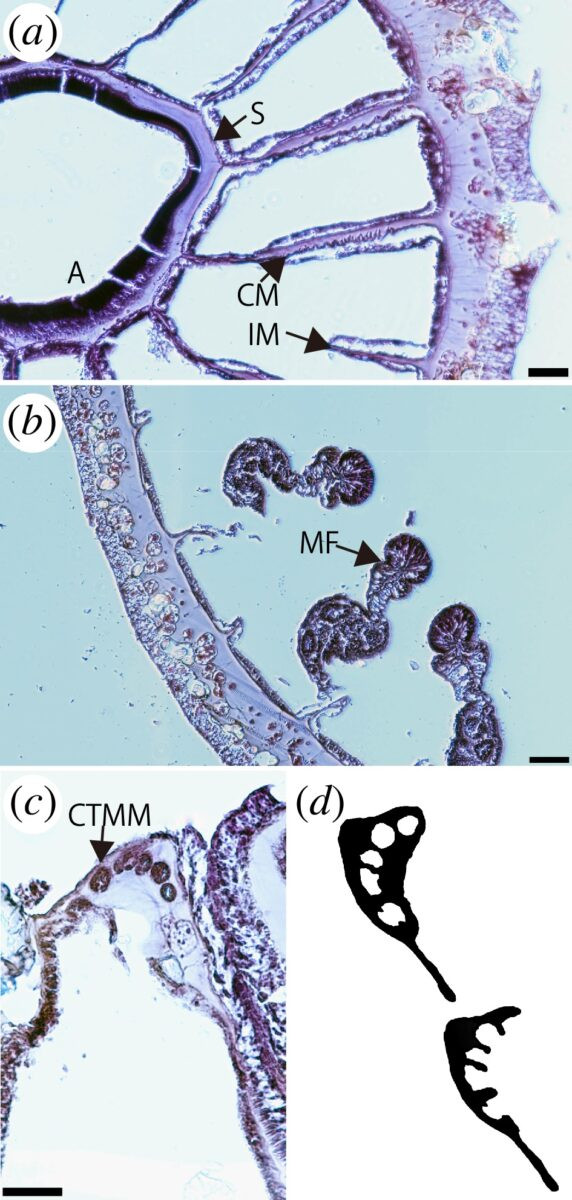
Detailed examination placed Corallizoanthus aureus in the order Zoantharia, closely related to sea anemones and other corals. Compared to its nearest relative, Corallizoanthus tsukaharai, it features 24 to 26 tentacles and unique marginal muscles around the oral disc. Its species name aureus highlights its striking vivid yellow coloration.
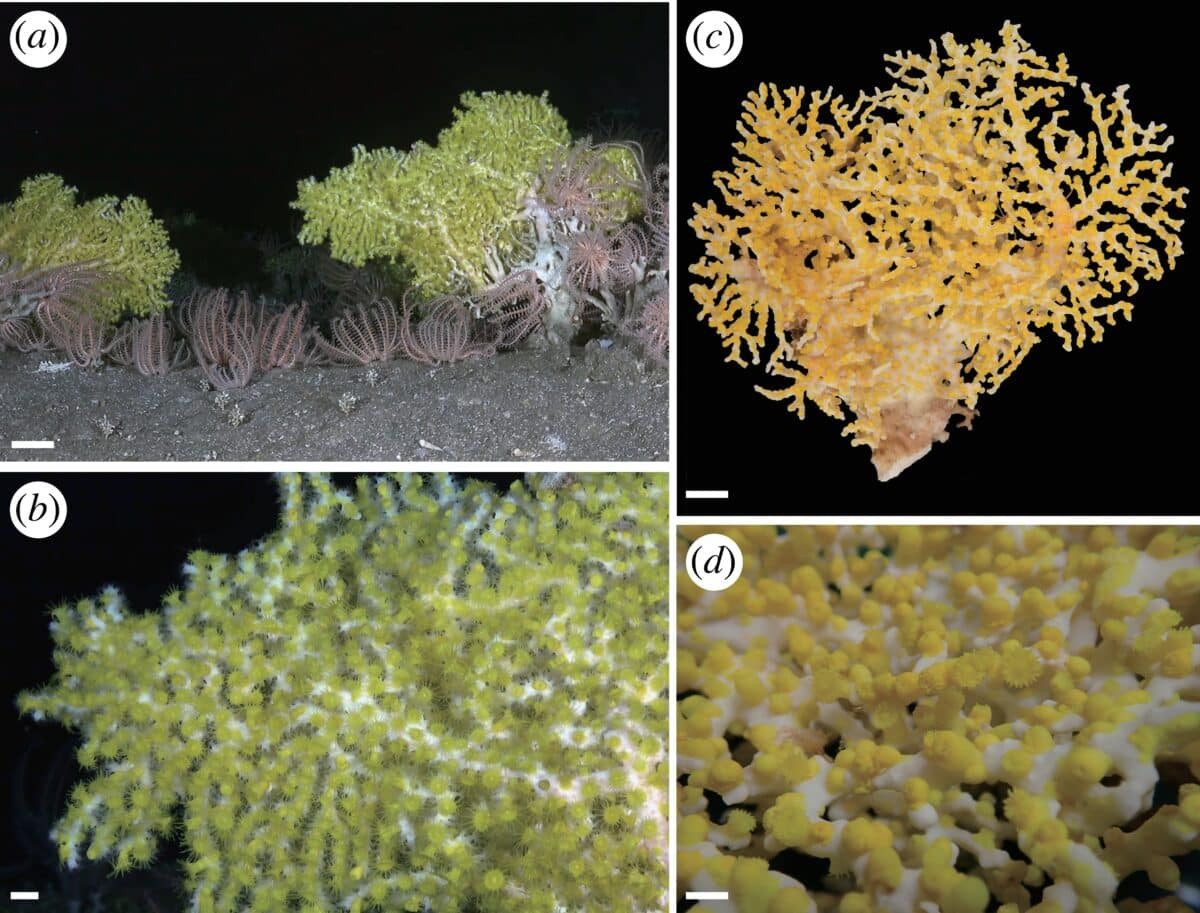
The coral has only been found growing on Pleurocorallium species, meaning it is considered an epibiont—an organism living on another's surface.
Measurements taken aboard the JAMSTEC vessel and confirmed in the field revealed the peak emission wavelength at approximately 515 nanometers, within the green light spectrum. The luminous response only occurs following physical or chemical stimulation—never spontaneously.
Light as a Potential Survival Strategy
Researchers probed the bioluminescence’s origin, eliminating several possibilities. The coral showed no fluorescence under ultraviolet light, ruling out fluorescent proteins, and no bioluminescent bacteria were detected in its tissues.
The team proposed that the coral generates light through an intrinsic biochemical reaction, likely involving coelenterazine—a molecule commonly associated with marine bioluminescence. This process involves the oxidation of coelenterazine catalyzed by the enzyme luciferase, producing light.
The authors linked the flashing light to the 'burglar alarm hypothesis,' which originated in the 1940s. This idea suggests some small creatures emit light to attract predators that might scare off or eat their attackers.
While they have not confirmed this mechanism in the deep cave habitat, scientists anticipate that further exploration of remote marine caves and obscure underwater environments will uncover additional bioluminescent life forms.
- Categories:
- Science



0 comments
Sign in to Comment