
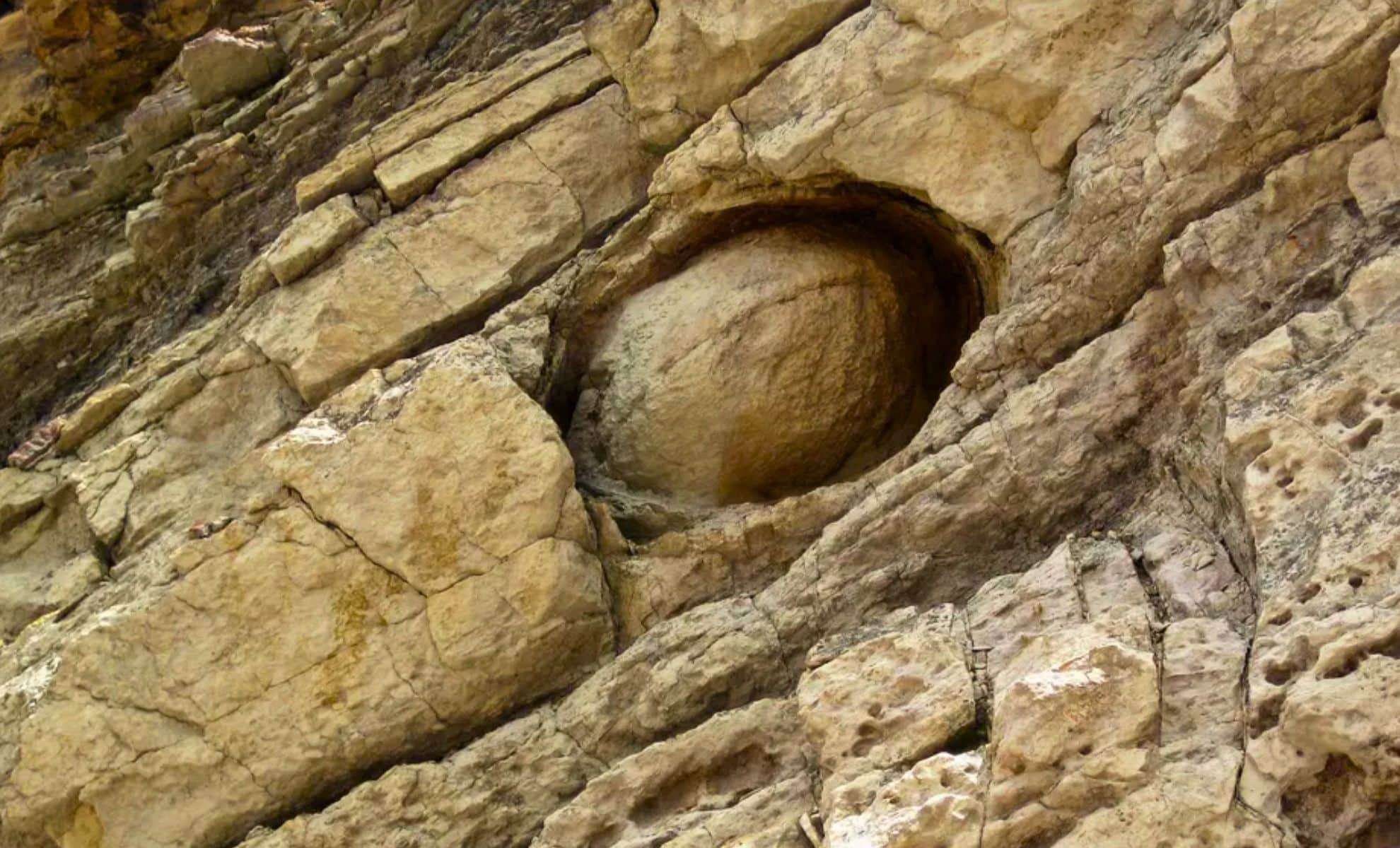
Nature often presents astounding phenomena that blur the line between fact and folklore. One such enigma, highlighted in a piece by IFLScience, originates deep within Earth's geological activity: rockfaces that appear to ‘lay eggs.’ Though it sounds like a tale from mythology, this remarkable occurrence is genuine and has intrigued both residents and geologists for many years.
What might initially seem supernatural actually results from gradual, potent natural forces operating over millions of years. These geological oddities, while seemingly mythical, are explained through the science of sedimentary rock formation.
Unveiling Cannonball Concretions
Among the most famous examples of these ‘egg-producing’ formations are the cannonball concretions seen in regions such as Colorado and the Dakotas. These rounded stones resemble giant eggs but are actually concretions—rocks created by the slow accumulation of minerals around a core, which could be organic matter or fossils. Over time, mineral layers bond to form hard, spherical masses buried within sedimentary strata.

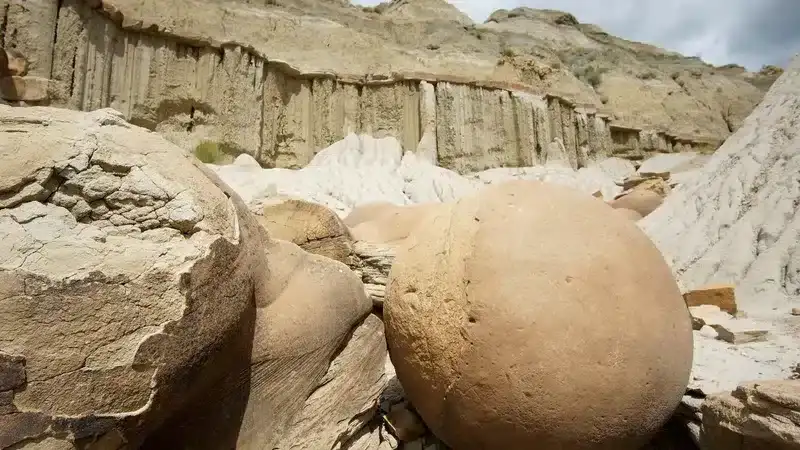
This natural process begins as mineral-laden water permeates rock layers, depositing minerals that solidify around a central nucleus. Over centuries, successive mineral layers build up, eventually forming a compact spherical shape.
Erosion gradually uncovers these formations. Wind and rain erode the surrounding softer rock, freeing these ‘stone eggs.’ This unfolding ‘hatching’ is notably visible at places like Theodore Roosevelt National Park in North Dakota, where fields dotted with cannonball concretions can be seen.
China’s Cliff That ‘Lays’ Stones Every Three Decades
The enigma extends beyond North America. In a secluded area of Guizhou province, China, a peculiar cliff has fascinated locals and scientists alike due to its episodic ‘egg-laying’ behavior, occurring roughly every 30 years. At this site, spherical concretions—commonly known as ‘stone eggs’—detach and fall from a 6-meter cliff face.
These ‘eggs,’ measuring between 20 and 40 centimeters in diameter, consist of dense sedimentary material encased within softer rock. Though local folklore has created numerous stories about this phenomenon, it is firmly rooted in geological processes.
The key factor is erosion: the softer calcareous rock into which the concretions are embedded erodes faster than the harder ‘eggs.’ This causes the concretions to eventually dislodge and fall, resembling eggs being ‘laid’ by the cliff. Despite this recurring event happening approximately once every three decades, researchers remain intrigued by the precision and timing of these ‘hatchings.’
- Categories:
- News







0 comments
Sign in to Comment