
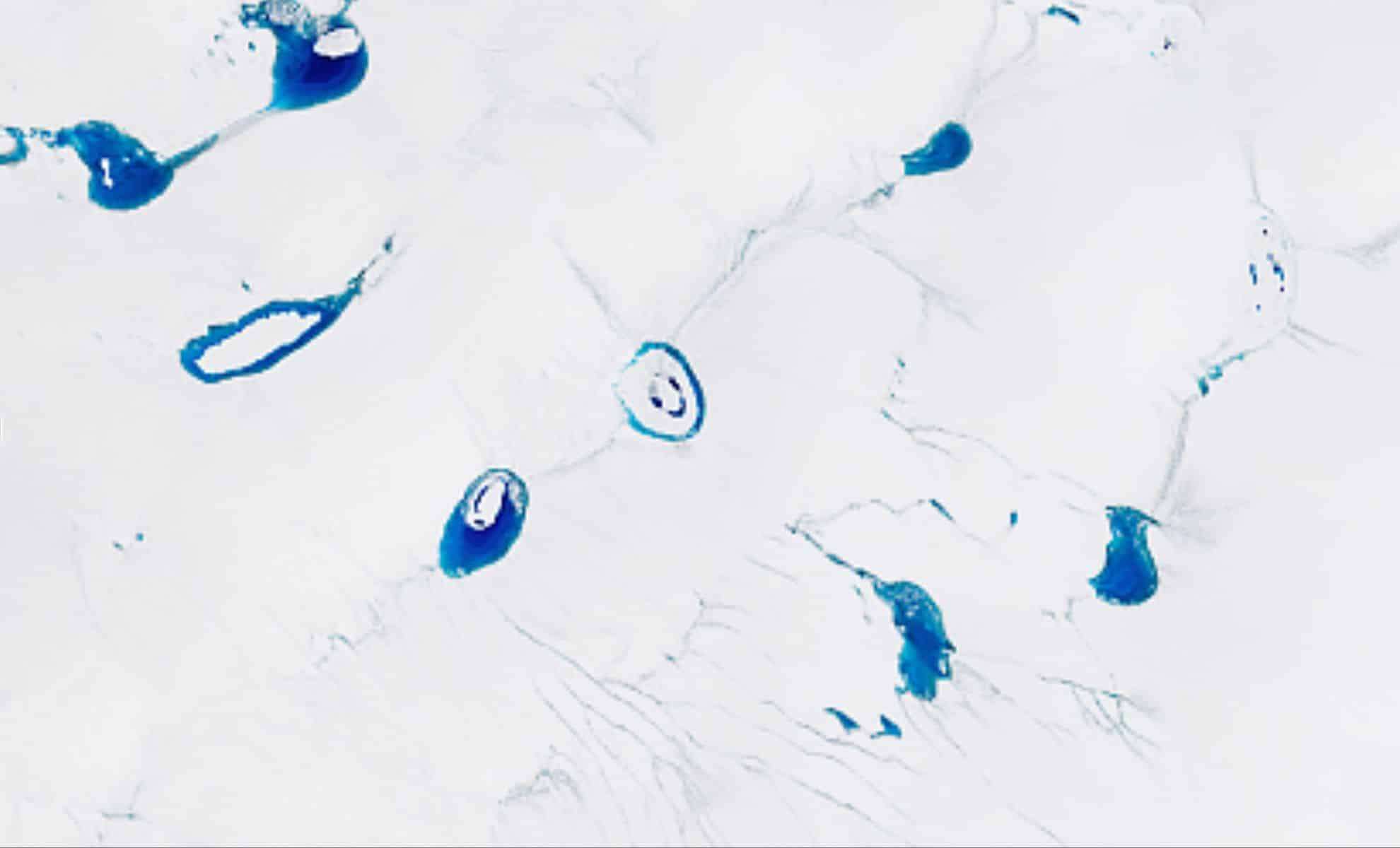
NASA’s Landsat 9 satellite has recently revealed an extraordinary summer transformation of the Greenland Ice Sheet, showcasing vibrant blue melt ponds and unusual shapes like smileys and musical notes. A detailed report from the NASA Earth Observatory dated July 12, 2025, highlights these stunning features. NASA scientist Kathryn Hansen analyzed the satellite images, explaining that these natural melting patterns are not only visually striking but also reveal critical scientific insights. The Debrief also explored how the whimsical formations help scientists understand ongoing changes within the Greenland Ice Sheet.
Understanding Melt Ponds and Their Impact
With summer’s arrival above the Arctic Circle, Greenland’s expansive ice sheet undergoes a dramatic shift. As sunlight intensifies and temperatures rise, pools of meltwater begin to appear, beautifully captured in detail by the Landsat 9 satellite in July 2025. These melt ponds are more than just pretty sights; they critically influence the ice sheet's movement and melting. The satellite images display distinct ring patterns with flowing “tails,” shaped by meltwater pathways and terrain beneath the ice. Among these natural designs, one particularly well-known image reveals a naturally occurring “smiley face”, a charming product of seasonal thawing.
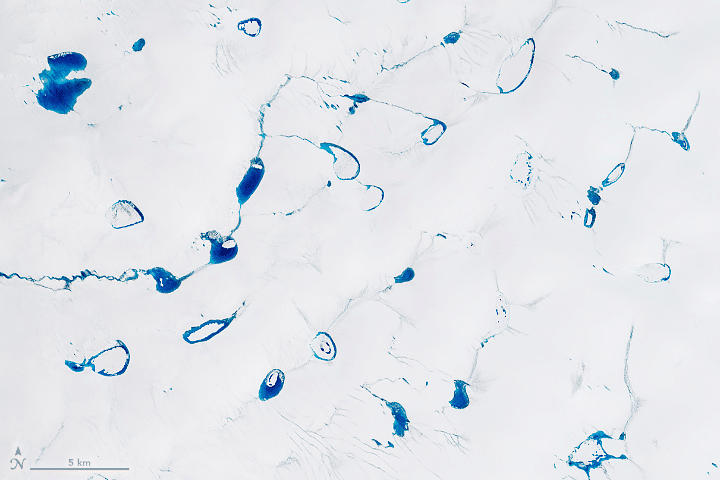
These artistic-like formations from space actually represent crucial geophysical mechanisms. As Hansen notes, “Meltwater draining through cracks reaches the ice sheet base, lubricating the interface with bedrock.” This lubrication eases glacier movement, making the ice flow more dynamic and less predictable, ultimately accelerating sea-level rise. Scientists now track these meltwater features as key indicators of ice stability, striving to better predict Greenland’s reaction to ongoing global warming.

The Influence of Dark Deposits on Ice Melting
Beyond the strikingly blue melt ponds, the satellite images reveal darker patches scattered across parts of the ice sheet. These zones contain ash, dust, and black carbon deposits that drastically reduce the ice’s reflectivity, known as albedo. Lower albedo causes more solar energy absorption, which intensifies melting.
This self-reinforcing effect, where impurities darken ice leading to faster melting, poses a significant threat to Greenland’s stability. Interestingly, these darker areas often appear deeper within the ice sheet rather than near the edges, indicating that environmental impacts extend beyond coastal margins. Data from the National Snow and Ice Data Center confirms that the western Greenland Ice Sheet experienced above-average melting during two notable events between May and June 2025.
Monitoring Melt Zones Moving Inland
Scientists have documented a worrying shift in Greenland’s melt zones moving further inland over the past decade. This trend, observed most markedly during the 2024 melt season, showed significant melting well inside areas once thought protected from warming. Evidence suggests this continuation into the 2025 season.
Hansen commented, “Only time will reveal if this inland expansion continues, as it did throughout July 2024.” The advancement of meltwater further into the ice sheet could soften internal ice and increase basal lubrication, potentially triggering faster glacial flow changes. These developments carry serious implications not just for science but globally, as they contribute to rising sea levels that threaten coastal communities worldwide.
- Categories:
- News


0 comments
Sign in to Comment