
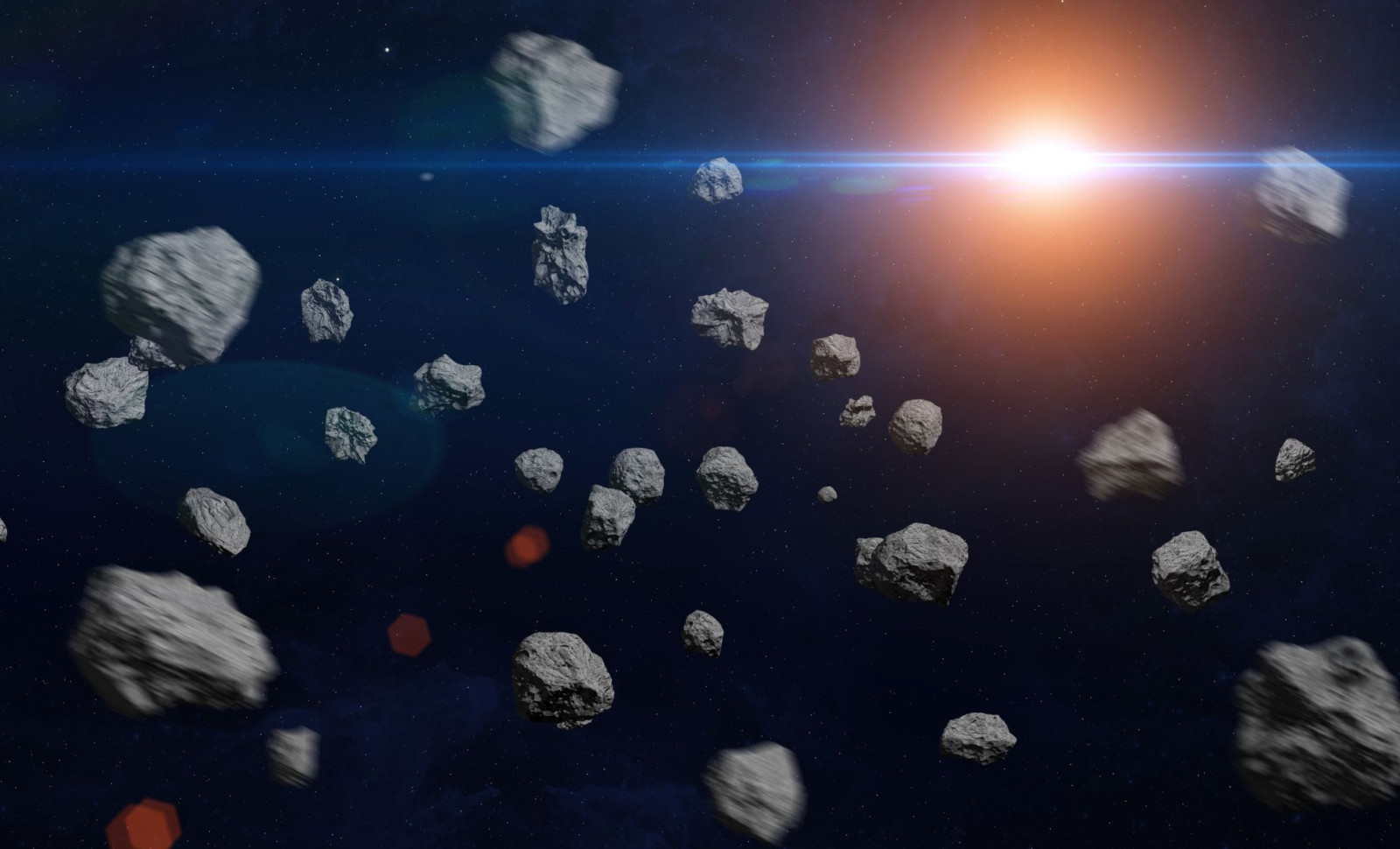
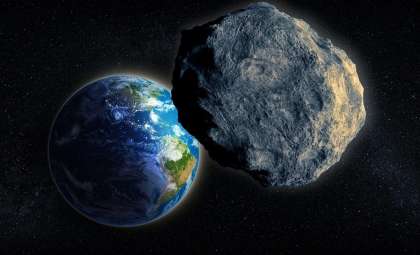
Subtle clues uncovered in spacecraft images reveal active movement of rocks between the asteroid Didymos and its small satellite, Dimorphos. This gentle interaction has been likened to “cosmic snowballs.”
Published in The Planetary Science Journal on March 6, 2026, these findings indicate that near-Earth asteroid pairs are much more dynamic than scientists previously realized. This discovery opens new avenues for understanding their development and potential behavior if they pose a threat to Earth.
Binary asteroid systems are common, with about 15% of near-Earth asteroids hosting moonlets, making such material exchanges potentially frequent. Before this, evidence for direct transfer of material was elusive.

Hidden Trails Reveal the Exchange
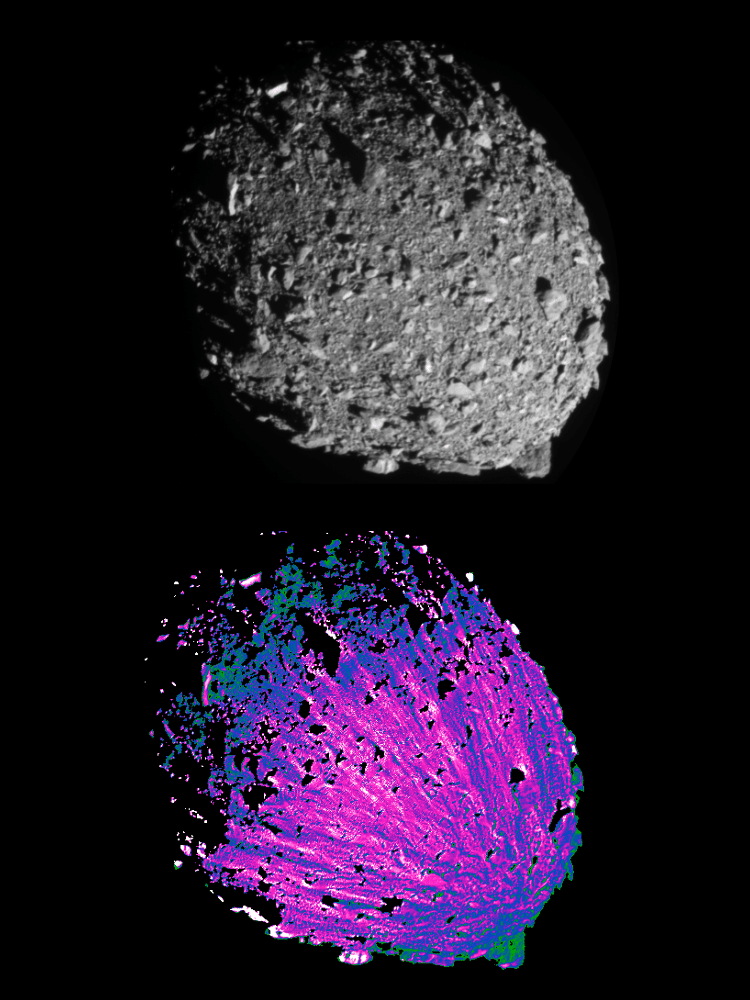
The key breakthrough involved detecting faint, fan-shaped trails emanating from Dimorphos. The team, headed by Jessica Sunshine of the University of Maryland, uncovered these patterns by digitally removing shadows and lighting irregularities from the original images.
“At first, we thought something was wrong with the camera,” Sunshine said, as reported in a press release published by University of Maryland. The patterns, once clarified, matched what scientists would expect from low-speed impacts. ” We were seeing were very consistent with low velocity impacts, like throwing ‘cosmic snowballs.’ We had the first direct proof for recent material transport in a binary asteroid system.”
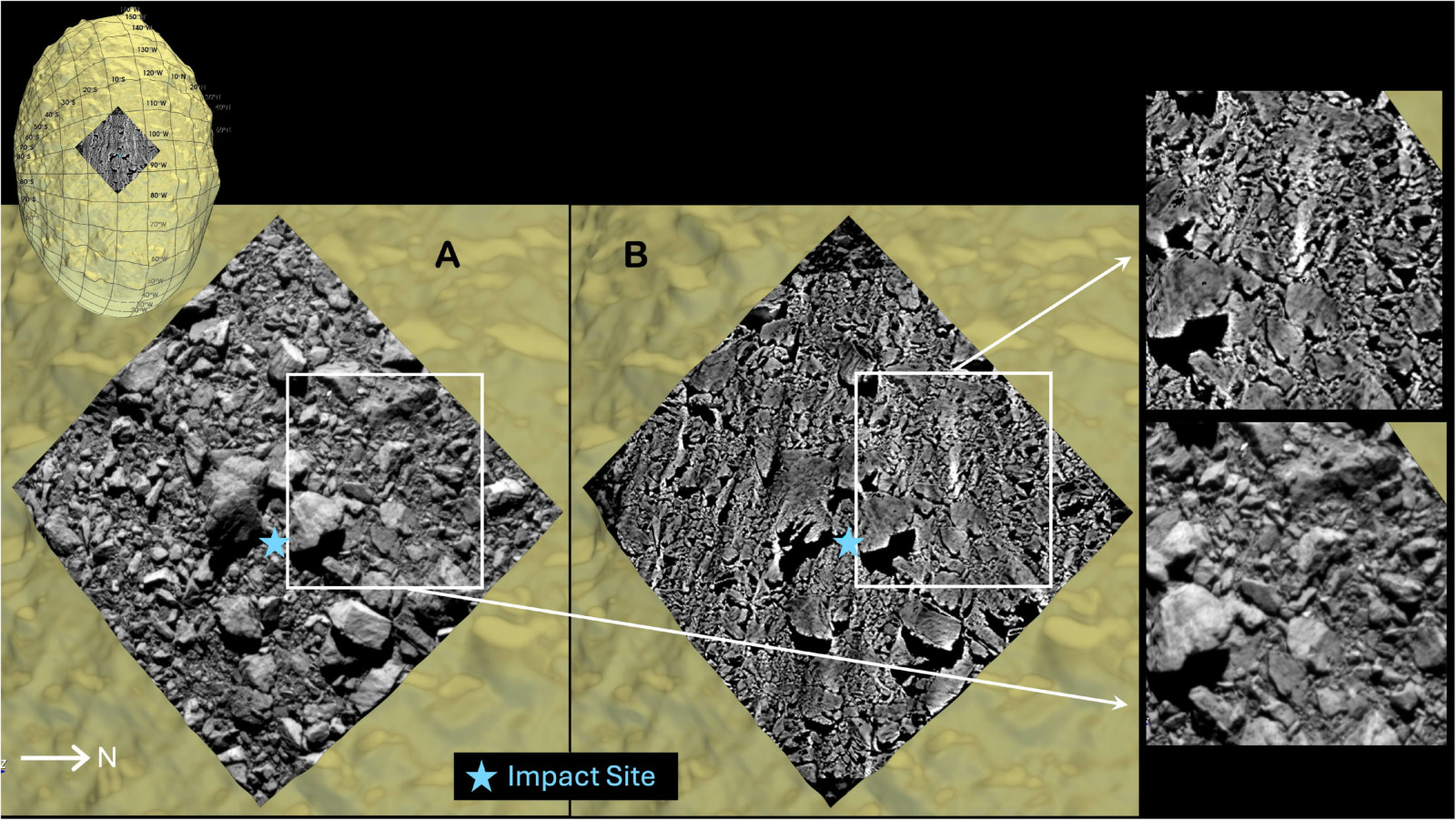
Following up, the researchers pinpointed these streaks to an area near the edge of Dimorphos, confirming they were not illusions caused by lighting. The consistent alignment and shape of these features indicated real geological activity.
Direct Evidence of the YORP Effect
The recent paper also provides the first direct visual confirmation of the YORP effect—a phenomenon where solar radiation steadily spins up an asteroid until it ejects surface material. Though theorized for years, this is the clearest observational proof to date.
The study estimates that debris departed Didymos at roughly 30.7 centimeters per second, slower than a normal walking speed.
“Instead of even spreading, these slow-moving impacts would create a deposit rather than a crater. And they are centered on the equator as predicted from modeling material spun off the primar,” she added.
Laboratory Simulations Validate Observations
To back their conclusions, researchers conducted experiments replicating the asteroid surface conditions. At the University of Maryland’s Institute for Physical Science and Technology, they dropped marbles into a mix of sand and gravel to mimic the asteroid environment.
High-speed videos revealed that boulders deflected the incoming particles, creating ray-like patterns akin to those on Dimorphos. Simultaneous computer models at Lawrence Livermore National Laboratory showed both compact rocks and fine dust could form these features.
The combined evidence strongly supports that the streaks seen by DART are genuine signs of ongoing material transfer between Didymos and its moon. These formations might still be visible in parts of Dimorphos unaffected by the spacecraft’s collision.
The upcoming Hera mission by the European Space Agency, scheduled to arrive in December 2026, aims to investigate the system again, potentially confirming the survival of these features and discovering new ones created post-impact.
- Categories:
- Nasa






0 comments
Sign in to Comment