
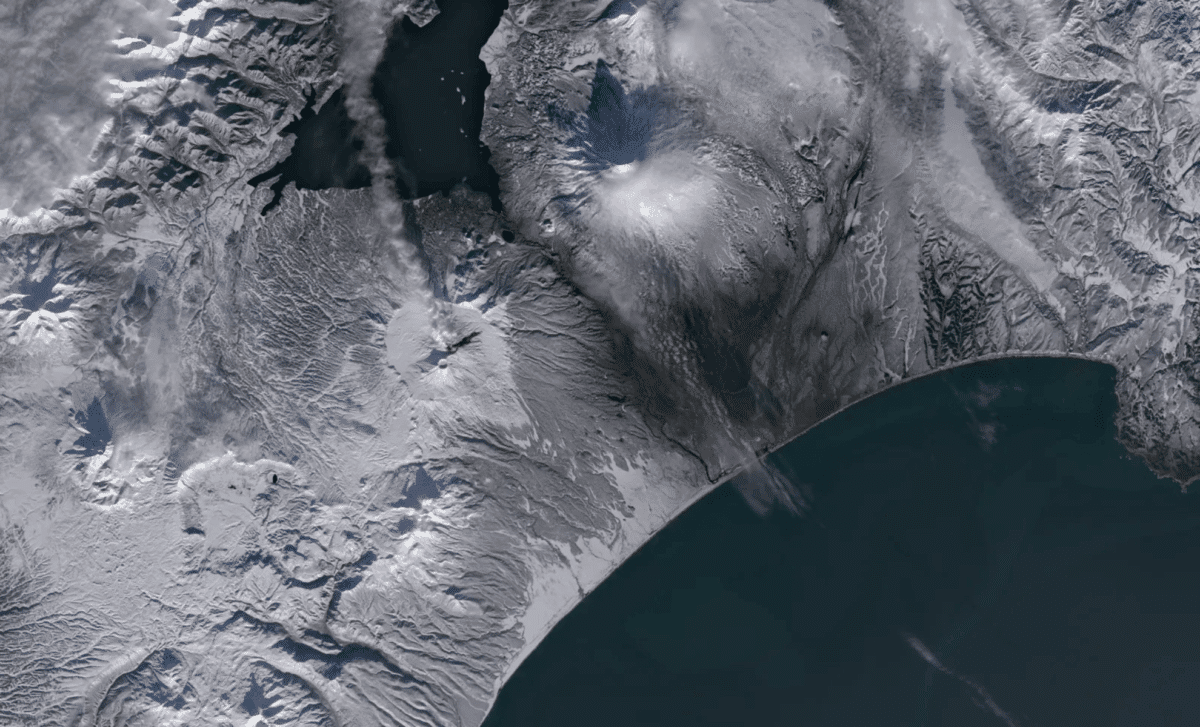
After lying dormant for over four centuries, the Krasheninnikova volcano in Russia’s Kamchatka Peninsula has erupted, reigniting global interest. The eruption commenced in early August 2025, with continuous emissions of ash, lava, and volcanic gases. Utilizing satellite data from NASA’s Landsat 9, researchers have been able to monitor the unfolding event closely. Insights from NASA’s Jet Propulsion Laboratory (JPL) are helping decipher the eruption’s triggers and what it means for volcanic activity in the area.
The Reawakening of Krasheninnikova: A Stunning Geological Event
The sudden eruption of Krasheninnikova surprised scientists and local authorities alike, given its lengthy period of inactivity. Situated on Russia’s Kamchatka Peninsula, this volcano had been quiet for more than 400 years until August 3, 2025, when it emitted ash and molten rock into the sky. The scale of this event has raised significant concerns due to its magnitude and prolonged nature.
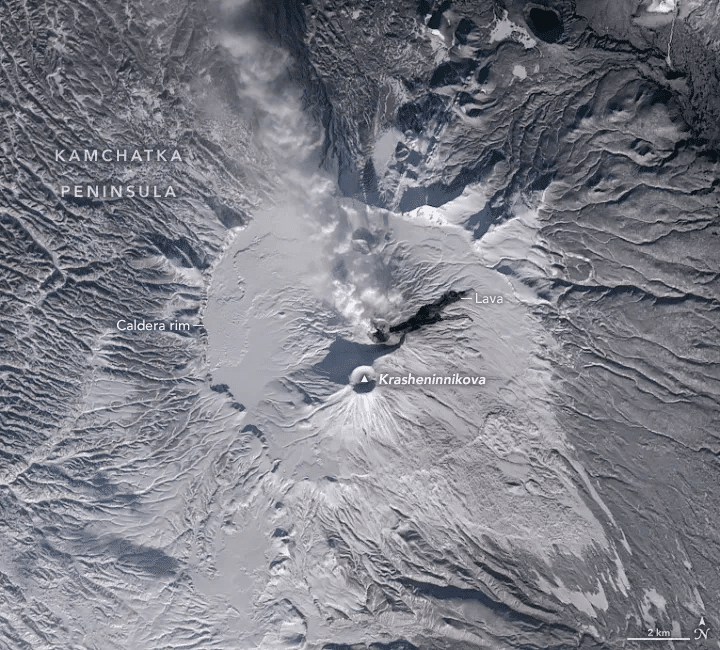
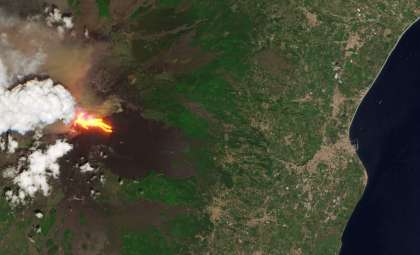
NASA’s Jet Propulsion Laboratory (JPL) has been tracking the eruption using detailed satellite imagery, delivering critical data to understand the volcano’s patterns. By November 14, 2025, images recorded vast plumes ascending several kilometers above the volcano. NASA’s Earth Observatory observed that

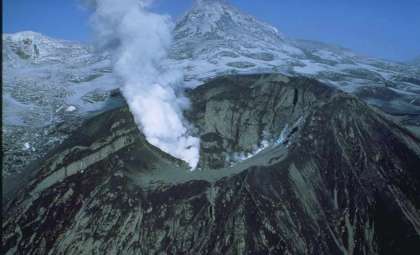
“A volcanic plume billows from one of Krasheninnikova’s craters and drifts to the northwest. This eruption has lofted plumes several kilometers above the crater rim, leading authorities to keep the aviation color code elevated to orange.”
This warning level indicates ongoing volcanic unrest, with a continued threat of more intense eruptions.
Could a Massive Earthquake Have Set Off the Volcano?
Just days before the eruption, a powerful seismic event struck the Kamchatka Peninsula—a magnitude 8.8 earthquake occurred on July 29, 2025, marking one of the region’s most intense tremors recorded. Such large earthquakes often influence volcanic activity, though researchers are still determining the exact link between this quake and the volcanic eruption.
Paul Lundgren, a geophysicist at NASA’s Jet Propulsion Laboratory, proposes that the earthquake may have triggered the awakening. Lundgren remarked, “Considering the volcano had been silent for about 400 years, this eruption seems linked to the magnitude 8.8 earthquake.” The quake’s epicenter was roughly 240 kilometers south of Krasheninnikova and caused tsunami alerts throughout the Pacific, underscoring the enormous energy involved. As aftershocks persist, the volcano's eruption may represent a direct aftermath of this seismic disturbance.
Effects on Local Populations and Air Traffic Control
The ongoing eruption at Krasheninnikova has not yet posed immediate threats to residents but has caused significant interruptions, especially in aviation. The volcanic ash plume reaching high altitudes compelled officials to maintain an “orange” aviation color code, signaling the potential for substantial volcanic hazards. Ash and gas clouds threaten aircraft safety in this busy Pacific airspace.
Local inhabitants are also keeping an eye on the lava flows moving northeastward.
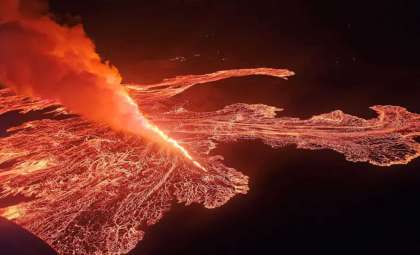
“A recent lava flow extends to the northeast, contrasting with the snowy slopes,” said NASA in their report.
Although this lava remains confined within the volcano’s crater, scientists remain vigilant for any developments that might impact nearby communities. Emergency teams face the complex task of managing volcanic risks while addressing local safety and needs throughout the eruption period.
- Categories:
- News




0 comments
Sign in to Comment