
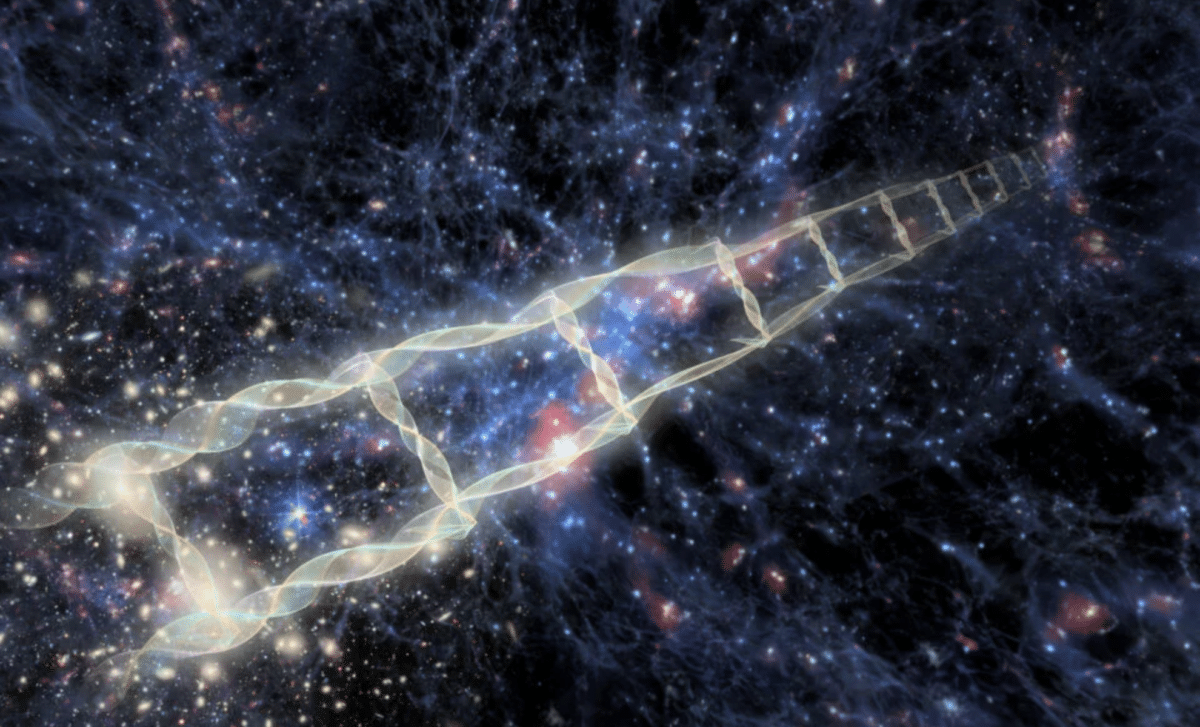
A newly released study in Astronomy & Astrophysics delivers the most precise determination yet of the universe’s expansion rate, simultaneously sharpening our cosmological insights and intensifying the longstanding “Hubble tension” dilemma. For years, astronomers have faced conflicting results from different techniques that measure how fast the universe expands. This fresh analysis merges these approaches, confirming the discrepancy and presenting pressing questions about the fundamental workings of the cosmos. Experts now emphasize the need to rethink the principles underpinning current cosmological theories.
The Enduring Enigma of the Hubble Tension
Determining the speed at which the universe expands is central to modern astronomy, impacting our grasp of spacetime and cosmic structure. The key figure here is the Hubble constant, which quantifies how rapidly galaxies drift apart. Yet, two main approaches for estimating this constant persistently disagree.
The first method examines the cosmic microwave background (CMB), the residual glow from the Big Bang, indicating an expansion near 41 miles (67 kilometers) per second per megaparsec. In contrast, the second approach focuses on direct observations of nearby celestial bodies like galaxies and supernovae, yielding a higher estimate of roughly 45 miles (73 kilometers) per second per megaparsec. Though close numerically, the gap exceeds statistical uncertainties, leaving astronomers puzzled by what is known as the “Hubble tension.”

This latest investigation, conducted by an international collaboration and published in Astronomy & Astrophysics, tackles this conflict by merging both methodologies into a comprehensive analysis. Integrating data from various measurement techniques, the team derived an exceptionally accurate Hubble constant value: 45.67 miles (73.50 ± 0.81 km) per second per megaparsec. This achievement represents a pivotal advance toward clarifying cosmic expansion.
“Confirming the Hubble tension makes it even more important for us to reexamine the foundations of the current cosmological model and to identify any new phenomena that might modify the evolution of the universe,” said Adam Riess, a co-author of the study from the Space Telescope Science Institute (STScI).
While presenting a more precise metric, these results deepen the unresolved nature of the tension and open avenues for fresh scientific exploration.
A Unified Approach to the Hubble Constant
The study introduces an innovative “distance network” framework that consolidates a vast array of independent distance measurements accumulated over decades into one transparent, community-driven resource. By combining information from galaxy observations, supernova data, and other cosmic indicators, the researchers have created a more cohesive and reliable methodology to determine the universe’s expansion rate.
As highlighted by the team, their work is not just about refining a number but building a shared tool: “This isn’t just a new value of the Hubble constant,” they explained, “It’s a community-built framework that brings decades of independent distance measurements together, transparently and accessibly.” This approach could become a fundamental reference for cosmological studies, potentially resolving future disparities and enhancing understanding of universal expansion.
Despite providing a common standard for the Hubble constant, the investigation underscores that the discrepancy between early-universe and present-day measurements persists. This ongoing contradiction implies gaps remain in our current cosmological theories.
Implications for Our Cosmic Understanding
Confirming the reality of the Hubble tension has significant repercussions for cosmology. If this inconsistency truly reflects new physics, it suggests vital phenomena are missing from our current models. Hypotheses proposed include the presence of unknown particles, complexities in dark energy, or alterations to gravitational theory.
For instance, the characteristics of dark energy—the force accelerating universal expansion—might be more intricate than previously recognized. Likewise, undiscovered particles or interactions could impact how we perceive cosmic evolution.
“If the tension is real, as the growing body of evidence suggests, it may point to new physics beyond the standard cosmological model,” the team added.
Moving forward, advanced telescopes and cutting-edge observational technology will be essential in tackling this enigma. The future of cosmology holds the promise of groundbreaking discoveries that could transform our understanding of the universe.
- Categories:
- Astronomy





0 comments
Sign in to Comment