
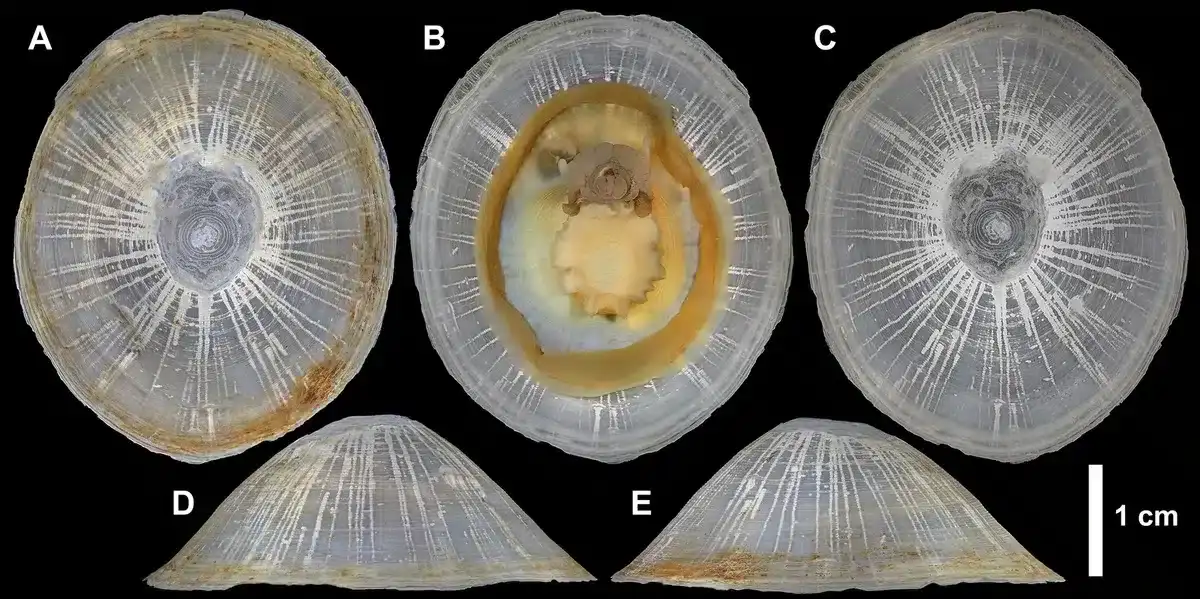
Researchers have identified a unique species of deep-sea limpet living almost six kilometers under the Pacific Ocean, unveiling an extraordinary marine organism that thrives in one of the world’s harshest underwater environments. This limpet, named Bathylepeta wadatsumi, was found adhering to volcanic rock about 500 kilometers southeast of Tokyo, marking the deepest recorded habitat for any true limpet species.
Remarkable Find in the Extreme Hadal Depths
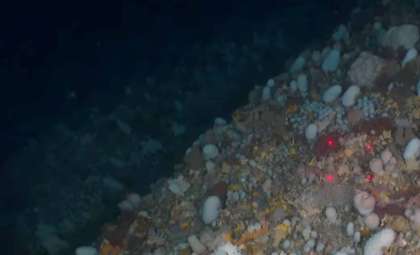
The discovery was made during an expedition organized by the Japan Agency for Marine-Earth Science and Technology (JAMSTEC). Utilizing the crewed submersible Shinkai 6500, scientists obtained rare photographs of the limpet alive in its rugged volcanic surroundings, providing a more accurate ecological insight than traditional seafloor dredging methods. The study, published in Zoosystematics and Evolution, highlights how direct observation via submersibles sheds light on species within their natural habitat.
Dr. Chong Chen, who led the project, highlighted the advantages of piloted exploration vehicles, stating, “In the era of advanced remotely operated vehicles, human-operated submersibles still bring a unique perspective to exploring the seafloor.” His team could maneuver deliberately, enabling the identification of lifeforms such as Bathylepeta wadatsumi that might otherwise be overlooked.

Significantly Larger Than Typical Limpets
Living at a depth of 5,922 meters, Bathylepeta wadatsumi not only sets a new depth record for its kind but also stands out due to its relatively large size, reaching up to 40.5 millimeters. This remarkable dimension suggests specialized adaptations that allow it to endure the intense pressure and resource scarcity characteristic of the hadal zone.
Experts believe this limpet fulfills a crucial ecological role within deep-sea habitats. By grazing on the sediment covering rocky surfaces, it aids in the breakdown and recycling of organic material in one of Earth’s least explored ecosystems. Such discoveries emphasize the intricate dynamics and importance of what lies beneath the ocean’s surface.
A Name Rooted in Cultural and Mythological Heritage
The species name, B. wadatsumi, draws inspiration from Japanese mythology and contemporary influences. The term Wadatsumi refers to the sea deity revered in Japan, symbolizing the powerful connection and respect for the ocean’s enigmatic depths.
This finding emphasizes how much remains to be explored about rocky habitats in extreme ocean depths. The research team advocates for expanding the use of manned submersibles to discover more of the hidden life forms dwelling in the abyssal and hadal zones across the planet’s oceans.
- Categories:
- News



0 comments
Sign in to Comment