

Advanced supercomputer simulations have unveiled the significant role that stellar rotation plays in blending materials between a star’s core and outer layers.
For decades, astronomers have sought to explain how changes deep within a star’s core manifest at its surface as it transforms into a red giant. This groundbreaking research provides a solution to this enduring mystery, paving the way for deeper understanding of stellar life cycles.
The Impact of Stellar Spin on Elemental Distribution
Central to this discovery is the influence of a star’s spin. Simon Blouin, leading the study at the University of Victoria’s Astronomy Research Centre (ARC), explains:

“Stellar rotation is crucial and provides a natural explanation for the observed chemical signatures in typical red giants.”
A University of Victoria report details how the team employed high-resolution 3D models to analyze how star rotation enhances the transport of elements from the core to the surface. Their data showed that stars with rotation mix their materials significantly more effectively than those without it.
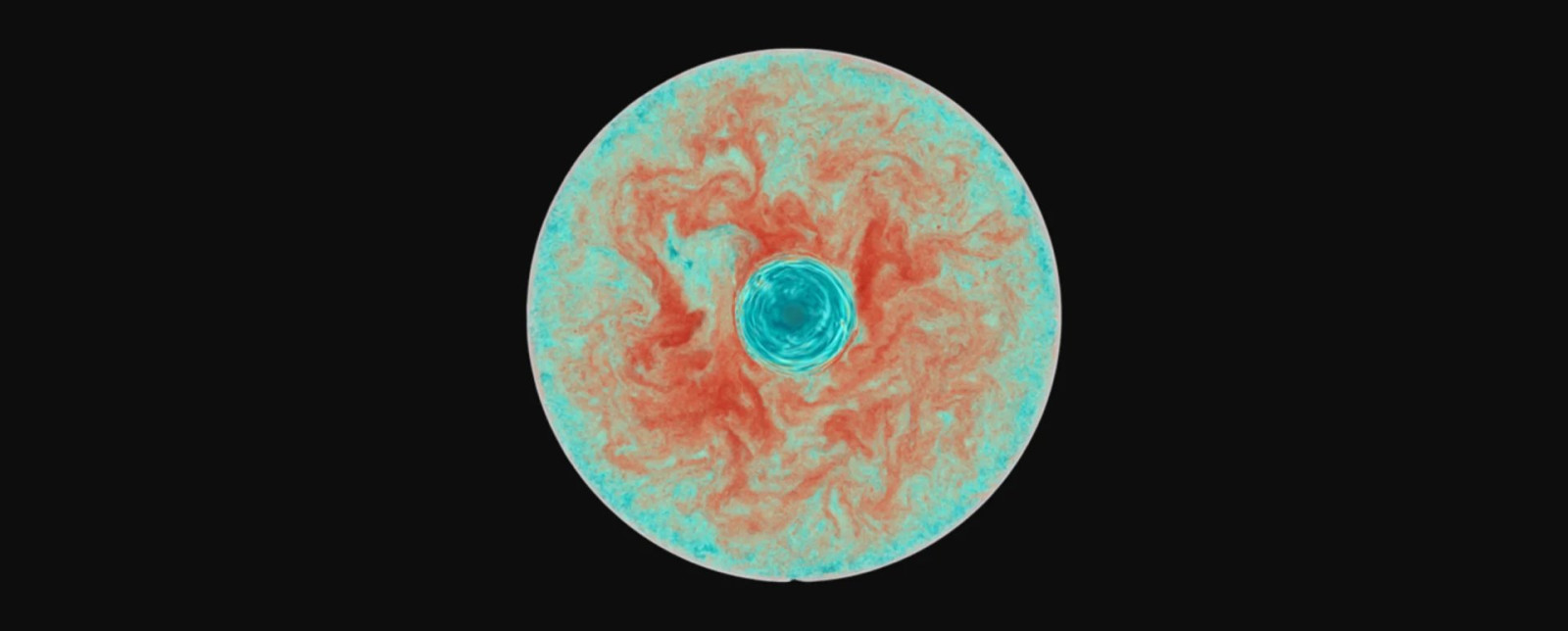
The team discovered that the rate of mixing in rotating red giant stars surpasses that of non-rotating ones by more than 100 times. This matches observed chemical patterns on their surfaces and confirms that rotation is key in enabling the movement of material from the nuclear fusion core outward — a phenomenon that was previously unexplained.
Leveraging Supercomputing Power for Stellar Insights
Simulating the intricate inner workings of red giant stars demands extraordinary computational resources. The research was powered by the Trillium supercomputer cluster at the University of Toronto’s SciNet and facilities at the Texas Advanced Computing Centre, enabling detailed and extensive simulations.
Falk Herwig, ARC director and lead scientist, remarked:
“We were able to discover a new stellar mixing process only because of the immense computing power of the new Trillium machine. These are the computationally most intensive stellar convection and internal gravity wave simulations performed to date.”
The breakthrough was only achievable due to the exceptional processing capabilities of these modern supercomputers, which allowed the team to test rotational effects on stellar material mixing comprehensively.
Implications of Rotation on Star Development
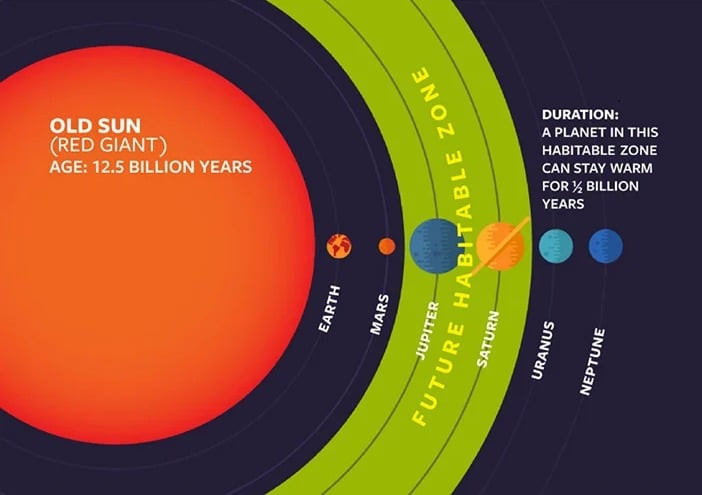
Red giants mark a late life stage in stellar evolution, a period our own Sun will reach after its hydrogen fuel is depleted. During this phase, their outer layers undergo noticeable chemical changes, a phenomenon documented for decades but not previously understood.
Blouin and his collaborators anticipate that their findings will shed light on the future evolution of the Sun. Furthermore, these insights could deepen our knowledge of how varying rotational speeds influence the evolutionary paths of other stars.
- Categories:
- Science













0 comments
Sign in to Comment