

Venus is renowned for its harsh environment, marked by scorching temperatures and dense, corrosive clouds long believed to be dominated by sulfuric acid. However, a groundbreaking reexamination of archival data has unveiled an astonishing fact: approximately 60% of the cloud particles actually contain water.
Unlocking Secrets from Pioneer Venus Mission Data
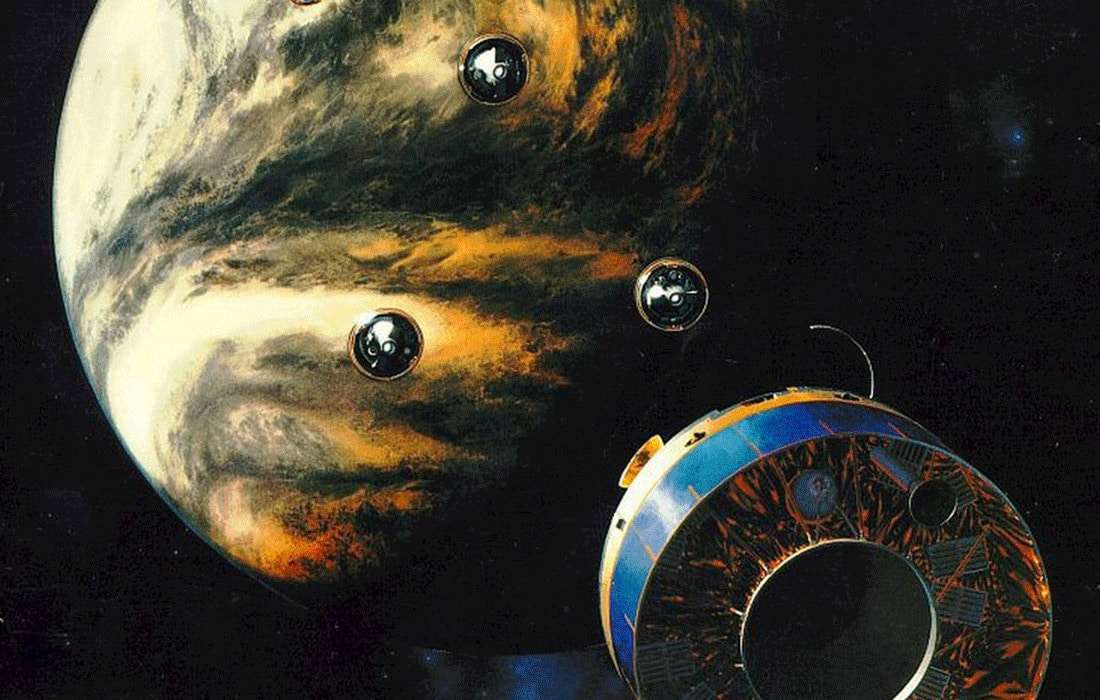
It’s remarkable that decades-old data from NASA’s 1970s Pioneer Venus probes are reshaping our understanding of the planet. Initially interpreted as showing an almost completely sulfuric acid-based cloud composition, researchers revisited the records and discovered a substantial presence of water—not as simple vapor but integrated within hydrated mineral compounds.
By analyzing temperature-dependent melting points encountered during probe descent, scientists identified peaks at 185 °C and 414 °C that correspond to hydrated substances such as ferric sulfate and magnesium sulfate. This suggests that water accounts for about 62% of the aerosol makeup—transforming the notion of Venus’ atmosphere from a dry, acidic environment to one rich in chemically bound water.

Sulfuric Acid, Iron, and Other Surprising Compounds in Venus’ Clouds
While water captured much of the attention, sulfuric acid remains a key constituent, constituting roughly 22% of the cloud particles—aligning with earlier beliefs. Unexpectedly, iron sulfate was also detected, revealing interactions between cosmic dust and Venus’ atmosphere.
Elevated levels of iron ions were recorded by the descending probe alongside sulfur dioxide emissions at roughly 397 °C, indicating the presence of ferric sulfate. This compound breaks down at such temperatures, producing iron oxide and sulfur oxides, and could represent about 16% of the cloud material according to researchers.
Implications of Water in Venus’ Clouds for Astrobiology
For many years, the absence of detectable water led to skepticism about the possibility of life on Venus. This new discovery complicates that view, highlighting that significant quantities of water are present, but chemically locked within minerals rather than free as on Earth.
Previous spectroscopy studies missed this chemically stored water, while the direct aerosol measurements performed by the Pioneer probes provided a more precise glimpse into the clouds’ true composition and potential for hosting life-related chemistry.
- Categories:
- News






0 comments
Sign in to Comment