
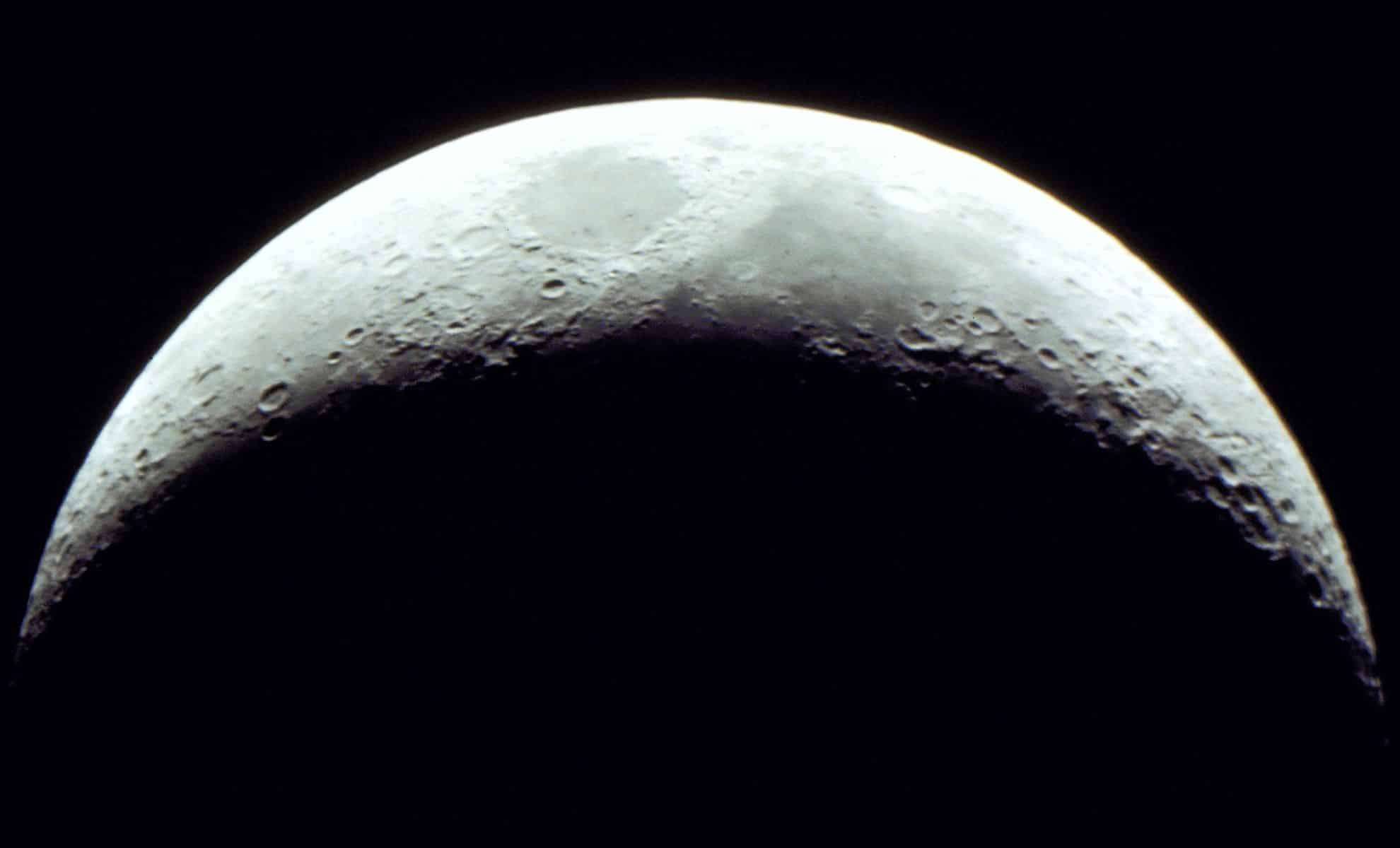
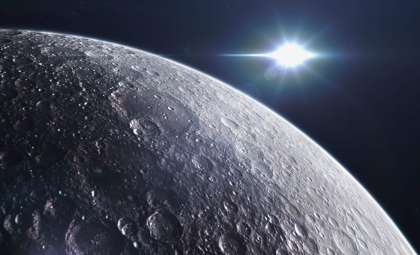
A recent investigation analyzing lunar materials from Apollo 16 has upended previous beliefs about the origin of the Moon’s fragile atmosphere. Instead of the solar wind being the dominant source, fresh evidence highlights micrometeorite collisions as the main mechanism sustaining the Moon’s sparse exosphere.
Solar Wind’s Limited Role Explored
For many years, researchers debated how the Moon keeps a faint atmosphere despite constant exposure to solar charged particles. Prevailing theories leaned on ion sputtering—where solar wind knocks atoms loose—or micrometeorite impacts as the primary suppliers of atmospheric material. Now, led by Professor Friedrich Aumayr at the Institute of Applied Physics, TU Wien, new experiments have brought clarity to this long-standing question.
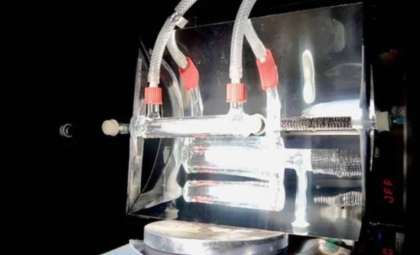
The team simulated solar wind by firing helium ions at authentic moon dust at around 135 miles per second. They discovered ion sputtering is drastically less effective than expected by measuring the minute mass loss with a highly sensitive quartz crystal microbalance. "Our precise measurements revealed sputtering yields far below conventional estimates," explained lead researcher Johannes Brötzner.

Contrary to earlier smooth-surface assumptions, the Moon’s exterior is a rough and porous mixture where voids absorb incoming particles, dissipating their energy quickly and preventing significant atom ejection. As a result, the sputtering yield is up to ten times lower than traditional models suggested.
The Outsized Effect of Small Impacts
This insight is in alignment with a 2024 isotopic analysis of elements such as potassium and rubidium from Apollo lunar rocks, which also pointed to micrometeorites as the key contributors to the Moon’s atmosphere. Combining these findings boosts confidence in the revised understanding.
Micrometeorite strikes not only generate gas more efficiently, but they also produce atoms with lower kinetic energy, correlating with densities recorded by NASA’s LADEE spacecraft during its 2013–2014 mission. This reinforces the conclusion that impact vaporization shapes the lunar exosphere rather than solar-driven sputtering.
Importantly, models now indicate that if micrometeorite bombardment ceased, the Moon’s atmosphere would vanish within a few lunar days. The exosphere is thus maintained by a steady shower of countless minuscule dust projectiles.
Implications for Artemis and Future Missions
This revelation arrives as NASA’s Artemis initiative prepares its crewed lunar expeditions. Accurately understanding material erosion rates is critical for engineering durable solar arrays, sensors, and habitat modules to withstand sustained exposure to particulate impacts and ion flux.
Given these new sputtering values, remote sensing instruments targeting elements like sodium or helium will need recalibration to account for the smaller role of solar wind, helping prevent misinterpretation of surface activity or misclassification of quiet regions.
These findings have significance beyond the Moon. The ESA-JAXA BepiColombo mission to Mercury, scheduled for full operations in 2027, will benefit from this knowledge by distinguishing between sputtered atoms and impact-originated gases, advancing our grasp of Mercury’s surface and space weathering.
Revising Our Understanding of Lunar Surface Weathering
Reducing the solar wind’s influence reshapes models of how space weather gradually modifies the Moon’s terrain—from soil darkening to fading rover marks—emphasizing micrometeorite frequency and energy as the main drivers.
This also suggests that equipment left by past expeditions, including those from the Apollo missions, may endure longer than anticipated, potentially serving as historic reference points or research assets for future explorers.
Solar storms can still cause spikes in ion densities, increasing sputtering temporarily by up to 100-fold. Upcoming CubeSat satellites launched alongside Artemis missions will monitor these bursts, delivering real-time data to better interpret surface experiments.
The research team, led by Aumayr, plans to expand studies to “volcanic mare dust,” especially glass-rich samples, to see how different lunar regions respond to ion strikes. They also intend to adapt their experiments for icy surfaces to shed light on weathering processes affecting moons like Europa and Enceladus.
“This investigation delivers the first experimentally verified sputtering rates for genuine lunar rock,” Aumayr said. The planetary science community recognizes this work as a pivotal advancement in comprehending space weathering and exospheric phenomena throughout our solar system.
- Categories:
- News



0 comments
Sign in to Comment