
For years, researchers have focused primarily on the brain as the source of conscious experience. However, a recent peer-reviewed article in Neuroscience & Biobehavioral Reviews authored by Anil K. Seth and Hugo D. Critchley proposes a deeper, body-centered understanding of consciousness.
The researchers suggest that awareness originates not solely within the brain, but through the brain’s interpretation of internal bodily cues. This mechanism, termed interoception, encompasses signals like heart rhythms, breathing patterns, gut sensations, and skin temperature changes. These physiological inputs may actually form the fundamental basis of our subjective experience.
“We are conscious because we feel, not the other way around,” said Professor Seth, a cognitive neuroscientist at the University of Sussex and co-author of the study. “Our bodies don’t merely support the brain—they shape what it means to have a mind.”
Add Cosmo Herald as a Preferred Source

While concepts of embodied cognition have existed for decades—most notably in Antonio Damasio’s somatic marker hypothesis connecting bodily emotions to decisions—this new study introduces a robust integrative model. It combines affective neuroscience, computational techniques, and empirical data to emphasize the body’s central role in shaping consciousness.
The Role of Interoception in Defining the Self
Consider your breathing, perhaps unnoticed, or subtle bodily motions like tapping a foot or sensing an unsettled stomach. These experiences, according to the study, are integral to your sense of self.
Interoception is described as the brain’s ongoing process of monitoring and predicting the internal state of the body—covering fluctuations in heart rate, respiration, digestive activity, and skin responses. A key strength of the framework is its grounding in predictive coding theory, which posits that the brain continuously anticipates sensory inputs and refines its models based on actual feedback.
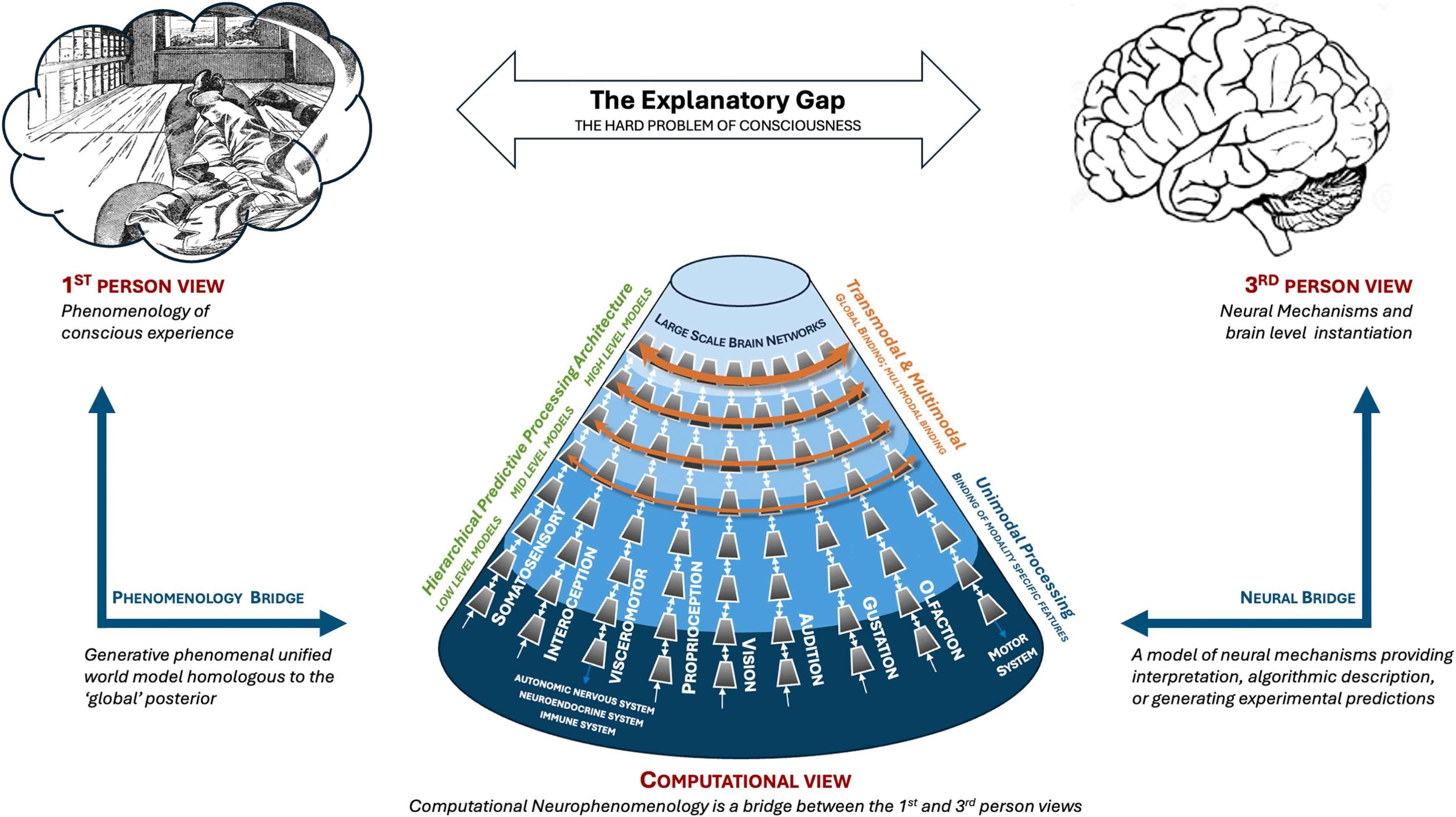
This predictive process extends to bodily sensations. When predicted internal conditions—such as hunger, anxiety, or safety—align or clash with incoming signals, a conscious sense of self unfolds. The authors describe consciousness as "the continual, embodied negotiation between prediction and sensation."
Significantly, the insula region, associated with interoception and emotional processing, plays a pivotal role. Other brain structures including the anterior cingulate cortex and brainstem nuclei that regulate bodily feedback and homeostasis are equally important. This suggests the brain’s function may be more about tuning into the body rather than commanding it.
Broader Impacts: Mental Health and Artificial Intelligence
This discovery has profound implications. It could transform therapeutic approaches to mental wellbeing. Conditions such as anxiety, depression, and dissociation often feature altered bodily perceptions—rapid heartbeat, shallow breathing, muscle stiffness. If interoception constructs conscious awareness, interventions targeting the body might facilitate mental healing.
Already, treatment methods like somatic experiencing, mindfulness-based cognitive therapy, and yoga may indirectly engage this mechanism, even if without full scientific acknowledgment.
“We’ve underestimated the body’s role in shaping thought, emotion, and even identity,” said Professor Critchley, head of Psychiatry at Brighton and Sussex Medical School. “This research helps us update that assumption.”
The findings also raise critical questions about artificial intelligence and the possibility of machine consciousness. If conscious awareness fundamentally depends on bodily inputs, purely digital or disembodied AI systems might never achieve true sentience, regardless of computational complexity. This insight presents intriguing challenges for AI researchers and developers of humanoid robots.
The study also speculates about evolutionary benefits. Connecting awareness to internal bodily states may have equipped ancestors with a live readout of their wellbeing, allowing quicker responses to threats, hunger, or fatigue.
Nevertheless, some experts remain cautious. Despite its elegance, the theory still needs more experimental validation. A cognitive psychologist interviewed by Nature remarked, “It’s a promising model, but we need direct neural evidence that interoceptive prediction drives conscious experience.”
Understanding Consciousness as an Ongoing Brain-Body Dialogue
The research doesn’t aim to displace neuroscience’s focus on the brain but rather to broaden its perspective. The mind doesn’t exist as some detached, ghostly software; it is woven from the dynamic and intertwined activity of our bodily processes.
That subtle flutter in your chest from caffeine, or the mounting tension before public speaking, aren’t mere physical reactions—they could be the very foundation of your conscious identity. As this embodied model gains momentum, it may revolutionize fields from education and mental health to machine learning and beyond.
- Categories:
- Science











0 comments
Sign in to Comment