
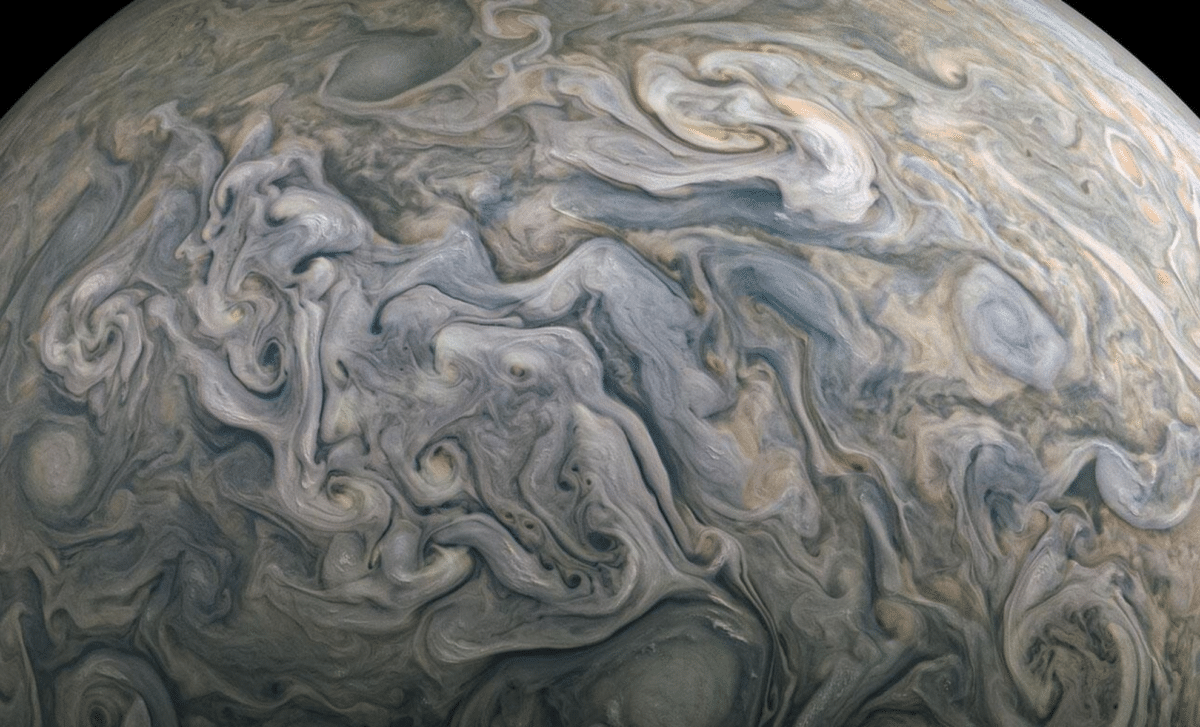
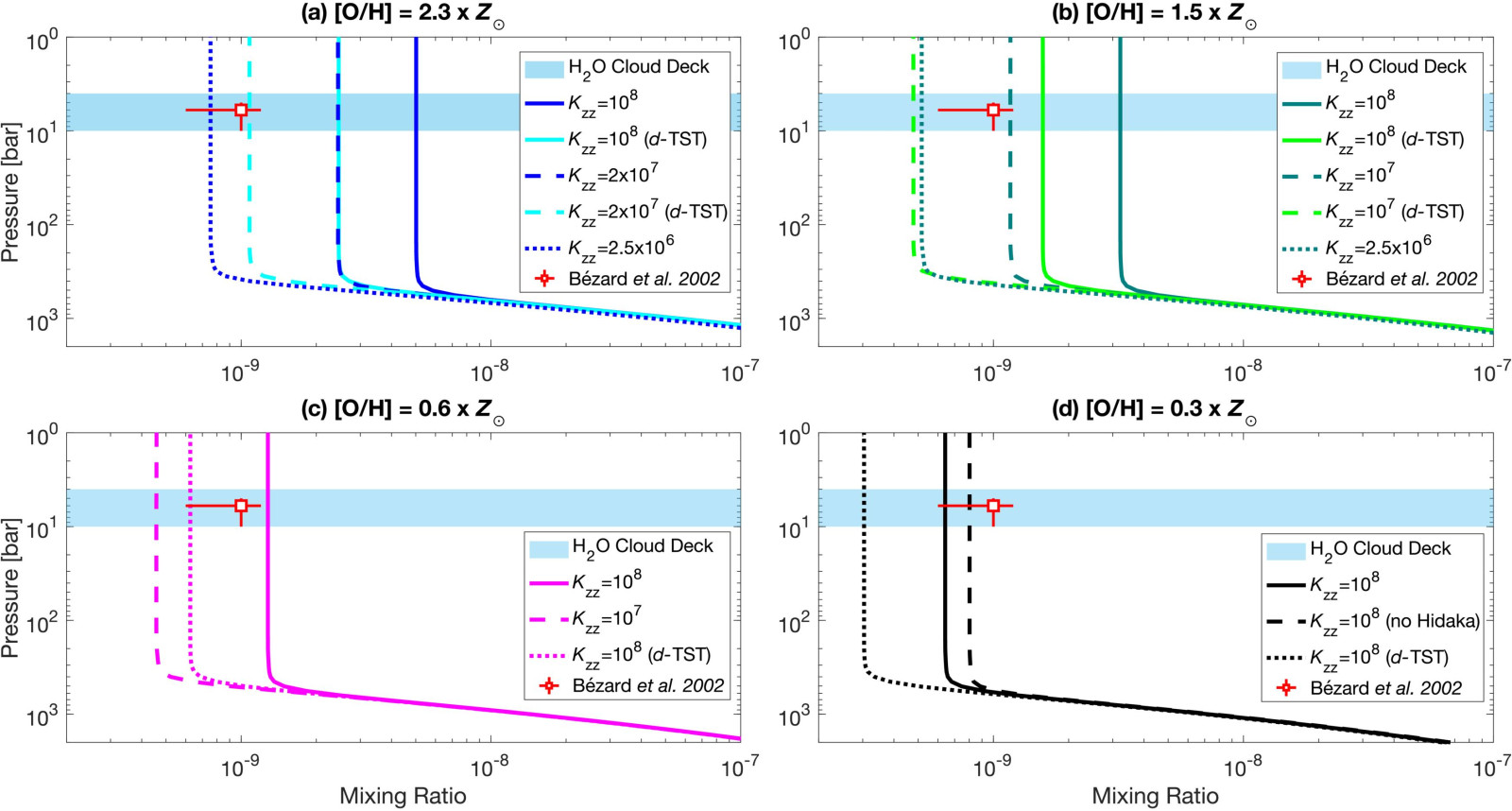
Researchers from the University of Chicago and Jet Propulsion Laboratory have published groundbreaking research in The Planetary Science Journal, unveiling surprising insights into the composition of Jupiter's atmosphere. Their analysis indicates that Jupiter contains approximately 1.5 times the oxygen abundance found in the Sun, an update that significantly alters our perspective on the planet’s origin and chemical environment. This discovery comes from the most detailed atmospheric model of Jupiter assembled so far, offering unprecedented clarity on the planet’s intricate chemistry.
Why Oxygen Matters for Jupiter
Oxygen, being one of the universe’s most prolific elements, has long been a subject of intense study regarding its presence on Jupiter. Past findings have varied widely, with some recent research suggesting that Jupiter’s oxygen levels were much lower than those of the Sun. The new University of Chicago model counters this view, proposing a higher oxygen concentration—about 1.5 times solar levels—which fundamentally reshapes theories related to Jupiter’s chemical structure.
Jeehyun Yang, a postdoctoral scholar at UChicago and lead author of the research published in The Planetary Science Journal, highlighted that the exact oxygen amount is more than a scientific statistic; it provides critical clues about the processes underlying Jupiter’s formation and the solar system’s evolution. Since oxygen plays a vital role in water creation, comprehending its distribution on Jupiter could also offer insights into planetary habitability beyond our solar neighborhood.

The Complexity of Jupiter’s Atmospheric System
Studying Jupiter’s atmosphere presents a significant challenge due to the planet's dense cloud cover. Iconic features like The Great Red Spot, a vast storm exceeding Earth’s size, complicate observations of the planet’s interior. Past missions such as Galileo fell short of penetrating deep atmospheric layers, but NASA’s Juno probe has recently provided valuable compositional data on upper atmospheric elements including ammonia, methane, and carbon monoxide.
Still, scientists have struggled to develop models that capture the full scope of chemical and physical interactions within Jupiter’s atmosphere. Earlier approaches relied on simplified assumptions regarding gas and cloud dynamics, often neglecting the influence of water droplets and cloud microphysics on chemistry. As Yang points out,
“You need both [chemistry and hydrodynamics]. Chemistry is important but doesn’t include water droplets or cloud behavior. Hydrodynamics alone simplifies chemistry too much. So, it’s important to bring them together.”
By integrating chemical reactions with atmospheric fluid dynamics, the new model provides a more precise depiction of Jupiter’s atmosphere. This holistic approach reveals improved estimates of the planet’s oxygen levels and the slow-moving circulation processes that shape its atmospheric behavior.
Significant Finding: Atmospheric Diffusion Is Much Slower Than Believed
A key takeaway from this investigation is that molecular motion within Jupiter’s atmosphere proceeds much more sluggishly than earlier models indicated. According to the new atmospheric framework, gaseous diffusion occurs at a rate 35 to 40 times slower than traditional estimates. “Our simulations imply molecules take weeks to traverse one atmospheric layer rather than hours, as previously assumed,” Yang explained.
This finding carries important ramifications for how heat and chemical species propagate on Jupiter. It likely influences cloud formation and storm activities, further complicating the planet’s meteorology. Revealing this much slower molecular movement challenges preexisting concepts and adds fresh complexity to our understanding of gas giant atmospheres.
- Categories:
- Astronomy





0 comments
Sign in to Comment