
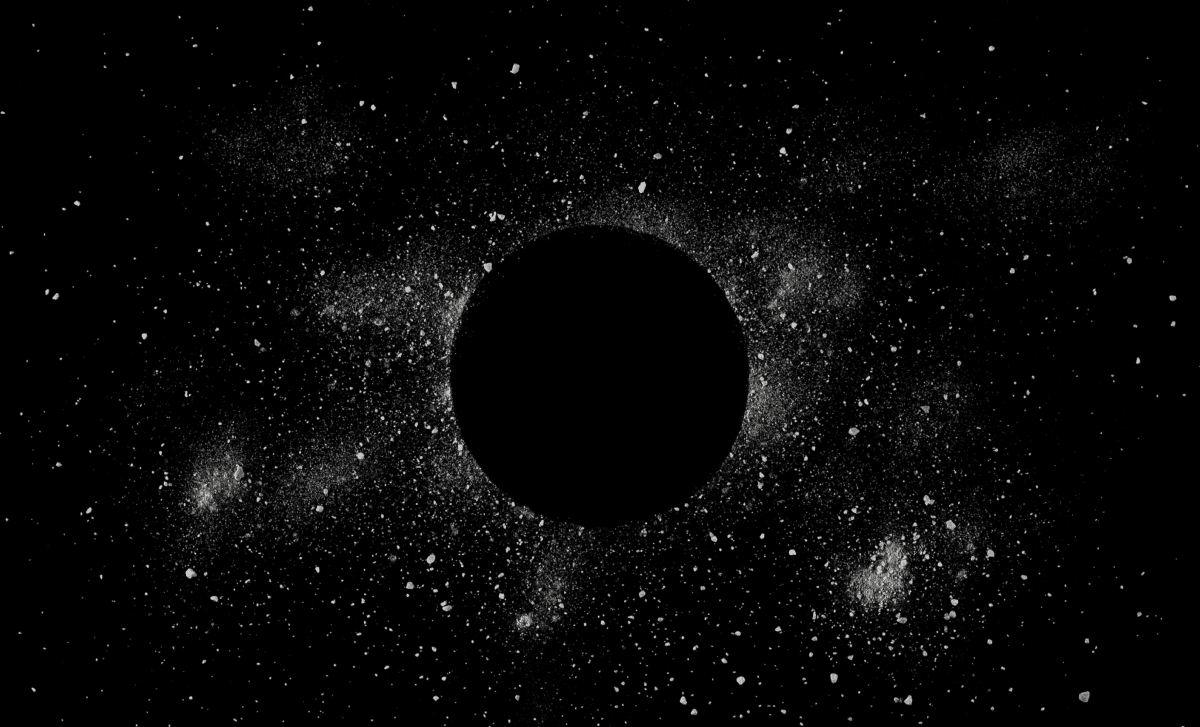
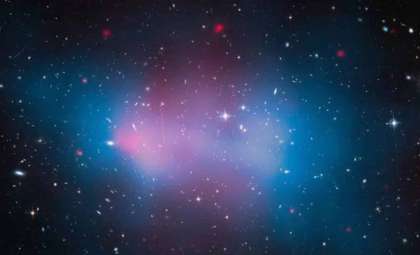
Scientists have introduced a daring hypothesis: dark matter, which comprises the bulk of the universe’s mass, may not consist of unknown particles but instead be composed of fragments of enormous exotic celestial bodies. A recent paper, uploaded to the open-access platform arXiv, details a potential method for testing this innovative idea through observations.
Challenging Conventional Views on Dark Matter
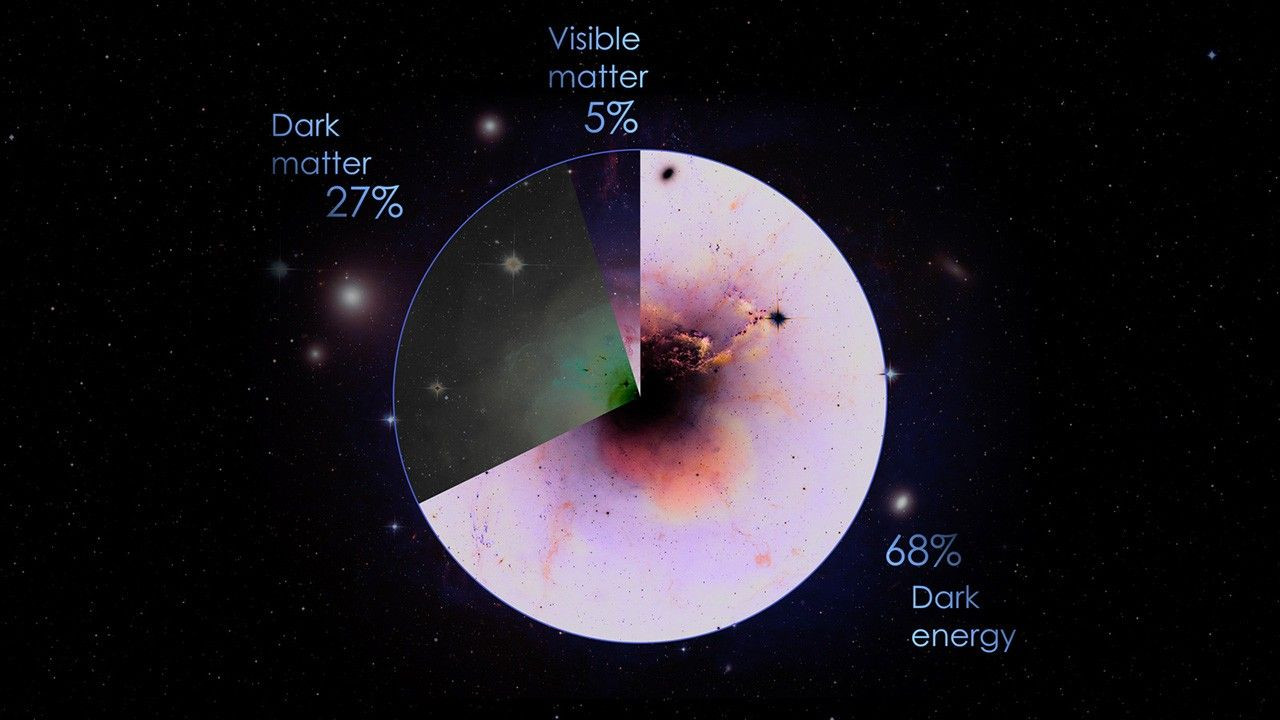
Dark matter has confounded astrophysicists for many years. Conventional theories hold that it is made up of weakly interacting massive particles, or WIMPs, which rarely interact with normal matter. Despite extensive efforts, no direct evidence of WIMPs has ever been found. This new research, available on arXiv, diverges from this mainstream view by considering that dark matter might be formed by large-scale entities, colossal aggregations of exotic material emerging during the universe’s infancy.
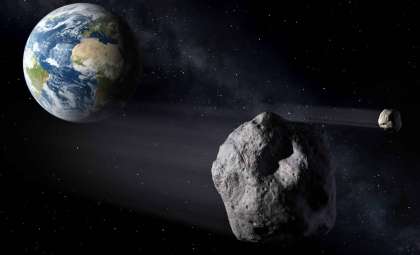
These proposed objects, termed macros, could span a range of sizes from minute grains to asteroid-like masses. Unlike elementary particles, macros would act more like cosmic debris traveling through space. According to the study's authors, these bodies could impart subtle changes to the light or trajectories of stars as they move between observers and distant celestial sources.

Innovative Techniques to Reveal Hidden Matter
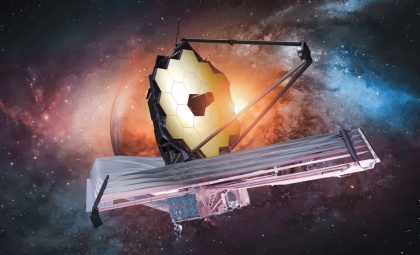
The paper advocates that forthcoming astronomical surveys might spot these elusive macros by tracking their unique gravitational signatures. Facilities like the Vera C. Rubin Observatory and the Nancy Grace Roman Space Telescope are designed to monitor fleeting events across extensive sky regions. If macros exist, they could momentarily distort or weaken star brightness, leaving behind identifiable optical traces.
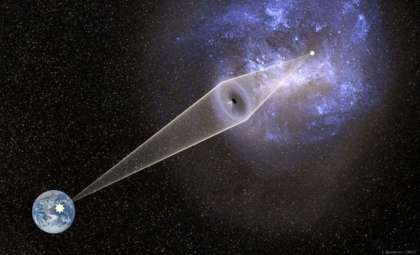
This detection strategy leverages gravitational microlensing, where a massive object bends the light from objects behind it. While this effect has helped discover exoplanets and black holes, spotting macros would necessitate prolonged observation campaigns and precise data scrutiny. Identifying even a single macro would revolutionize our comprehension of dark matter and the universe’s history.
Insights from the Universe’s Earliest Eras
The hypothesis also ties in with the physics of the early cosmos. The researchers suggest these exotic objects might have formed during phase transitions occurring soon after the Big Bang, when distinct forces emerged and cooled. In specific conditions, concentrations of exotic quark matter or similar states could solidify into dense, persistent structures still present today.
These primordial formations might explain gravitational effects credited to dark matter, eliminating the need for postulating unknown particles. Confirmation would imply that dark matter components are ancient, massive bodies quietly roaming galaxies.
Looking Forward to New Discoveries
Anticipated future missions promise greater insight into this theory. With the ability to monitor billions of stars, even infrequent events may soon be observable. Researchers are also revisiting historic datasets from observatories such as Gaia and Pan-STARRS to identify subtle light fluctuations potentially caused by macro interactions.
The authors emphasize that their approach complements rather than replaces current dark matter frameworks, broadening the spectrum of theoretical possibilities. Published on the open-access server arXiv, the study underscores that breakthroughs in astrophysics often arise by testing bold new ideas, ultimately refining our understanding of the cosmos.
- Categories:
- Astronomy




0 comments
Sign in to Comment