
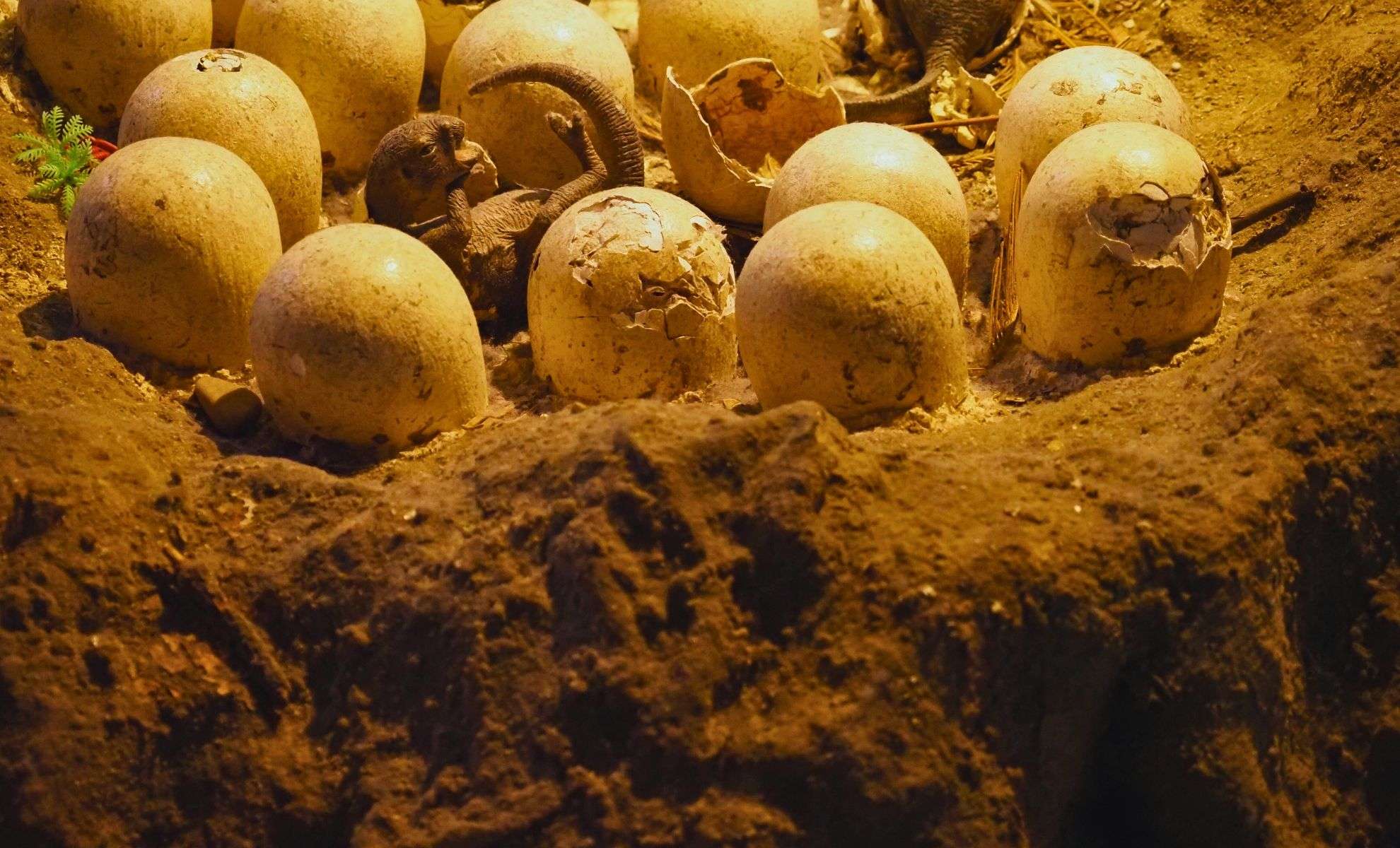
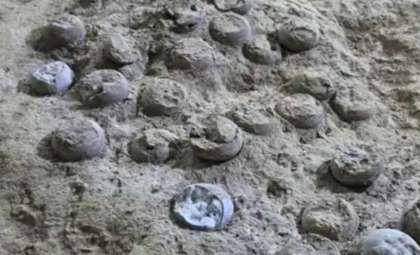
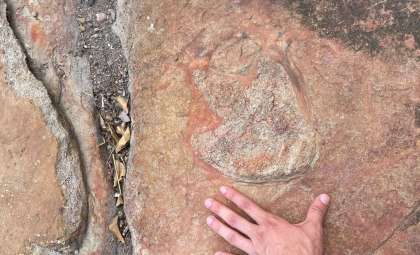
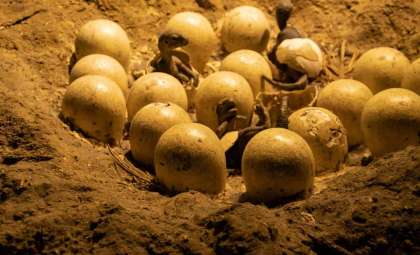
During an excavation near the quaint village of Loarre in Huesca province, paleontologists uncovered a staggering cluster of at least 30 fossilized dinosaur eggs embedded within a hefty two-ton stone block. Researchers estimate that the total fossil count could reach as many as 70 eggs. This remarkable find is poised to transform our understanding of the reproductive and nesting behaviors of giants like the Titanosaurus.
Potential for Many More Titanosaur Eggs in the Nest
The initial find occurred last September when José Manuel Gasca, a crystallography and mineralogy expert from the University of Zaragoza, detected an unusual grouping of eggshell fragments. Immediately, he contacted Dr. Miguel Moreno-Azanza, who conducts research at the Universidade Nova de Lisboa in Portugal.
Upon Moreno-Azanza's arrival at the site in the Loarre Mountains, their excavation revealed an extraordinary concentration of intact eggshells and complete eggs.

These aren't ordinary fossils; these Titanosaur eggs stem from massive herbivores with long necks and powerful tails that roamed until the Cretaceous-Paleogene extinction 66 million years ago. Fossilized bones of these creatures are widespread, but discovering an intact nest is exceptionally uncommon.
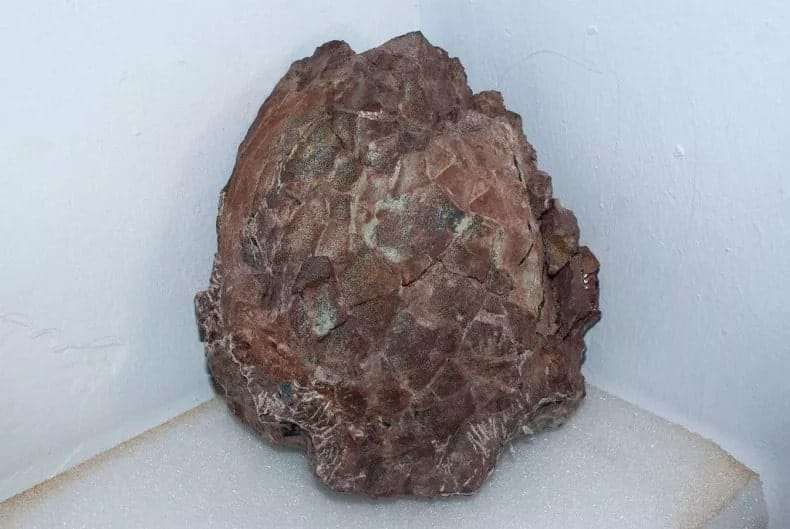
Extracting a Heavy Fossil Nest
Removing this fossilized nest presented a significant challenge. Moreno-Azanza highlighted that during the 2021 excavation campaign, their primary goal was to extract a particularly large nest containing at least 12 visible eggs encased within a rock block exceeding two tons—roughly the weight of a compact car.
The small team of five dedicated roughly eight hours daily for 50 days to free the colossal nest, finally succeeding with the assistance of a bulldozer. Beyond this massive find, they also retrieved ten smaller rock fragments bearing additional fossils.
Typically, paleontologists extract fossils in smaller sections to avoid damage, but Moreno-Azanza pointed out that moving the entire block intact was crucial here due to the nest's exceptional preservation and scientific importance.
The Upcoming Display of the Dinosaur Nursery
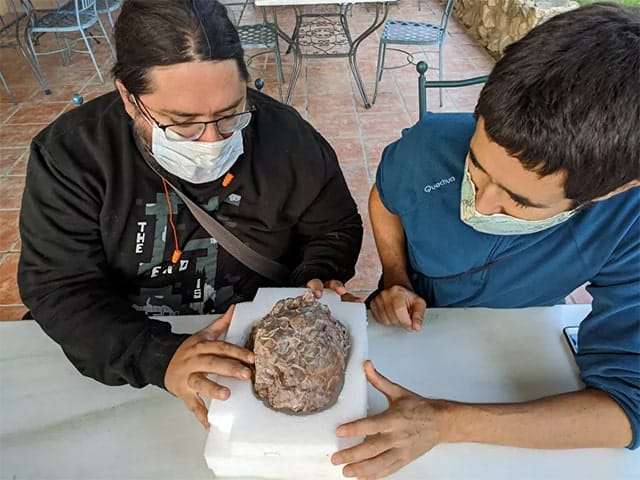
So, where does a two-ton fossil nursery go after excavation? Currently, the stone block and its smaller counterparts are housed in a storage facility in Loarre. Plans are underway to eventually exhibit them publicly.
Moreno-Azanza envisions the fossil nest as the centerpiece for a new satellite exhibit within the Museum of Natural Sciences at the University of Zaragoza. Alongside it will be replicas of dinosaur eggs from across the globe, creating an immersive display celebrating prehistoric parental care.
The excavation and future exhibition are supported by the Portuguese Foundation for Science and Technology and the Spanish Ministry of Science, highlighting ongoing governmental commitment to paleontological research.
- Categories:
- News


0 comments
Sign in to Comment