

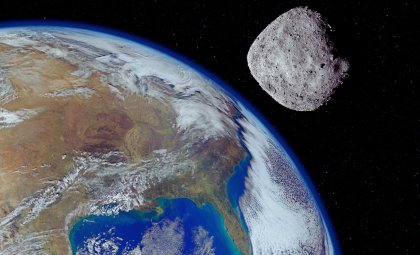
On April 13, 2029, skywatchers around the world will experience a remarkable astronomical event. The asteroid 99942 Apophis, roughly the same size as the iconic Eiffel Tower, is set to zoom past Earth at a distance of just 30,000 kilometres—closer than many orbiting satellites. For the first time ever, a near-Earth asteroid of this scale will be observable with the naked eye, captivating people across Europe, Africa, and parts of Asia.
First identified as a possible threat in 2004, Apophis alarmed scientists globally due to an early estimated 2.7% chance of striking Earth in 2029. This risk earned the asteroid a Level 4 rating on the Torino Impact Hazard Scale, the highest score ever recorded at that time. Its name, inspired by the Egyptian deity linked to chaos and darkness, added an aura of foreboding.
Nearly twenty years later, astronomers have confidently ruled out any impact for at least the next century. Nevertheless, the fascination surrounding Apophis has only grown stronger.

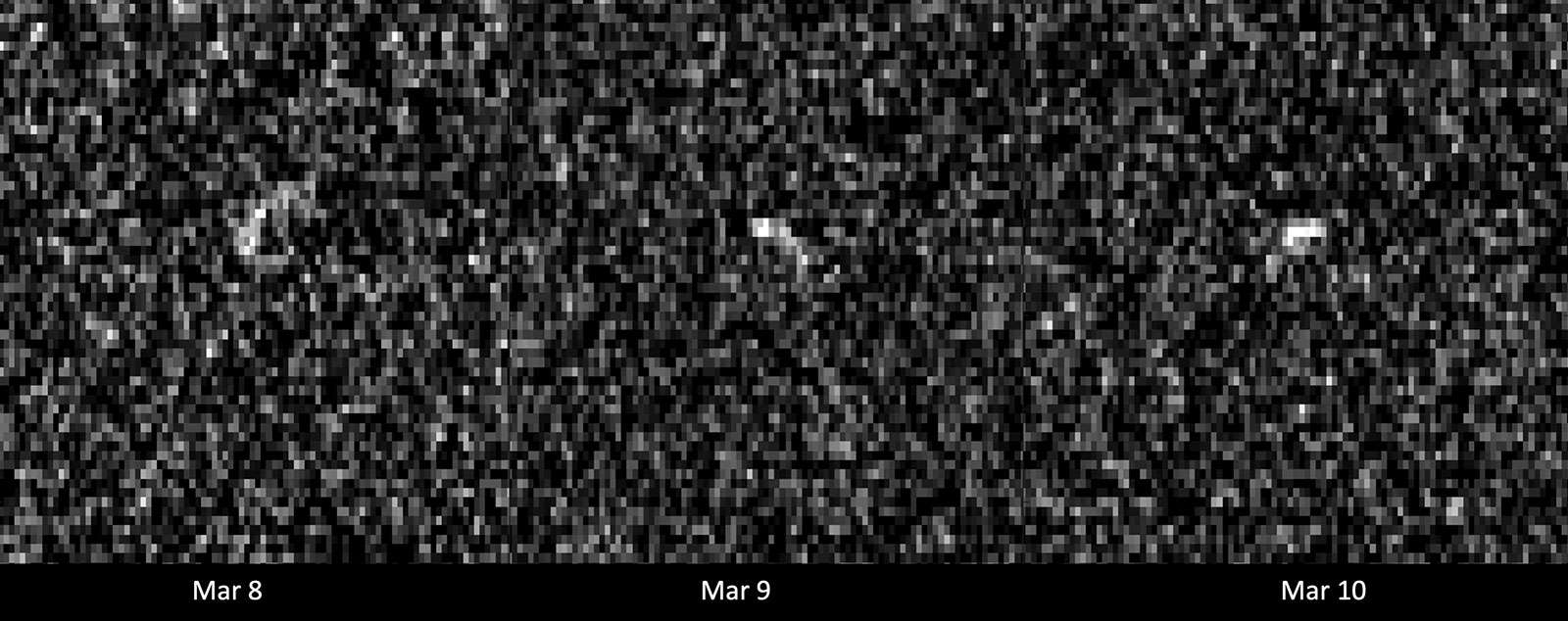
Apophis's Influence on Asteroid Research
Researchers detailed in a 2024 article in The Planetary Science Journal that Apophis will undergo a major orbital shift during its close pass. Currently following an Aten-type orbit, which lies mostly within Earth's path around the Sun, it is predicted to transition to an Apollo-type orbit extending beyond Earth's orbit. This adjustment results from Earth’s gravitational pull and may also alter the asteroid’s rotation speed and surface characteristics.
The real-time gravitational influence offers a unique chance to study asteroid behavior without sending a crewed mission. At the Europlanet Science Congress, planetary scientist Richard Binzel from MIT, who originally developed the Torino Scale, stated, “Apophis poses no impact risk. Still, it provides an unparalleled view of a sizable near-Earth asteroid.”
Scientists aim to leverage this rare event as a natural laboratory for understanding asteroid internal make-up and durability — critical knowledge for future planetary defense initiatives.
Global Space Agencies Gear Up for Apophis Study
NASA is already redirecting its OSIRIS-REx spacecraft, known for an unprecedented sample return from asteroid Bennu, to meet Apophis soon after the 2029 flyby. Renamed OSIRIS-APEX, the mission will focus on detailed surface mapping, monitoring rotation, and detecting any seismic events caused by Earth’s tidal forces.
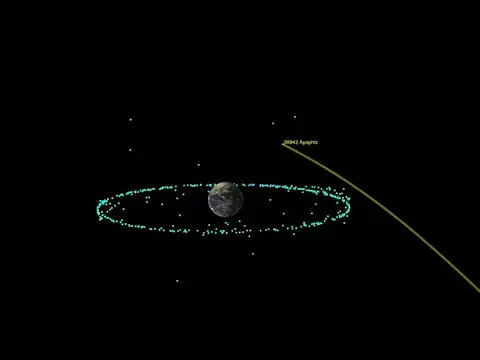
Concurrently, the European Space Agency (ESA) is considering the proposed RAMSES mission, which aims to observe Apophis before, during, and after its Earth encounter. A key feature could be the deployment of a subsatellite dedicated to recording internal vibrational activity, providing unprecedented insight into the asteroid’s geological framework. If successful, Apophis would join the Moon and Mars as one of the few extraterrestrial bodies with seismic data.
ESA planetary geologist Dr. Clara Maurel from the Paris Observatory, involved in mission planning, commented, “Understanding how Earth’s gravity affects Apophis is vital for improving models that could help deflect hazardous asteroids someday.”
A Spectacular Cosmic Show Visible to Billions
Besides its scientific importance, Apophis will offer a once-in-several-millennia spectacle. On clear nights, people in Western Europe and Northern Africa may see it glimmering as brightly as the stars in the constellation Ursa Major. Unlike meteors that burn out swiftly, Apophis will glide visibly as a over several minutes—a celestial display astronomers say won’t recur for 7,500 years.
Because the asteroid will pass within the orbits of many geostationary satellites, space agencies are closely monitoring the event. Though there is no collision danger, its proximity might temporarily affect satellite navigation systems or cause anomalies in tracking data, underscoring the need for ongoing observation and preparedness.
- Categories:
- News








0 comments
Sign in to Comment