
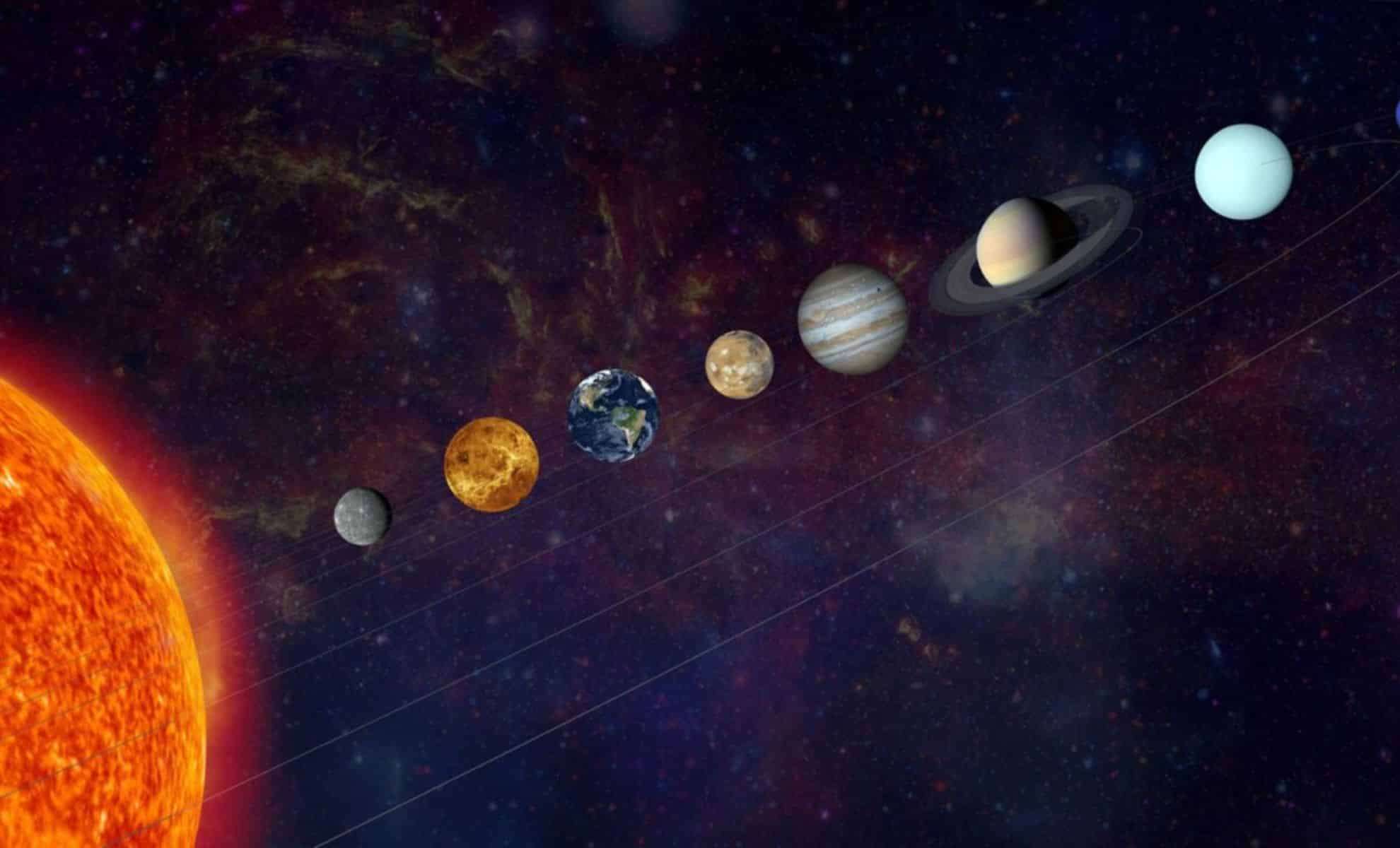
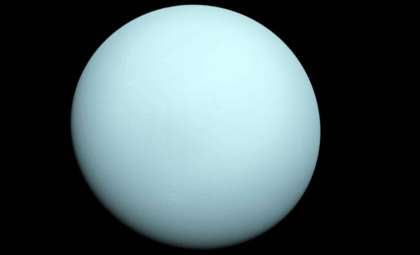
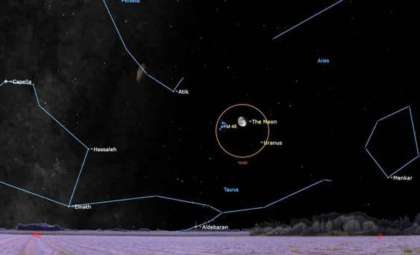
On April 7, 2025, an uncommon celestial event gave NASA an exceptional opportunity to examine Uranus’s atmosphere and ring system via a stellar occultation. As Uranus crossed in front of a distant star located roughly 400 light-years away, its atmospheric layers bent and dimmed the star’s light, producing a distinctive "light curve". Scientists can analyze this curve to gain vital insights into the planet’s stratosphere, revealing details about temperature, density, and pressure.
This occurrence represents the most notable Uranus observation since a prominent stellar occultation in 1996. NASA’s Langley Research Center reports that more than 30 astronomers from 18 observatories throughout Western North America joined forces for the Uranus Stellar Occultation Campaign 2025. Their mission: to obtain precise measurements that will enhance our knowledge of Uranus’s atmospheric composition, ring behavior, as well as its orbital trajectory, which currently has an uncertainty margin of about 100 miles.
Stellar Occultation Offers a Window Into Uranus’s Middle Atmospheric Layer
As Uranus occulted the background star, the bending of the star’s light illuminated crucial characteristics of the planet’s stratosphere—a transitional zone between its upper atmosphere and lower weather systems. According to William Saunders, the principal researcher from NASA Langley, capturing this light curve from various perspectives enables researchers to “measure the light curve and determine Uranus’s atmospheric properties at many altitude layers.” This opportunity is especially valuable because it marks only the second occasion in nearly three decades that scientists have been able to closely examine this layer of the ice giant’s atmosphere.

Beyond advancing atmospheric science, the occultation has improved Uranus’s orbital models, providing more accurate navigation data for future exploratory missions. With Voyager 2 remaining the sole spacecraft to have visited Uranus back in 1986, the updated data could play a pivotal role in supporting and planning Uranus missions targeted for the 2030s.
Extensive International Cooperation Drives Success
The accomplishment of the April 7 event was made possible through worldwide collaboration. Prior to this, NASA conducted a trial run during a November 2024 occultation observable solely from Asia. Observatories across Japan, Thailand, and India took part, assisting NASA in refining timing estimates and instrument calibration for the upcoming April event. These preparatory observations ensured smooth coordination among the 18 observatories and enabled astronomers to adjust Uranus’s predicted position by 125 miles, a level of accuracy critical for collecting dependable data.
Contributing to the effort was Emma Dahl, a postdoctoral researcher at Caltech, who participated in observations using NASA’s Infrared Telescope Facility (IRTF) in Hawaii. She remarked, “Scientific progress thrives on collaboration. The atmospheres of gas and ice giants are especially intriguing because their lack of solid surfaces allows us to study cloud patterns and atmospheric layers without additional complications.”
- Categories:
- News





0 comments
Sign in to Comment