

Dating back to 600 BCE, the fascination with static electricity began when Thales of Miletus, an ancient Greek thinker, observed that rubbing fur against amber caused the fur to attract small particles. This simple observation ignited centuries of research into the enigmatic behavior of static electric charges.
Today, static electricity is a common experience found in everyday situations like:
- The static cling of hair during grooming
- Balloons adhering to walls after friction
- The unexpected zap from metal contacts
Despite how frequently we encounter these phenomena, the precise processes behind static electricity have puzzled scientists for a long time. It wasn't until recently that a research team unveiled a discovery that revolutionizes our comprehension of static charge generation.

Cracking the Code: Elastic Shear’s Influence on Static Charge
This innovative insight centers on the principle of elastic shear. This intrinsic property of materials is vital in the formation of static electricity. When two surfaces slide against each other, they resist movement due to friction. This resistance is what stops us from slipping when walking in socks on smooth floors.
The breakthrough involves recognizing how friction induces different elastic deformations within the materials. As one surface moves past another, the strain experienced at the leading edge contrasts with that at the trailing edge. These disparities in deformation create an imbalance in electrical charges, sparking the flow of static electricity.
Consider the following table illustrating this concept:
LocationElastic StrainElectric ChargeLeading EdgeElevatedPositiveTrailing EdgeReducedNegative
This model offers a clear explanation for why friction is essential for creating static electricity, resolving a long-standing question among scientists.
Broader Impact and Prospective Studies
The ramifications of this finding reach beyond theoretical knowledge. By decoding how static electricity arises, we can develop new strategies to manipulate and utilize this natural force. Possible future applications include:
- Reducing unwanted static effects in industrial manufacturing
- Boosting the performance of wind energy technology
- Advancing fire safety methods
- Deepening our understanding of planetary formation
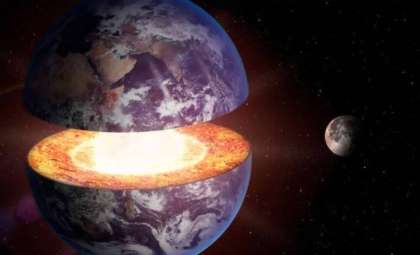
Intriguingly, static charge may have been a fundamental factor in Earth's early development. Researchers hypothesize that electrostatic attractions helped gather primordial dust particles, serving as the first step in the assembly of our planet billions of years ago.
While this discovery lays a firm groundwork for comprehending triboelectric phenomena, ongoing research will aim to reveal more nuanced aspects. Future experiments could unlock additional insights, spurring innovative applications in science and engineering.
A Milestone in the Quest for Knowledge
The path to deciphering the origins of static electricity spans millennia. Beginning with the curious observations of ancient Greek philosophers and culminating in modern scientific breakthroughs, each phase has deepened our appreciation of this fundamental natural force.
As we continue to probe the subtleties of static charge, we recognize its widespread influence—from everyday occurrences like balloon experiments to cosmic events like planet formation. This advancement highlights the enduring value of scientific exploration and the persistence needed to solve enduring puzzles.
Looking ahead, the trailblazing spirit that motivated Thales to examine amber and fur over 2,600 years ago inspires us to push further in unveiling the universe’s hidden secrets.
- Categories:
- Physics







0 comments
Sign in to Comment