

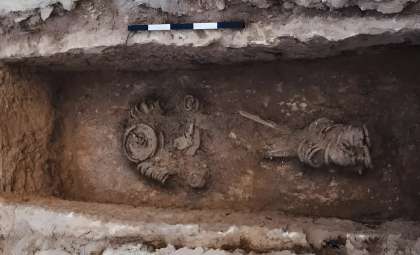
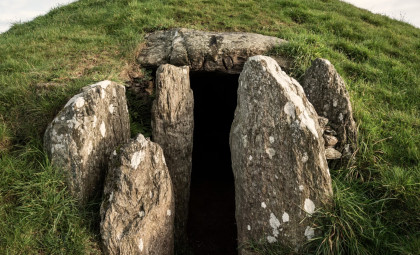
During excavations in the 1950s at Mycenae, the famed citadel of King Agamemnon, researchers discovered a burial site that defied expectations. Next to a male skeleton lay the remains of a woman accompanied by a gold-electrum mask and a trio of swords. The initial interpretation was simple: she was believed to be his spouse, and the weapons were assumed to belong to him.
Undisturbed for millennia, this burial preserved the remains of an individual who died roughly 3,500 years ago, long before the famed Trojan conflict. For all those years, her identity was overshadowed, her features unseen and reduced to an accessory to a presumed warrior husband.
Advancements in DNA technology combined with modern digital reconstruction have now altered that narrative dramatically.

Unearthing a Bronze Age Woman’s Appearance
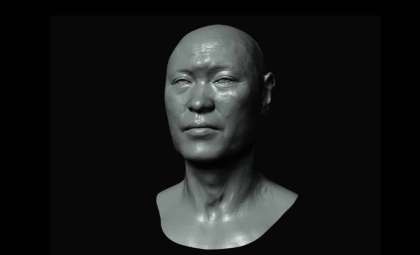
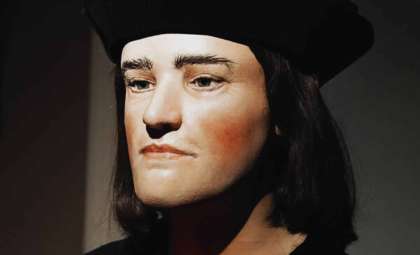
Historian and author Dr. Emily Hauser spearheaded a digital facial reconstruction derived from a clay mold of the woman’s skull, which was originally crafted in the 1980s by University of Manchester scientists. The digital artist Juanjo Ortega G. transformed this data into a vivid portrait of the ancient Mycenaean woman. Hauser shared with The Guardian, stating, “The result was breathtaking. For the first time, a woman from a kingdom connected to legendary figures such as Helen of Troy and Clytemnestra is visible; she might have been imagined as their sister.”
The digital portrayal captures a woman in her early thirties whose striking eyes convey both timeless depth and an unexpected contemporary aura. Her burial dates to the 16th century BCE in what has now been confirmed as a royal Mycenaean tomb.

However, the facial reconstruction is only part of this discovery. Genetic analysis fundamentally changed the understanding of her connection to the male skeleton. Rather than being spouses, the two were siblings.
Genetic Insights Challenge Previous Assumptions
“The common assumption is that a woman found next to a man in burial is his wife,” Hauser explained. “DNA evidence conclusively showed they were brother and sister. This woman’s presence in the royal tomb reflected her own status, independent of marriage.”
This revelation is significant. If the weaponry truly belonged to her, as mounting evidence suggests, it highlights the increasingly recognized complexity of women’s roles in Late Bronze Age Mycenae.
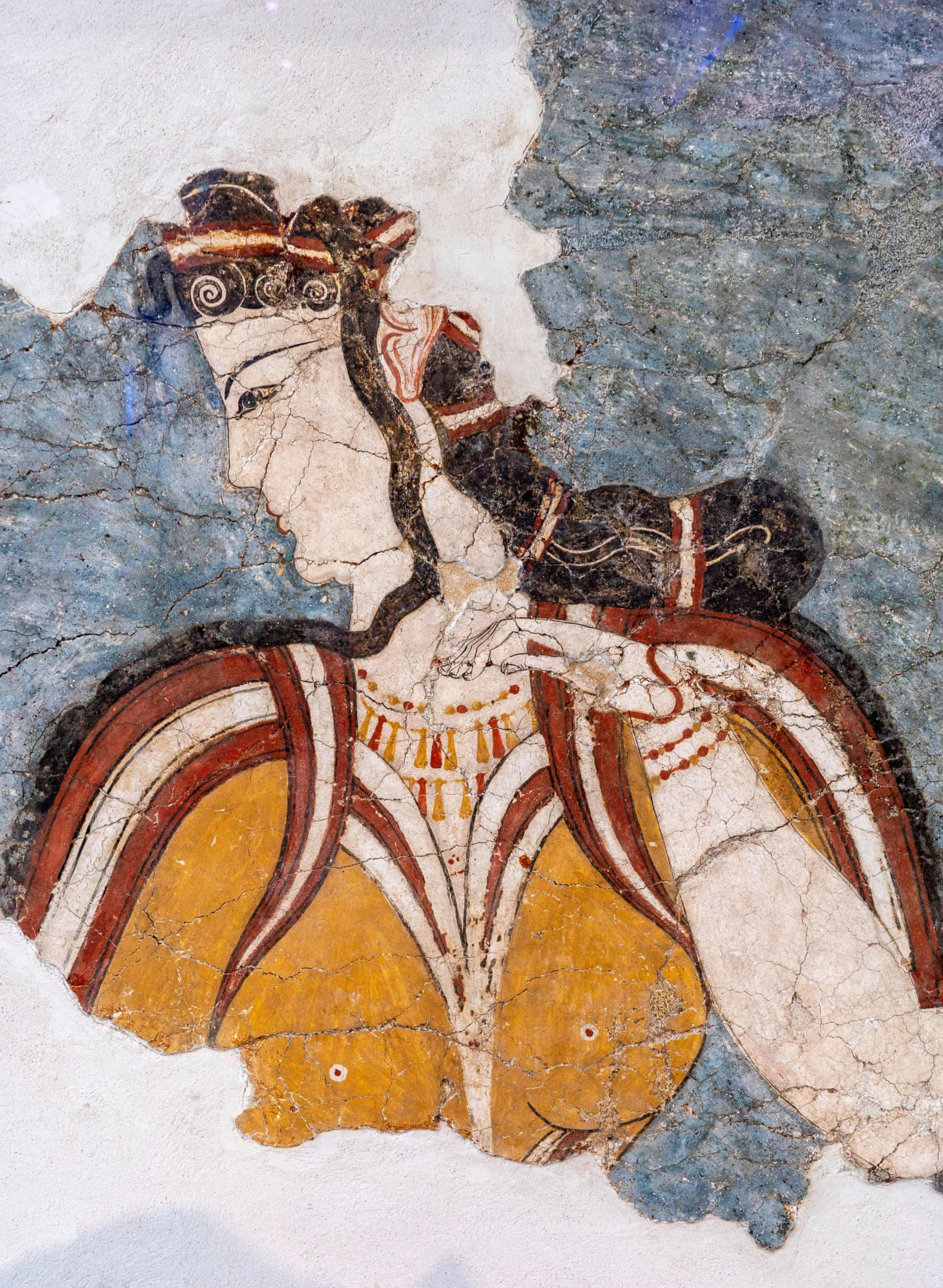
Hauser pointed out that recent research reveals weapons and warrior gear are more frequently found with women than men in certain tomb contexts from the era. The three swords discovered in this grave align with this trend, prompting historians to reconsider entrenched ideas about gender roles in ancient warfare documented in the ancient world.
Evidence of Labor Etched Into Bones
Further examination of the skeleton showed telltale signs of arthritis in the spine and hands, consistent with years of demanding textile production. In The Iliad, Helen is famously depicted weaving; here, the physical strain of such tasks is visibly recorded in bone, bridging myth with tangible human experience.
The reconstruction endeavor, detailed by The Archaeologist, incorporates forensic anthropology, carbon dating, 3D printing, and DNA studies. Hauser emphasizes how these technologies revolutionize the way scholars visualize the distant past. “For the first time, the past confronts us face to face,” she remarked.
Her newly released book, Mythica: A New History of Homer’s World, Through the Women Written Out of It, uses this reconstruction as a key illustration and argument: that women in Mycenaean Greek society were vital, influential, and physically marked by their work in ways traceable after millennia.
The image gazing out today is no anonymous ancient figure. She was a living person who labored, held honor, and was laid to rest in a royal tomb beside her brother, bearing arms that may well have been her own.
- Categories:
- Science





0 comments
Sign in to Comment