
For many years, cosmologists have relied heavily on the concept of dark matter and dark energy to explain the universe’s large-scale structure and its accelerating expansion. Dark matter, believed to compose around 27% of the cosmos, has been central to this picture. Yet, a revolutionary analysis led by astrophysicist Rajendra Gupta offers a new perspective that questions these assumptions. Featured in The Astrophysical Journal, Gupta introduces a model that accounts for cosmic phenomena without relying on dark matter or dark energy.
Reevaluating Dark Matter: From Established Beliefs to New Possibilities
Dark matter has been a foundational concept since the 1930s when astronomer Fritz Zwicky observed surprising motions within galaxy clusters that visible matter couldn’t explain. Scientists have since attributed varying galaxy rotation speeds and gravitational lensing effects to this unseen matter. Although it’s never been directly detected, its presence was inferred to reconcile discrepancies between observed gravitational behaviors and the matter we can detect.
Gupta’s research challenges this conventional approach by proposing that if fundamental physical constants evolve over time, the need to invoke dark matter could disappear. This innovative idea contradicts the commonly accepted ΛCDM framework, which has underpinned cosmology for decades.

"Our previous work, ‘JWST early universe observations and ΛCDM cosmology,’ led us to an estimated universe age of 26.7 billion years, demonstrating that the cosmos can be explained without dark matter," Gupta states. This represents a significant shift from traditional models where dark matter played a crucial explanatory role.
Fundamental Constants in Flux and the Tired Light Hypothesis
Central to Gupta’s proposal is the concept of covarying coupling constants (CCC), suggesting that constants such as electromagnetic force strength or light speed might not be immutable. Variations in these constants could dramatically alter our interpretation of cosmic data—for instance, affecting how redshift and distances are measured from light emitted by distant galaxies.
The model also integrates the idea of “tired light,” a mechanism suggesting that photons lose energy over vast distances, causing a shift toward the red spectrum independently of cosmic expansion. This contrasts with the standard model, where redshift primarily signals an expanding universe.
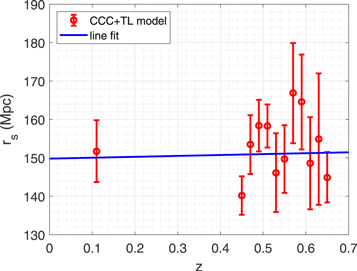
Together, these principles form the CCC+TL model, which Gupta argues can account for observations traditionally attributed to dark matter. Instead of relying on undetectable matter, this framework explains cosmic phenomena through evolving fundamental forces and photon energy loss.
Universe’s Expansion: Changing Forces Replace Dark Energy
The mysterious dark energy has been credited with driving the universe’s accelerating expansion in the standard cosmological model. Gupta’s research, however, attributes this acceleration to the diminishing strength of natural forces over time. As these forces weaken, the universe’s expansion speeds up without invoking dark energy.
"Our analysis points to a scenario where the universe’s accelerating expansion results from decreasing force strengths, not an unknown dark energy," Gupta elaborates. This perspective could reshape predictions about the universe’s ultimate fate and its long-term cosmic evolution.
A model based on fluctuating natural forces potentially offers a cleaner explanation compared to dark energy—an entity that has remained mysterious despite extensive investigation. Gupta’s approach implies that the fundamental laws themselves may transform as the universe ages, causing observable effects consistent with current measurements of cosmic acceleration.
Evaluating Gupta’s Model: The Path Ahead in Cosmology
To gain acceptance, Gupta’s theory must endure comprehensive experimental tests. The model provides specific predictions regarding galaxy rotation, gravitational lensing, and patterns in the cosmic microwave background (CMB) that differ from expectations under the established ΛCDM paradigm.
"While other studies have cast doubt on dark matter, this is, to my knowledge, the first work proposing its nonexistence in a way that aligns with a wide array of cosmological evidence," Gupta asserts confidently. Validation of his theory could revolutionize our grasp of the cosmos, its structure, and its expansion history.
Research groups worldwide are actively comparing the CCC+TL model against observational data involving galaxy clusters, redshift distributions, and background radiation. Successful confirmation could herald a fundamental shift away from dark matter and dark energy towards a dynamic, evolving cosmic framework.
A New Perspective on the Universe’s Age
Perhaps the most startling aspect of Gupta’s hypothesis is the assertion that the cosmos is far older than previously believed. While the standard measurement places the universe’s age at roughly 13.8 billion years, Gupta’s work posits it might be closer to 26.7 billion years.
This extended timeline would influence our understanding of galaxy and star formation processes and reshape theories about early cosmic history. An older universe provides fresh context for how the earliest galaxies formed and evolved, potentially unlocking new insights into cosmic origins.
- Categories:
- News





0 comments
Sign in to Comment