
Researchers have successfully reanimated microscopic algae that remained dormant for nearly 7,000 years beneath the Baltic Sea’s seabed. These foundational marine organisms, known as phytoplankton, possess a remarkable survival strategy: when environmental conditions become unfavorable, they enter a dormant state and settle to the ocean floor. In oxygen-deprived sediment layers like those in the Baltic Sea, these cells can endure for thousands of years.
The investigation was spearheaded by Sarah Bolius of the Leibniz Institute for Baltic Sea Research (IOW). As published in the journal The ISME Journal, sediment samples extracted from the Eastern Gotland Deep offer a stratified record of historical environments, enabling scientists to correlate living organisms with precise historical phases.
Subaqueous Sediments Preserve Environmental History
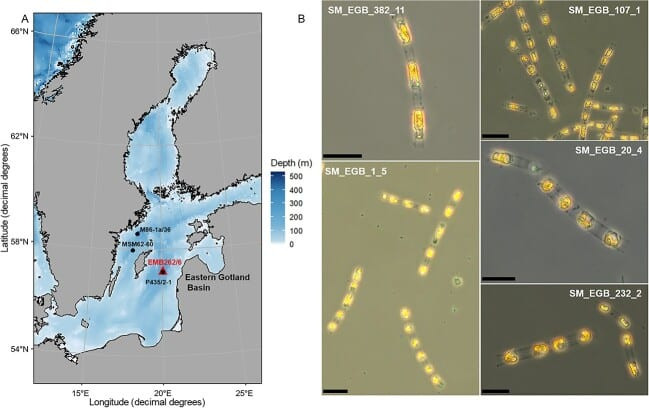
The sediment cores, retrieved from a depth of 240 meters during a 2021 research voyage on the Elisabeth Mann Borgese, represent different periods of the Baltic Sea's ecological past. These sediment strata also contain vital indicators, such as oxygen concentration and salinity, critical for reconstructing bygone environmental conditions. According to researcher Bolius:

“Such deposits are like a time capsule containing valuable information about past ecosystems and the inhabiting biological communities, their population development and genetic changes.”
Bringing Dormant Algae Back to Life with Light and Nourishment
The study, detailed in the ISME Journal, employed a technique known as resurrection ecology to reactivate the dormant algae. By exposing them to light and nutrient-rich conditions, researchers tested their ability to resume metabolic activity.
“Dormancy is a widespread key life history trait observed across the tree of life. Many plankton species form dormant cell stages that accumulate in aquatic sediments and, under anoxic conditions, form chronological records of past species and population dynamics under changing environmental conditions,” explained the team of the study.
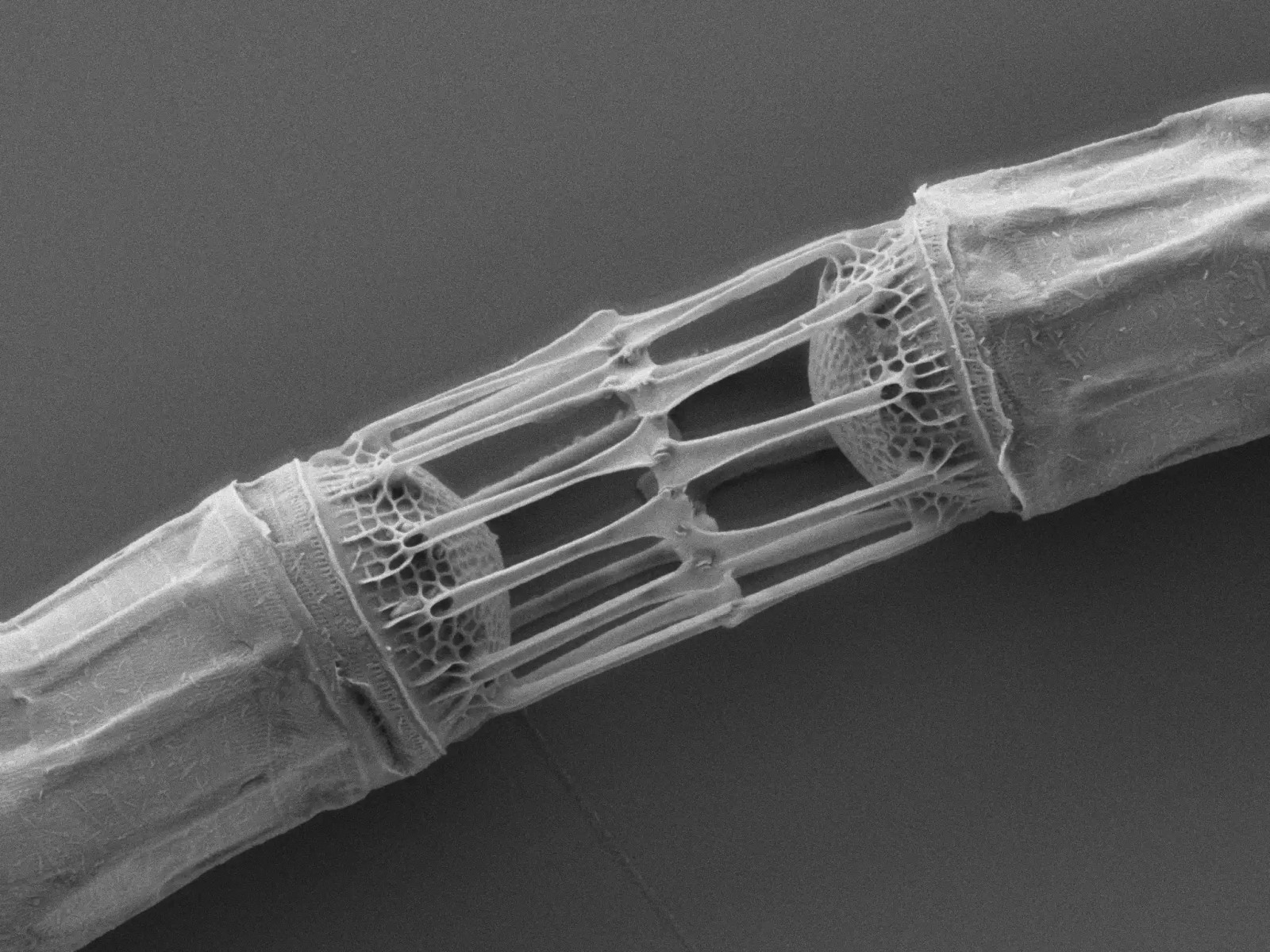
This process succeeded in reviving Skeletonema marinoi, a diatom still prevalent in the Baltic today, from all sediment layers tested. The oldest revived cells were nearly 6,900 years old, although only this single species was able to be reactivated consistently.
“The fact that we were actually able to successfully reactivate such old algae from dormancy is an important first step in the further development of the ‘Resurrection Ecology’ tool in the Baltic Sea.” She added, “this means that it is now possible to conduct ‘time-jump experiments’ into various stages of Baltic Sea development in the lab.”
Ancient Algae Show Modern-Like Activity
Remarkably, these millennia-old cells functioned similarly to contemporary counterparts upon revival. They resumed dividing and photosynthesis at rates comparable to today’s algae. Growth averages reached about 0.31 divisions per day, with photosynthetic oxygen production near 184 micromoles per milligram of chlorophyll per hour, paralleling modern S. marinoi.
“For the future, sediment archives, together with the resurrection approach, would offer a powerful tool to trace adaptive traits over millennia under distinct climatic conditions and elucidate the underlying mechanisms,” the authors wrote.
- Categories:
- Science


0 comments
Sign in to Comment