
As global temperatures continue to climb, the demand for effective cooling has never been greater. Imagine maintaining comfortable indoor climates without relying on electrical power. Researchers in Saudi Arabia have devised a novel cooling technology that harnesses the power of salt and sunlight. Studies from the King Abdullah University of Science and Technology (KAUST) reveal a promising method to lessen our reliance on conventional air conditioners that consume vast amounts of electricity.
With climate-driven heatwaves intensifying, particularly in regions suffering from unreliable electricity supply, the quest for energy-efficient cooling innovations is critical. More than 700 million people currently live without access to electrical grids, highlighting the urgent need for low-cost, sustainable cooling alternatives.
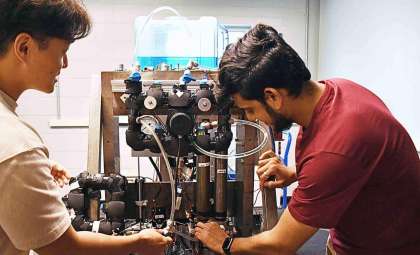
Under the guidance of Professor Peng Wang, the research team introduced Nescod — short for No Electricity and Sustainable Cooling on Demand. This groundbreaking system leverages the properties of ammonium nitrate to provide cooling without any electrical input.

The Science Behind Ammonium Nitrate Cooling
At the heart of Nescod lies ammonium nitrate, a compound frequently used in fertilizer production. This chemical undergoes an endothermic dissolution reaction, absorbing heat from its environment when it dissolves in water. This process causes a substantial temperature reduction in the surrounding air.
Compared to other salts, ammonium nitrate exhibits superior cooling efficiency. Laboratory tests showed that mixing ammonium nitrate with water can lower temperatures from 25°C down to 3.6°C within a brief 20-minute period, outperforming alternatives like ammonium chloride by approximately four times.
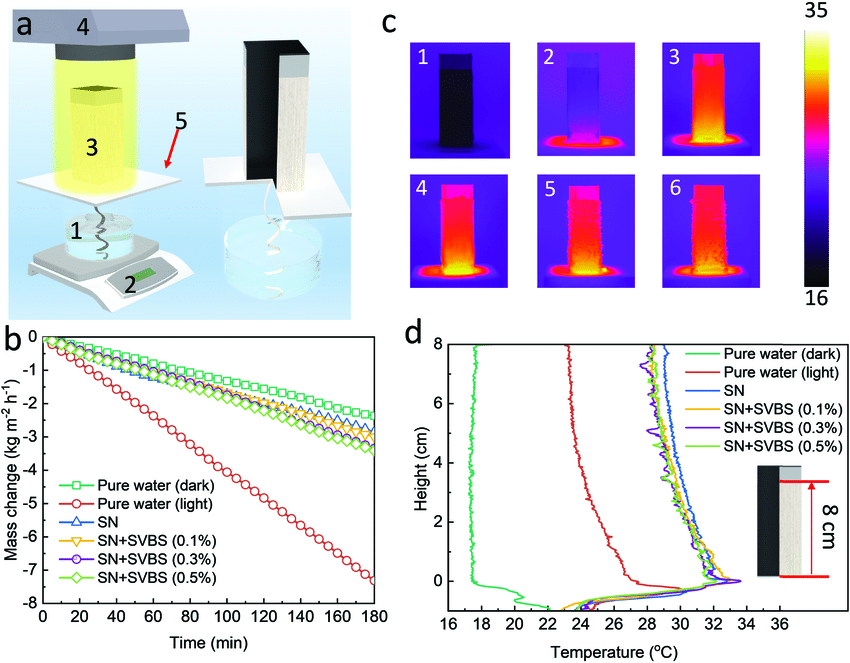
Additionally, ammonium nitrate is an affordable, stable, and easily sourced material, making it ideal for use in areas with limited electricity.
Harnessing the Sun for Continuous Cooling
A standout aspect of this technology, detailed in research featured in Energy and Environmental Science, is its self-regenerating cycle. After ammonium nitrate induces cooling by absorbing heat, the solution can be renewed without electricity.
Using solar energy, the system evaporates water, causing the ammonium nitrate to recrystallize. This cycle enables continuous reuse without the need for an external power supply.
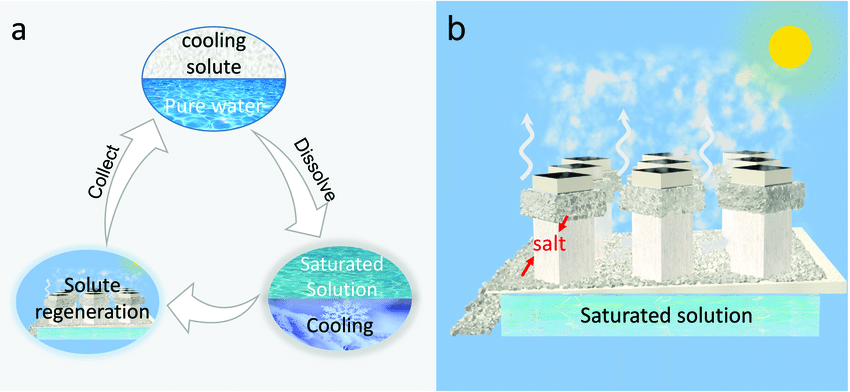
This solar-driven regeneration also benefits the environment. As the water vaporizes, it can be recaptured through solar distillation, preventing water loss and revolutionizing air conditioning methods.
A Viable Cooling Option for the Future
The need for cooling devices globally is escalating rapidly. According to the International Energy Agency (IEA), air conditioning already uses roughly 10% of worldwide electricity, with projections indicating further growth. In countries like Saudi Arabia, where summer electrical demand is heavily driven by air conditioning, the deployment of Nescod could significantly lower both energy consumption and carbon emissions.
This system holds particular promise for communities lacking electricity in hot climates. Nescod can enhance living standards by providing temperature control, food preservation, and storage for sensitive goods.
Once implemented on a large scale, this innovation could revolutionize how heat is managed, especially in locales constrained by limited energy and water resources.
- Categories:
- News











0 comments
Sign in to Comment