

Tucked away at a decommissioned naval facility near San Francisco Bay, a team of engineers is repeatedly propelling metal objects at speeds surpassing the speed of sound. This process requires no rocket propellant, no fiery launchpad, and no countdown rituals. Instead, it features a steady mechanical drone, a surge of compressed gas, and a roar that reverberates within the hangar.
While it resembles an artillery experiment more than traditional aerospace technology, the creators emphasize this mechanism is designed not for combat but for space access. This innovation promises to transform how satellites reach orbit, potentially disrupting the economic dominance rockets currently hold and reshaping who can afford to operate beyond Earth's atmosphere.
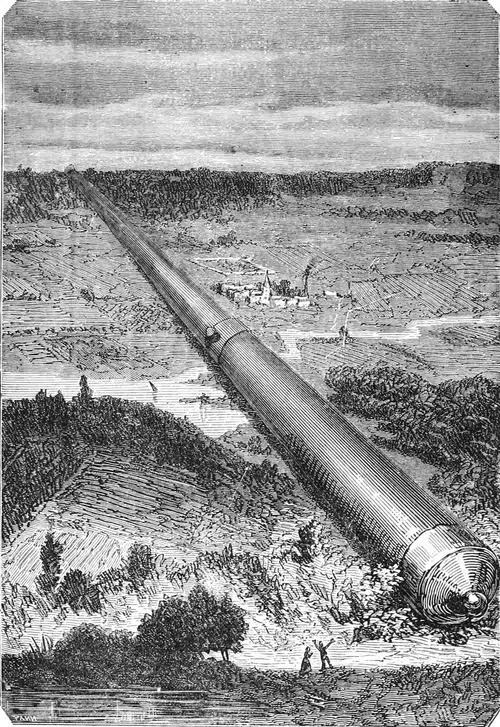
The concept traces back to 1865, when Jules Verne envisioned a colossal cannon, dubbed the Columbiad, capable of sending a crewed vessel to the Moon. What was once pure imagination, preceding even the dawn of powered flight, is now engineered with modern industrial techniques in a California hangar.

A Rocket-Free Route to Orbit
Longshot Space Technologies, the company pioneering this approach, aims not to improve rockets but to bypass them entirely for cargo transport. Their concept, called kinetic space launch, leverages sheer mechanical acceleration instead of combustion: a ground-based gun that uses compressed gas to send satellites and payloads skyward.
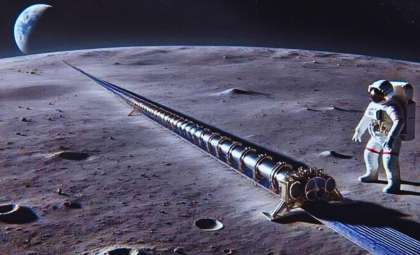
The full-scale installation envisioned would span an incredible 40 kilometers, making it the longest barrel ever constructed. Instead of stacking rockets with fuel above navigation systems, it utilizes sequential pressurized chambers to whip projectiles through the barrel at extreme velocities. The objective is to achieve speeds near Mach 23—around 28,400 km/h—sufficient to reach low Earth orbit when combined with a small onboard propulsion system.
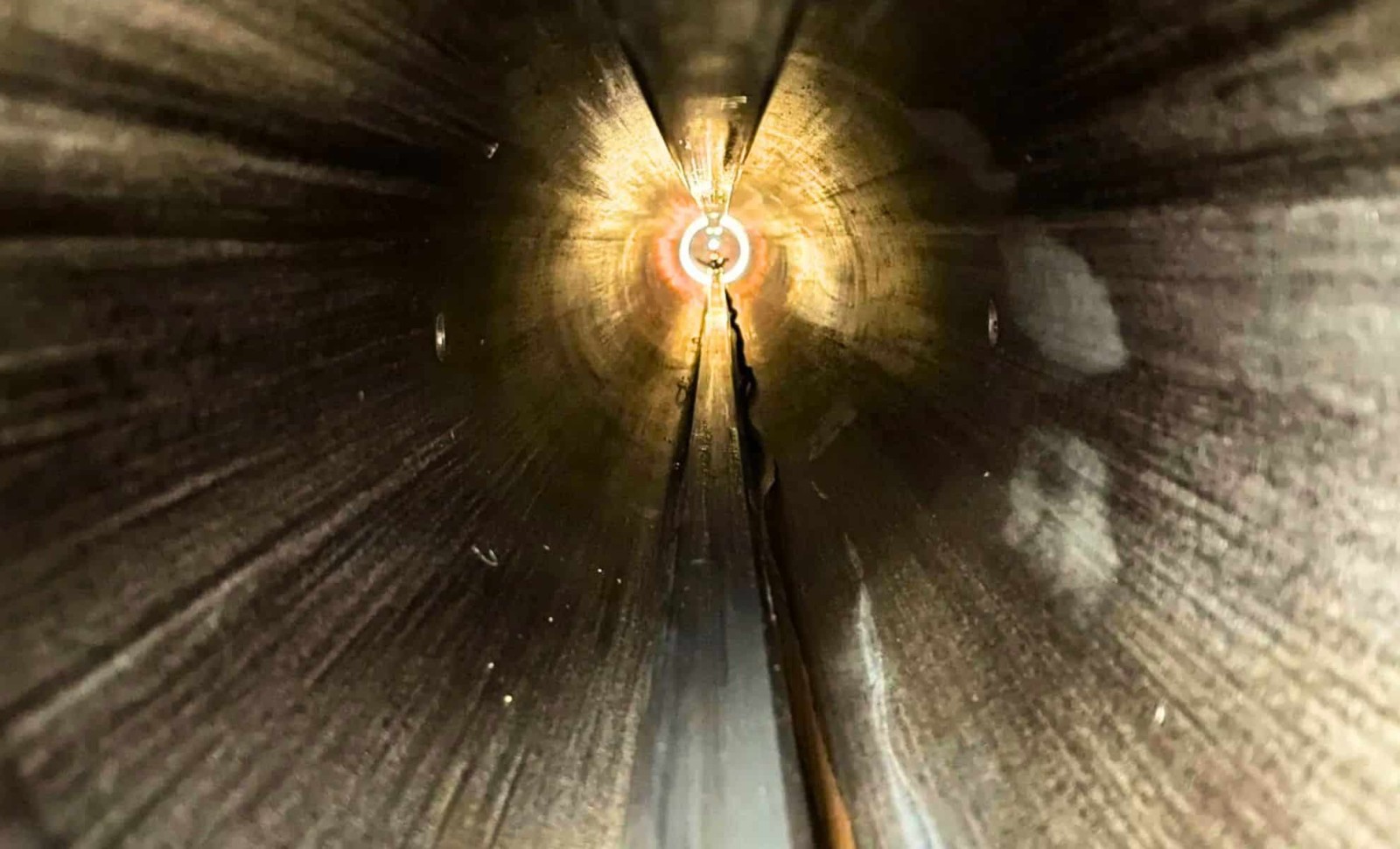
Per their technical documentation, the project has met critical early benchmarks. A prototype gun about 20 meters long has been fired more than 100 times, reaching speeds exceeding Mach 4.2. A 37-meter barrel is currently under production to expand testing capabilities.
The company projects launch costs as low as $10 per kilogram, slashing current rates by over 99% compared to providers like SpaceX. If realized on a large scale, this could fundamentally revolutionize satellite deployment and space logistics economics.
Confronting the Extreme Challenges of Hypersonic Launches
The concept of shooting payloads into orbit isn’t unprecedented. Project HARP in the 1960s experimented with repurposed military artillery for suborbital missions, and this idea has long appeared in science fiction. However, no existing system has yet withstood the intense thermal stress, drag forces, and structural demands encountered during orbital insertion.
Traveling at hypersonic velocities presents brutal atmospheric resistance. As described in Wikipedia’s “Space Gun” entry, a vehicle at Mach 23 encounters temperatures upwards of 1,600°C, hot enough to damage most materials. Longshot tackles this with ablative coatings—protective layers that gradually vaporize during ascent, insulating the core payload.
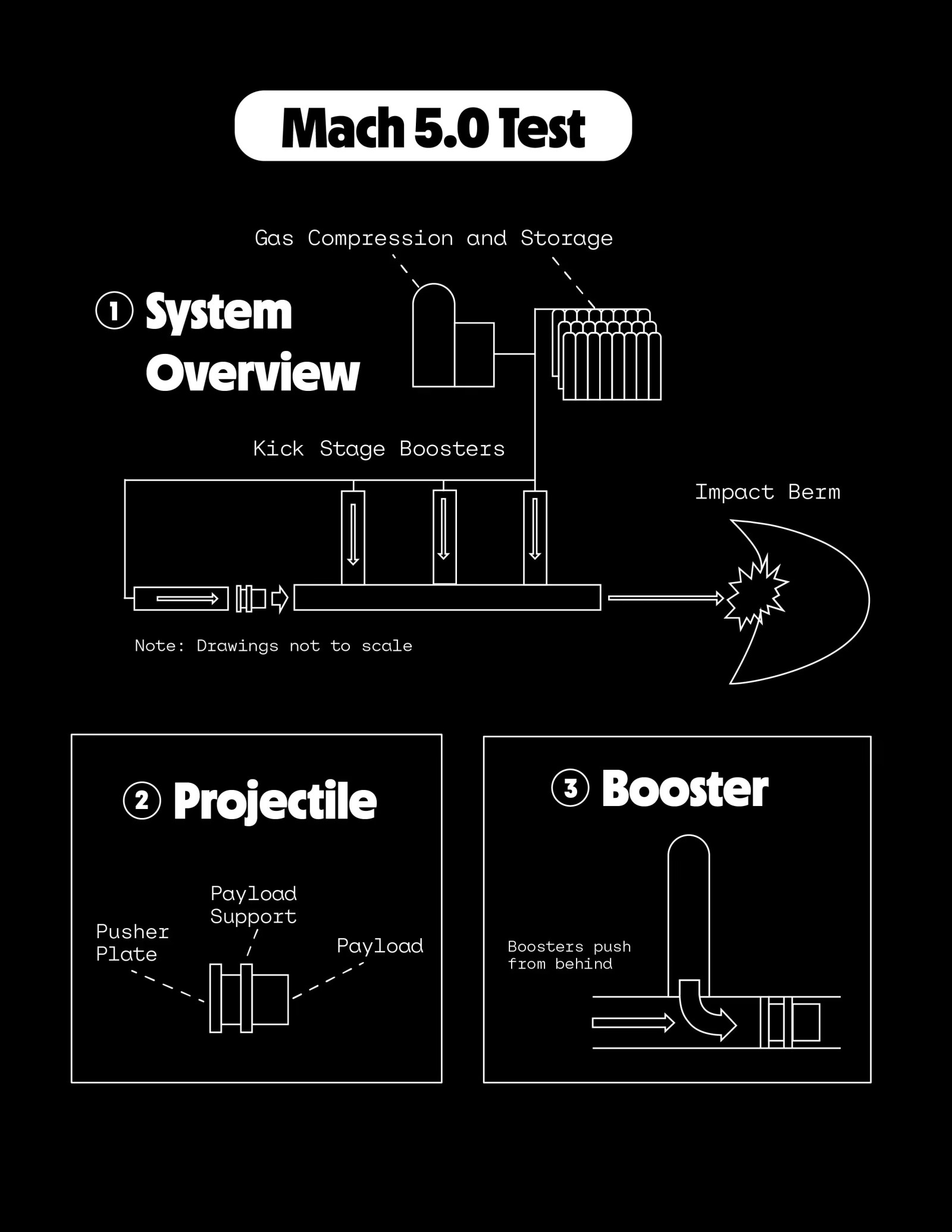
Another obstacle is the force of acceleration. Even with a 40 km barrel, projectiles endure over 10,000 g of force. This intense stress excludes passengers or fragile instruments but suits durable cargo such as solar arrays, fuel, structural components, batteries, and construction supplies.
Longshot’s design distinctly separates cargo shipment from crewed missions. Rockets, the company argues, should remain reserved for astronauts and priority payloads, while everything else can be sent flying on a powerful shockwave.
Defense Sector Interest and Silicon Valley Backing
The United States military has shown enthusiasm. Longshot has secured contracts worth $3 million from the U.S. Air Force to develop hypersonic test capabilities. This technology’s capacity to fire payloads at extreme speeds repeatedly could enable affordable evaluation of advanced materials and defense systems.
Operating out of a former U.S. Navy testing facility in Alameda, California—previously used for missile defense tests—the team benefits from the controlled environment essential for early experimentation. They are also seeking permissions to establish a more extensive range near Tonopah, Nevada, which would provide high-altitude launch opportunities and improved atmospheric conditions.
Private funding has followed suit. Longshot’s website lists prominent supporters including Sam Altman, Draper Associates, Starship Ventures, and other venture capital firms deeply involved in aerospace and defense innovation.
In a recent post titled “How I Learned to Stop Worrying and Love the Burn”, Longshot portrays its mission within a larger vision: to facilitate the emerging space economy, not just spaceflight. Building orbital infrastructure, supporting extraterrestrial mining, and constructing large-scale space projects will all depend on fast, affordable, and scalable supply chains—something this technology aims to provide.
- Categories:
- Space







0 comments
Sign in to Comment