
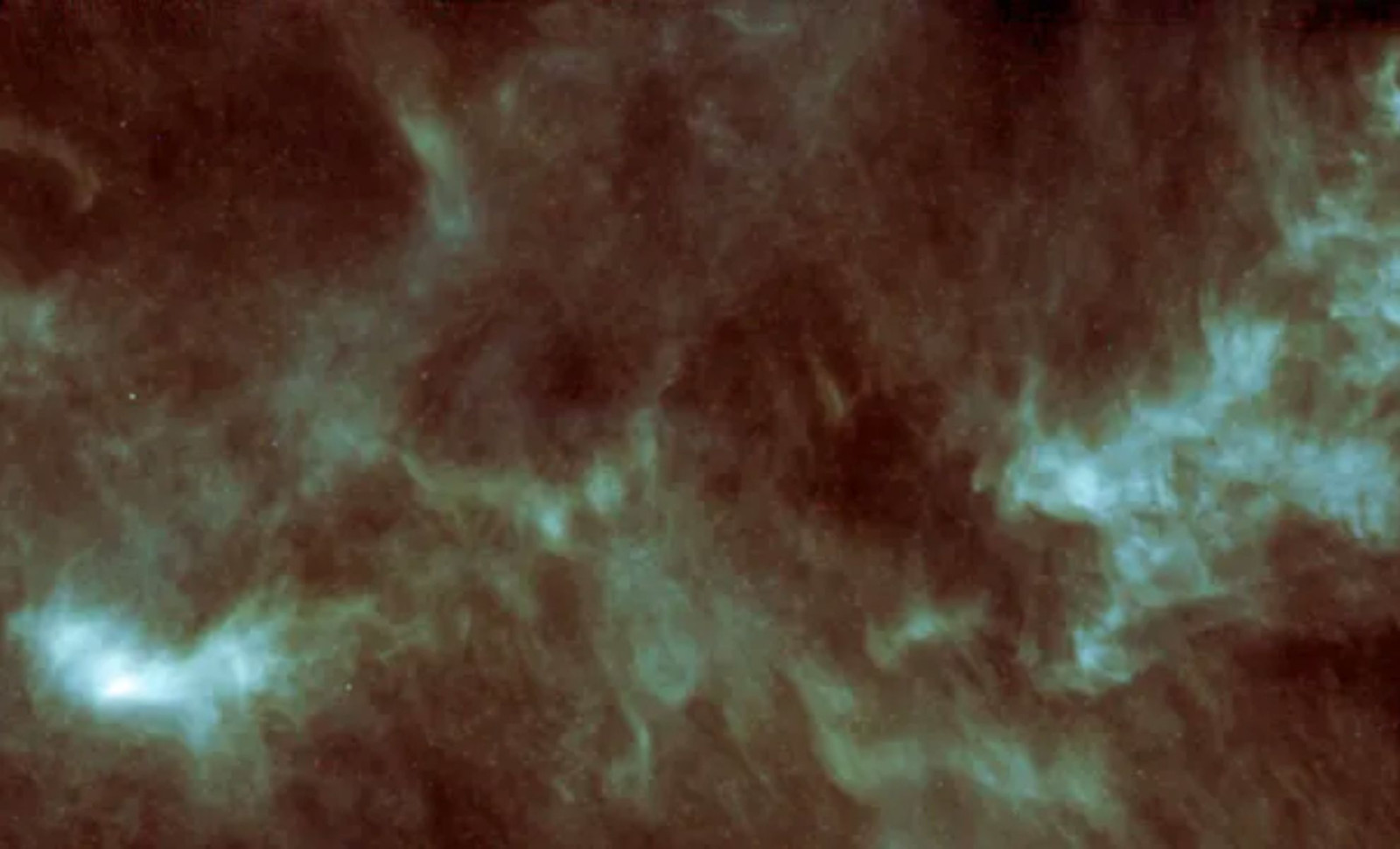
Researchers have identified methanimine, an organic compound, at the heart of a pre-stellar cloud located 554 light-years away. This discovery provides important insight into the chemical processes that might initiate life on other planets. The molecule was found within the cold gas and dust of the L1544 cloud, indicating that essential prebiotic chemistry occurs early in star system formation.
The findings, led by astronomer Yuxin Lin and colleagues, highlight how such molecules could supply the foundational components necessary for life to developing planets. As the L1544 gas cloud contracts to generate a new star system, its chemical constituents may significantly influence the composition of emerging planets capable of supporting life.
L1544: A Cradle for Future Stars and Planets
The Taurus Molecular Cloud, in which L1544 resides, is a dense region filled with gas and dust where stars begin to take shape. These pre-stellar cores, such as L1544, represent fundamental phases in star development. Despite their quiet appearance, these areas are centers of intense chemical reactions that lay the groundwork for star and planet formation.


Although L1544 might seem serene, Yuxin Lin and his research team reveal it as an ideal setting for observing the earliest molecules that may lead to life. As material drifts inward toward the core, it carries various chemicals, including methanimine. Formed in the cooler outer regions, this compound might eventually become part of the material making up new planets.
Methanimine: A Key Player in Prebiotic Chemistry
According to the study published in The Astrophysical Journal Letters, methanimine (CH2NH2) is a simple yet vital organic molecule involved in pathways that synthesize more complex biomolecules. Containing carbon, hydrogen, and nitrogen, it is a building block essential to creating life’s molecular framework.
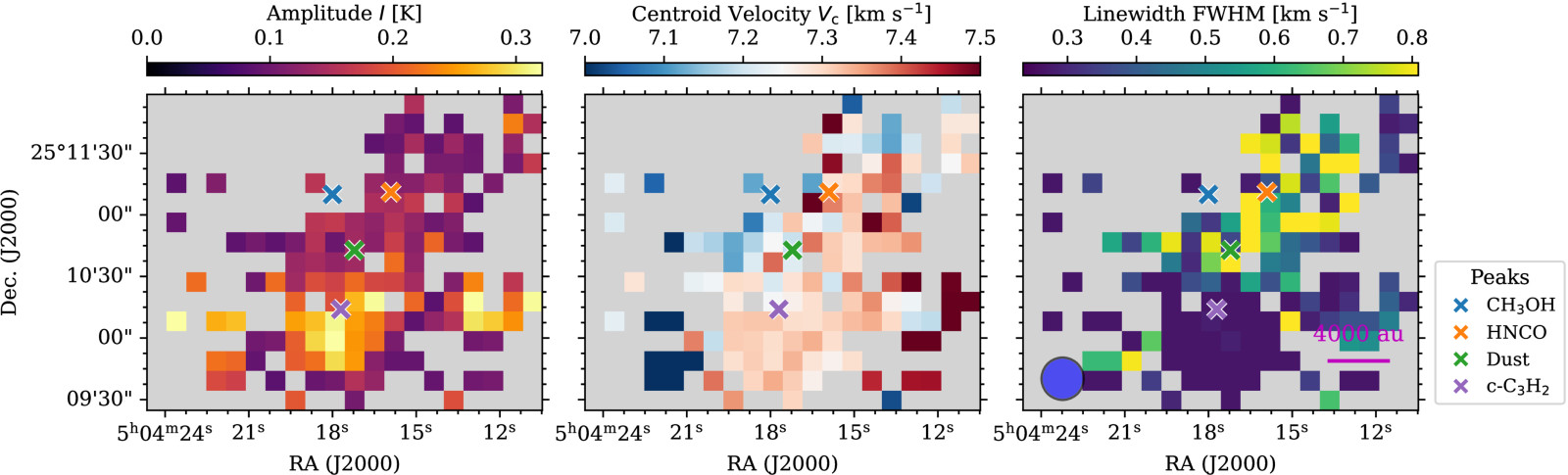
The detection of methanimine in a pre-stellar core like L1544 carries significant implications. As the core contracts to produce a star and orbiting planets, organic compounds such as methanimine may be incorporated into nascent planets. This increases the chances that these worlds could develop organic chemistry necessary for life, as noted by Lin and his team:
” This indicates that prebiotic nitrogen-carbon chemistry continues efficiently up to the onset of gravitational collapse, providing key constraints for astrochemical models and the early stages of chemical complexity leading to amino acids.”
Life’s Ingredients Extending Across the Cosmos
If methanimine arises within one pre-stellar core, it’s likely that similar organic molecules are forming widely throughout numerous star-forming regions in the galaxy. The researchers suggest that life’s essential chemical precursors could be prevalent across cosmic environments.
As clouds like L1544 give rise to new stars and planetary systems, the raw materials for life may be distributed across the universe. By unraveling the formation and accumulation of these molecules in star-forming areas, scientists enhance their understanding of how planets might acquire the potential to harbor life. This study reinforces the concept that organic molecules are fundamental components in the emergence of life-bearing worlds.
- Categories:
- Space








0 comments
Sign in to Comment