
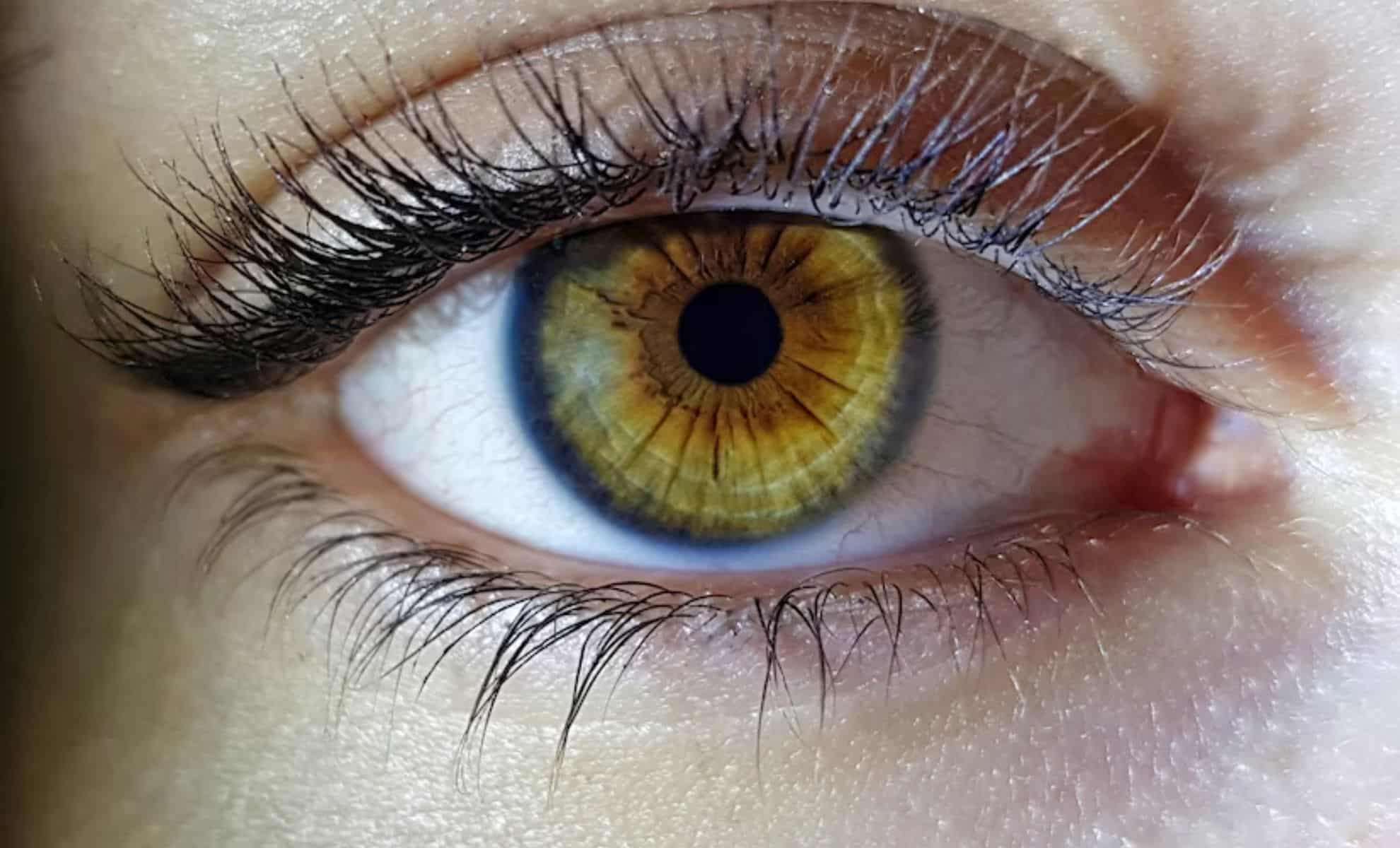
A novel method has enabled five individuals to witness an entirely new color called olo — a remarkably vivid blue-green shade with a saturation level previously believed unattainable by human vision.
Expanding the Horizons of Color Perception
Researchers at the University of California, Berkeley introduced an innovative retinal stimulation technique named Oz. This approach selectively activates particular photoreceptor cells in the eye.
By precisely targeting a single type of cone cell, the team overcame the typical overlap found between red (L), green (M), and blue (S) cones, enabling participants to perceive a highly saturated greenish color well outside the conventional visible spectrum.
Published in Science Advances on April 18, this work marks a significant advancement in controlling and understanding human vision. James Fong, one of the lead authors and a computer science doctoral candidate, stated, “The ultimate goal is to provide programmable control over every photoreceptor [light-sensing cell] in the retina.”

The Mechanism Behind Oz
To create the color olo, the team first mapped each participant’s retina with exceptional precision, employing adaptive optics combined with optical coherence tomography. This process identified individual cones and their wavelength sensitivities — long, medium, or short — customized for each person.
Following this, the Oz system utilized finely tuned visible-light laser pulses to exclusively stimulate the M cones, deliberately avoiding activation of the L and S cones. The name olo derives from this targeted action: the notation “0, 1, 0” signifies the isolated stimulation of the M cone type.
Experiencing the Color olo
Test subjects characterized olo as “a blue-green hue with an unprecedented intensity.” James Fong noted the surreal quality of this perception: “It is very foreign to me to imagine how something else could be saturated enough to where the laser starts looking pale in comparison.” In other words, this synthetic color appeared even more vivid than a pure green laser pointer.
Due to the spatial arrangement of cones in the retina’s center, participants couldn’t focus directly on the Oz stimulation spot. Instead, they viewed it via peripheral vision, fixing their gaze on a nearby area. While current technology limits direct central viewing, future improvements in precision may enable stimulation of the central fovea.
Potential Applications: From Vision Disorders to Advanced Displays
The Oz technique offers promising paths beyond just producing new colors. It could simulate visual impairments in real-time and help individuals with color blindness experience a richer spectrum.
“It may be possible that this [color-blind] person would learn to see the new dimension of color,” Fong explained.
Additionally, the team is exploring how to trigger perceptions akin to a fourth photoreceptor type, a rare trait known as tetrachromacy, potentially expanding color sensitivity dramatically. Nevertheless, adapting Oz for consumer devices remains a long-term goal.
“Our current method depends on highly specialized lasers and optics that are definitely not coming to smartphones or TVs any time soon,” Fong noted.
- Categories:
- Science












0 comments
Sign in to Comment