
In a mineral-rich area long studied by geologists, recent research is reshaping our understanding of Earth’s ancient geological development. Hidden beneath the iconic red soils of northwestern Australia, fresh data is challenging established ideas about how ancient ore deposits formed.
This discovery focuses on a mineral type that has played a critical role in global industrial growth and economics for more than a hundred years. Previously, the genesis of these iron ore formations was viewed through well-accepted geological frameworks tied to early shifts in the planet’s atmosphere.
New age-dating methods, applied at pivotal sites within the Hamersley Basin, have yielded dates that differ significantly from past estimates. The results not only influence resource geology but also broaden ideas about how tectonic phenomena affect mineral formation on a continental scale.

Precise Age Determination of the Hamersley Iron Deposits
Published in the Proceedings of the National Academy of Sciences (PNAS), the investigation demonstrates that the massive iron ore formations in the Pilbara Craton of Western Australia were created between 1.4 and 1.1 billion years ago. This timeframe contrasts sharply with earlier theories that placed their formation between 2.2 and 2.0 billion years ago, coinciding with the Great Oxidation Event.
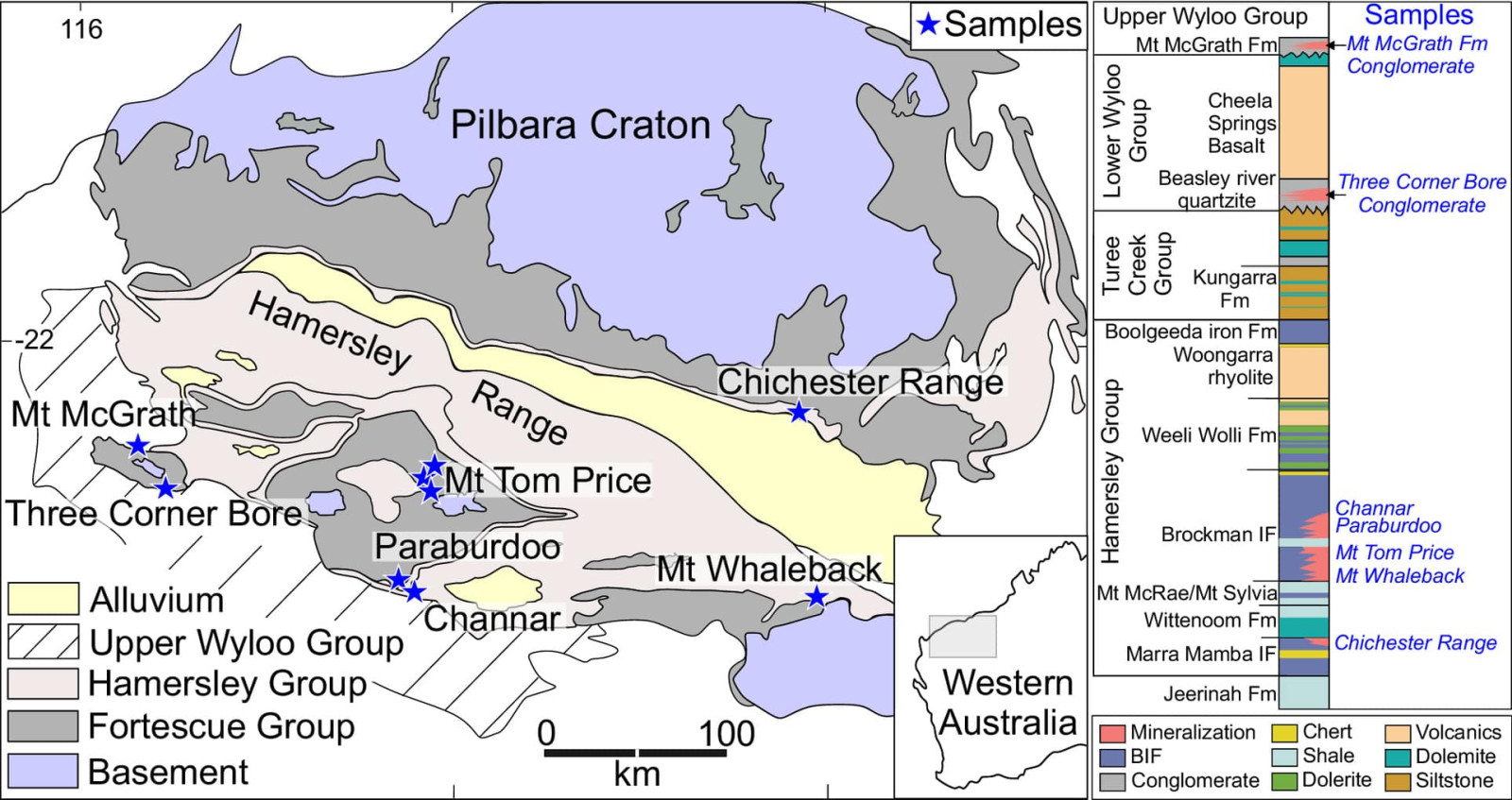
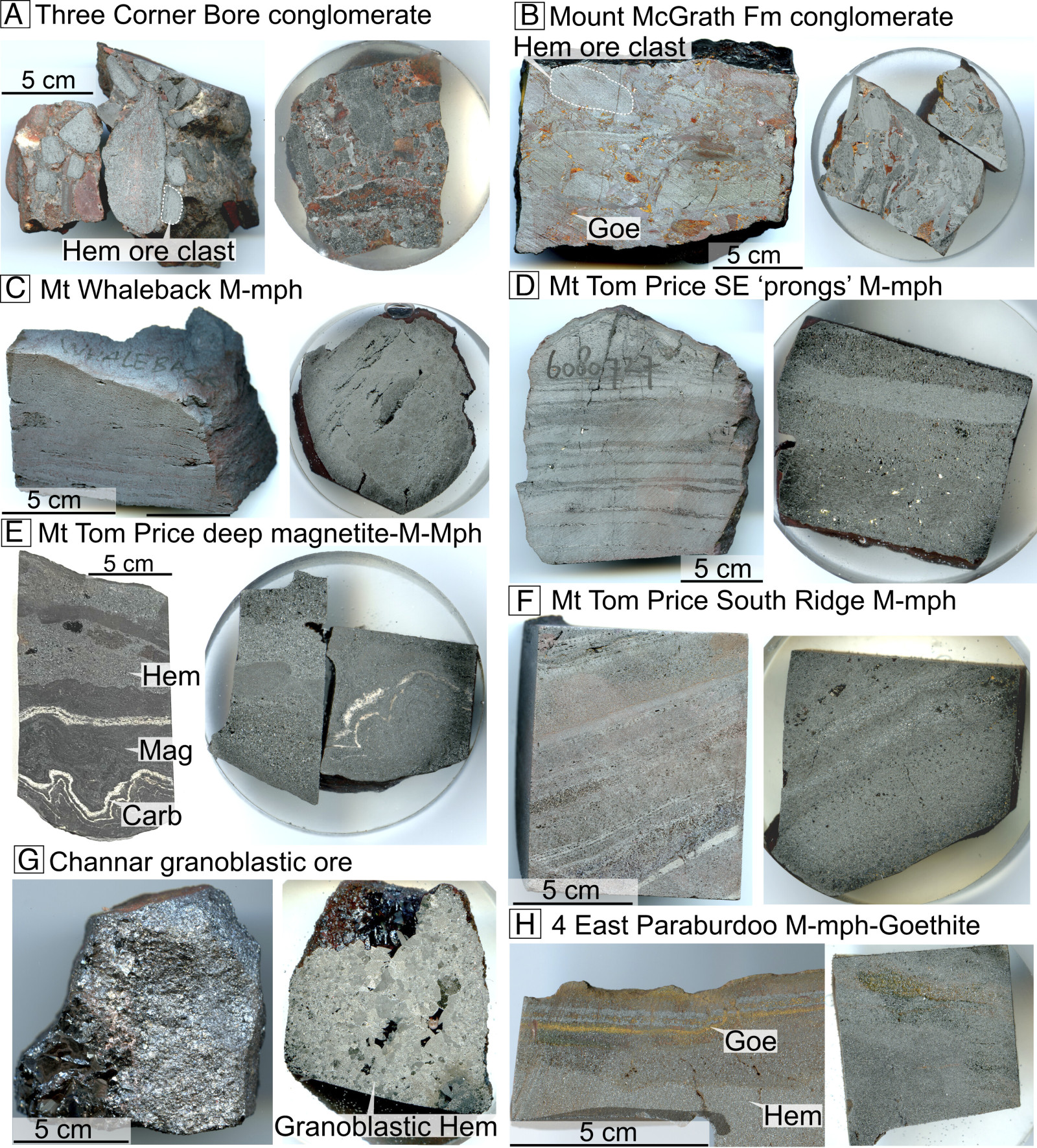
By applying in situ U–Pb isotopic analysis directly to hematite minerals, the team pinpointed the timing of ore crystallization itself. This represents a breakthrough from earlier methods relying on indirect dating of surrounding minerals or geological layers.
“No existing phosphate mineral dates overlap with obtained hematite dates and therefore cannot be related to hematite crystallisation and ore formation,” the paper notes.
These revised ages have been consistently verified across numerous mining locations within the region. Additional reports, such as coverage on Earth.com, underscore how this challenges deeply entrenched geological paradigms.
The evidence suggests that the iron deposits formed well after the recognized major oxygenation periods, instead linking their creation to tectonic shifts related to the break-up of the ancient Columbia supercontinent. The isotopic work was led by geologist Liam Courtney-Davies, originally at Curtin University and now affiliated with the University of Colorado Boulder.
Supercontinent Dynamics as a Driver of Ore Genesis
Scientists propose that heat and structural deformation caused by continental rifting promoted deep crustal remodeling and fluid movement. These processes converted older banded iron formations (BIFs) into concentrated iron ore deposits boasting grades above 60% iron.
This interpretation frames ore formation as a result of geodynamic forces, moving away from earlier explanations focused on biospheric or atmospheric factors. It also suggests closer links between mineral deposits and supercontinent cycles, a hypothesis gaining momentum among geoscientists studying crustal evolution.
Curtin University, a lead institution in the project, emphasized in a press release how this discovery could transform mineral exploration approaches, potentially aiding in locating similar rich deposits elsewhere.
Grounding ore genesis in tectonic activity opens fresh exploration opportunities in comparable Proterozoic terrains such as those in South Africa, Canada, and Brazil, regions with analogous deep crustal environments.
Vast Economic Potential and Exploration Impact
The deposit holds an estimated 55 billion metric tonnes of iron ore, ranking it among the largest known worldwide. Valued at over $5.7 trillion based on current market prices from iron ore trading, the find’s scientific importance eclipses its commercial value.
The Hamersley Basin is already a cornerstone of Australia’s dominance as the top global iron ore exporter. According to Geoscience Australia, the country accounted for more than 35% of the world’s iron ore shipments in 2022.
This research was supported by a consortium including the Australian Research Council, industry giants BHP, Rio Tinto, Fortescue Metals Group, and the Minerals Research Institute of Western Australia (MRIWA). Infrastructure was funded by AuScope, a national geoscience network backed by Australia's National Collaborative Research Infrastructure Strategy.
Remaining Mysteries of the Region’s Ore History
Although the younger mineralization phases are now well dated, older iron deposits formed during the Palaeoproterozoic era remain poorly constrained. Many of these may have been eroded or altered by subsequent tectonic events, and their role in regional iron accumulation continues to be explored.
Upcoming investigations will concentrate on thermal and fluid evolution of the crust between 1.4 and 1.1 billion years ago, aiming to better understand the processes that enhanced iron-rich sediments. The advanced methods used here, such as precise laser ablation ICP-MS, might soon be employed to reevaluate other major ore fields with uncertain histories.
By revising the geological chronology of a globally important iron ore area, this discovery encourages renewed examination of the connections between ancient tectonic activity and modern mineral resources. Additional insights may further alter our perception of how ancient continental frameworks shaped the Earth’s mineral wealth.
- Categories:
- News




0 comments
Sign in to Comment