
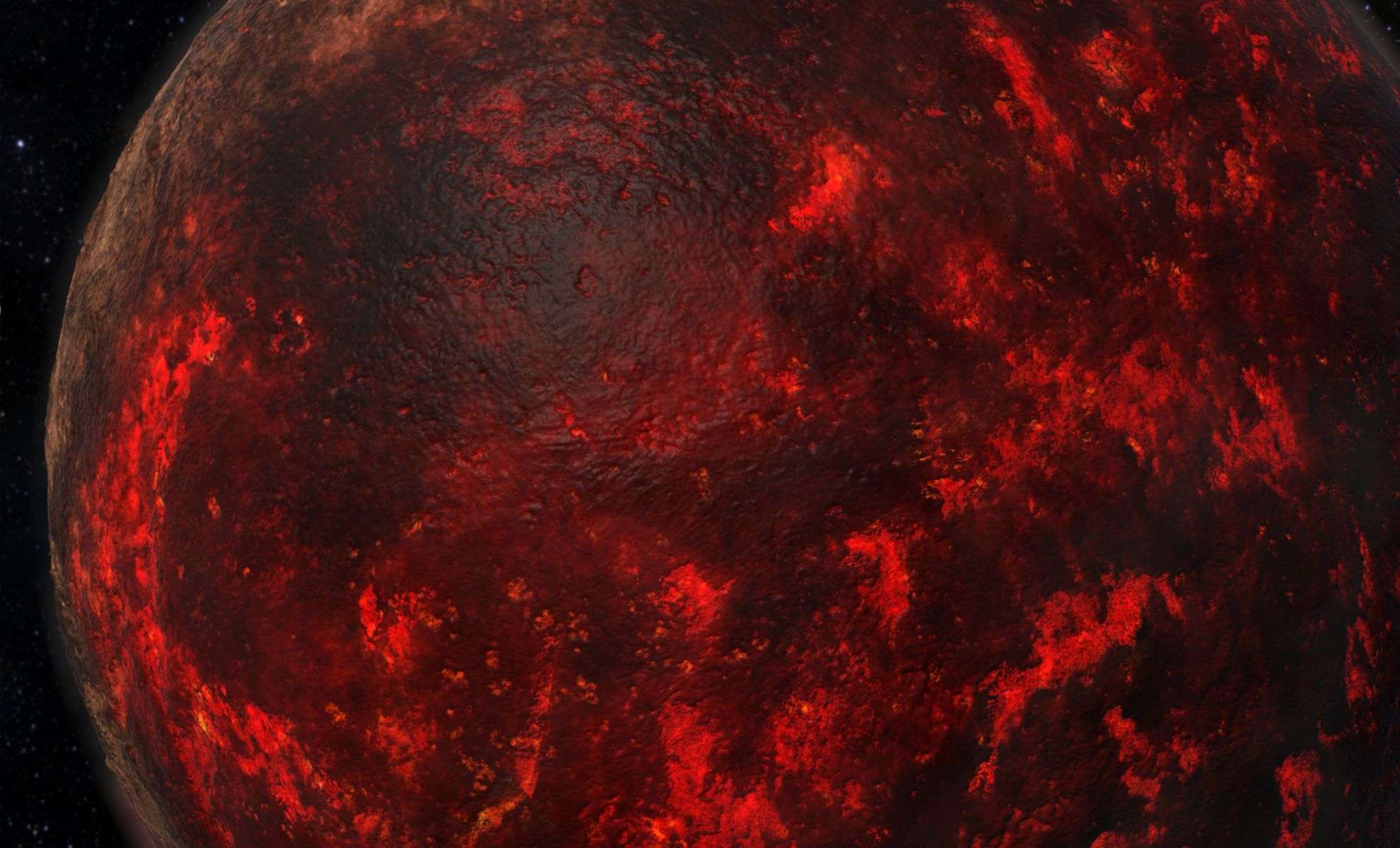
Researchers may have uncovered the earliest remnants of the proto-Earth, the form of our planet existing before the Moon’s formation. By examining ancient rock formations from Greenland, Canada, and Hawaii, they detected a unique chemical makeup that potentially dates back 4.5 billion years, surviving the cataclysmic event responsible for shaping Earth.
Featured in Nature Geoscience in February 2025, the paper highlights a distinctive anomaly in potassium isotopes inside these rocks. This suggests that elements of Earth's primordial mantle may still reside beneath its surface, contradicting the long-held assumption that the colossal impact that created the Moon obliterated all evidence of Earth’s initial material structure.
An Unexpected Potassium Signature
The investigation concentrated on potassium-40, a naturally occurring isotope that decays radioactively. Samples from the Abitibi belt in Canada, along with rocks from the Kama‘ehuakanaloa and Mauna Loa volcanoes in Hawaii, all exhibited a significant deficiency of potassium-40 compared to standard expectations.

“This is maybe the first direct evidence that we’ve preserved the proto-Earth materials,” said Nicole Nie, an assistant professor of Earth and Planetary Sciences, according to Space.com.
The team employed cutting-edge mass spectrometry techniques, dissolving rock samples to extract potassium before performing high-precision measurements. The results defied explanations involving surface erosion, volcanic processes, or typical geological cycling.
Instead, the chemical pattern points to a fragment of Earth’s molten early mantle, a portion that endured the planet’s tumultuous history without being completely homogenized.
Simulations Clash With Observations
To verify their findings, researchers conducted numerous computer-generated models evaluating if the unusual potassium composition could be explained by alternative processes like asteroid impacts, mantle melting, or convection within Earth's interior. None of these simulations replicated the potassium levels observed in the actual rock samples.
According to theNature Geoscience, each scenario produced slightly elevated potassium-40 quantities compared to the ancient rock samples, leaving a single plausible explanation: these stones represent material from a deep, undisturbed section of Earth's mantle, remnants of the proto-Earth that survived the Moon's formation event.
While similar potassium irregularities have been spotted in meteorites, the actual figures didn’t align, confirming the material was terrestrial, not extraterrestrial. This points to a hidden chapter of Earth’s earliest evolution preserved beneath the planet’s crust.
MIT scientists have found amazing clues about Earth’s early history:
— Tornado guy (@fanofaliens) October 15, 2025
– Rocks from 4.5 billion years ago were found in Greenland, Canada, and Hawaiian lava.
– These rocks have very little potassium-40, which challenges the usual Moon-formation theory.
– Computer simulations say… pic.twitter.com/L9t6gnBHTL
Reconsidering Earth’s Early Formation
This breakthrough reshapes how scientists perceive Earth’s composition and questions assumptions made when reconstructing the planet’s early development timeline. It signals that parts of Earth’s formative materials may have eluded previous detection.
“Scientists have been trying to understand Earth’s original chemical composition by combining the compositions of different groups of meteorites,” Nie explained, quoted by Space.com.
Since meteorites represent some of the oldest solar system matter, this methodology is logical. However, the presence of Earth-bound primordial material not mirrored in any known meteorite class implies that current models are missing critical pieces of the puzzle.
“Our findings reveal that the existing collection of meteorites is incomplete, highlighting the need for deeper exploration into Earth’s beginnings,” she added. Some of these answers likely reside far below our feet, inaccessible through meteorite studies alone.
- Categories:
- Space





0 comments
Sign in to Comment