
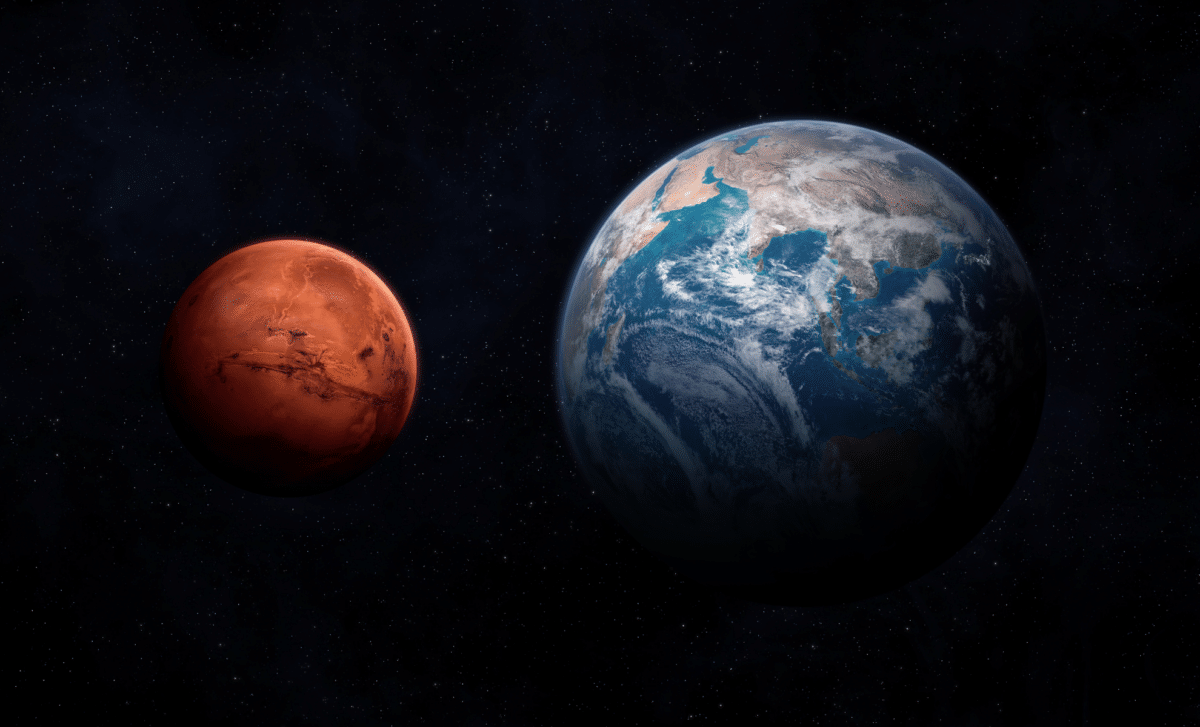
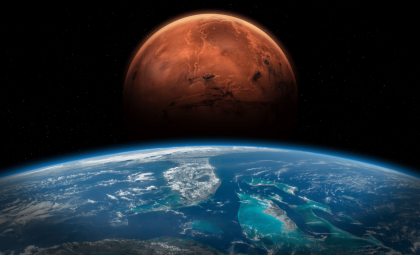
Recent research published in Nature Communications highlights a subtle yet impactful role Mars plays in altering Earth’s orbital path, which drives extensive climate changes and modifies deep ocean circulation across millions of years. This novel insight links the motions of our neighboring planet to significant terrestrial geological and oceanographic phenomena, offering a fresh perspective on Earth's climate evolution.
The Long-Range Gravitational Impact of Mars
The concept that planets mutually affect each other gravitationally is established, but the magnitude of Mars’ impact on Earth revealed here is remarkable. Despite the vast distance separating Earth and Mars, their gravitational interplay, known as gravitational perturbations, accumulates over geological timescales. Approximately every 26 months during planetary opposition, Mars imparts a minor shift to Earth’s trajectory around the Sun. These repeated influences adjust the eccentricity of Earth's orbit, thereby modifying the orbit’s shape and altering the amount of solar radiation Earth receives over long durations.
While orbital cycles such as Milankovitch cycles have been extensively studied, this research points to an additional, more gradual resonance effect stemming from planetary gravitational interactions. “Planets' gravitational fields in the solar system interact and this resonance changes the eccentricity of their orbits,” said co-author Dietmar Müller, geophysics professor at the University of Sydney. This subtle celestial choreography reveals a dormant influence on Earth's climate unfolding far beyond observable human timescales.

Clues Locked Within Ocean Sediments
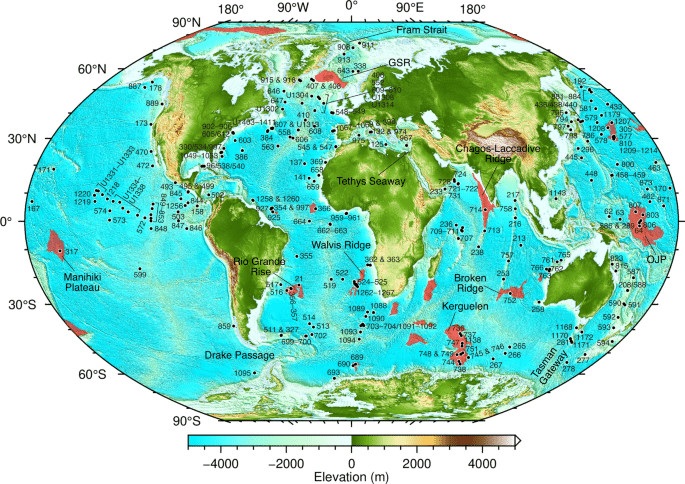
The study analyzed vast geological records stored beneath ocean floors by combining satellite observations with sediment distribution maps covering 65 million years. These deep-sea archives displayed cyclical interruptions in sediment deposition linked to stronger deep ocean currents during distinct intervals. Researchers identified a repetitive pattern approximately every 2.4 million years, termed an astronomical grand cycle. At these times, vigorous currents and intense abyssal eddies disrupt sediment layers, modifying previously quiet seafloor areas.
Published in Nature Communications, the paper connects these oceanographic shifts to changes in Earth's orbit driven by Mars. “Our deep ocean data from the past 65 million years indicate that warmer ocean phases coincide with heightened deep circulation,” explained lead author Adriana Dutkiewicz, a sedimentologist at the University of Sydney. This finding bridges planetary mechanics with dynamic ocean behavior, revealing a cosmic imprint within Earth’s geological history.
Persistent Motion Within the Deep Ocean
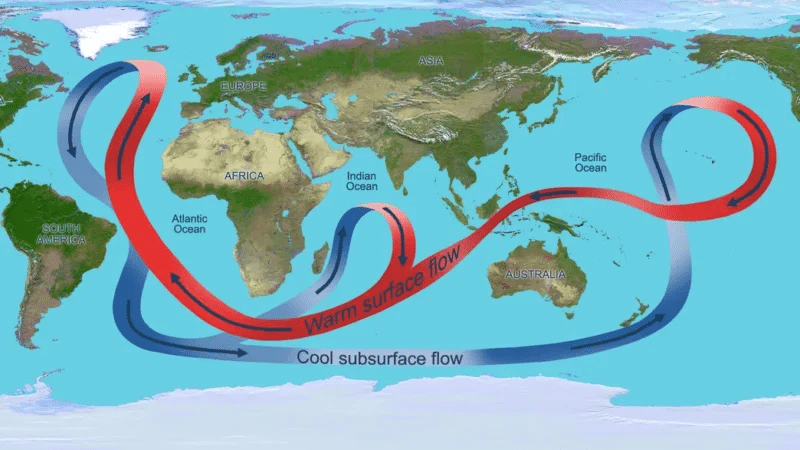
Deep ocean currents are often perceived as slow-moving and constant, but this work challenges that view. A complex network of flows transports heat, oxygen, and nutrients globally, influenced both by immediate surface factors and protracted planetary cycles. Variations in orbital eccentricity appear to strengthen deep ocean mixing, enhancing the presence of powerful eddies that reshape the sea floor.
“Two distinct forces drive deep ocean mixing,” explained Müller, referring to global circulation and localized turbulent processes. The research indicates that even if prominent circulation systems weaken, smaller scale mixing mechanisms may maintain ocean dynamism, preserving ecological and chemical balance in the abyssal environment.
Implications for Understanding Present Climate Change
Despite uncovering a significant planetary force affecting Earth's climate over millions of years, scientists emphasize this cycle’s separation from modern-day warming. The 2.4-million-year pattern operates on an entirely different timescale than current rapid climate shifts, which result from anthropogenic greenhouse gas emissions.
Comprehending these deep-time cycles aids in refining climate models and interpreting geological data, offering insight into ocean circulation’s resilience amidst disruptions such as potential slowdowns of the Atlantic Meridional Overturning Circulation (AMOC). “This mechanism may prevent the ocean from stagnating if the AMOC decelerates or halts,” Dutkiewicz concluded. The research underscores that while Earth’s climate is shaped by distant planetary influences, today's environmental changes stem from distinctly different drivers.
- Categories:
- Science








0 comments
Sign in to Comment