
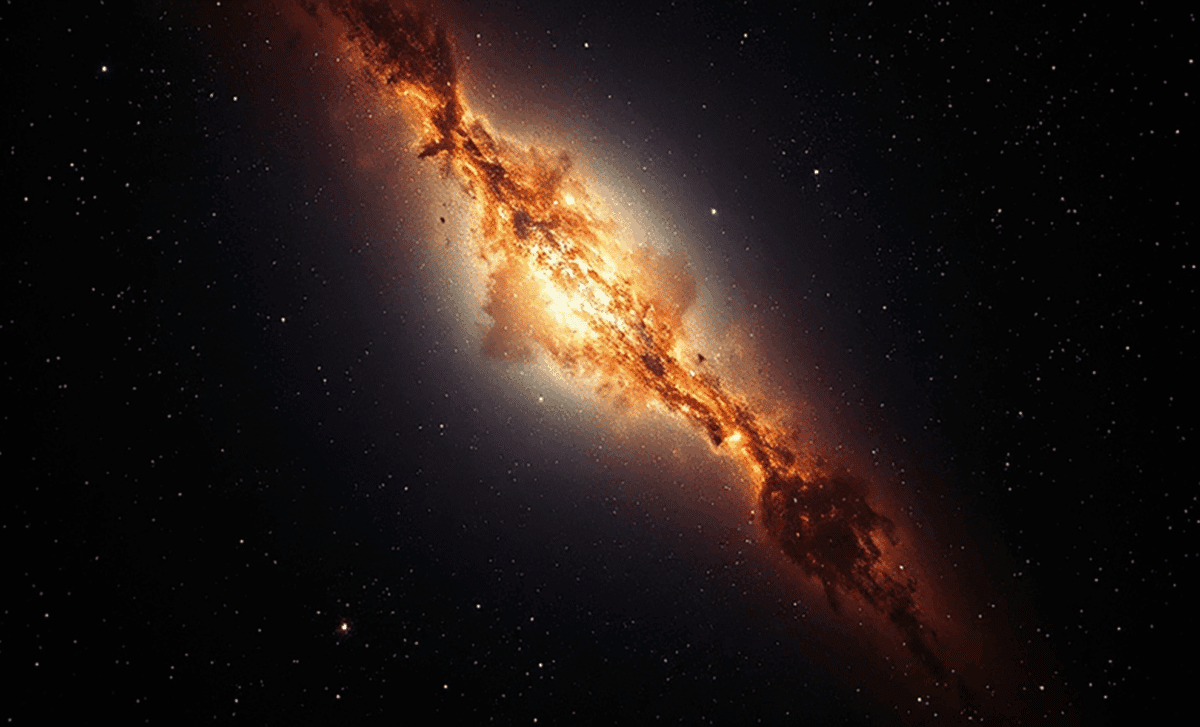
A team of astronomers has identified an enormous and mysterious stream of gas extending approximately 185,000 light-years that connects a pair of remote dwarf galaxies. This discovery, made by researchers affiliated with The University of Western Australia and the International Centre for Radio Astronomy Research (ICRAR), offers new clues about the interactions between galaxies. Beyond revealing this immense gaseous structure, the investigation provides valuable insight into the intricate processes that influence galaxy formation and development over billions of years.
Discovering an Immense Cosmic Connection: The Gas Bridge
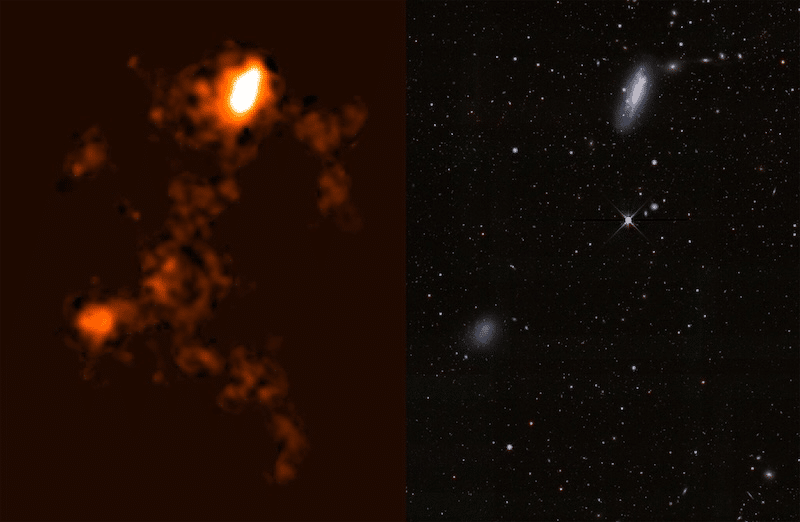
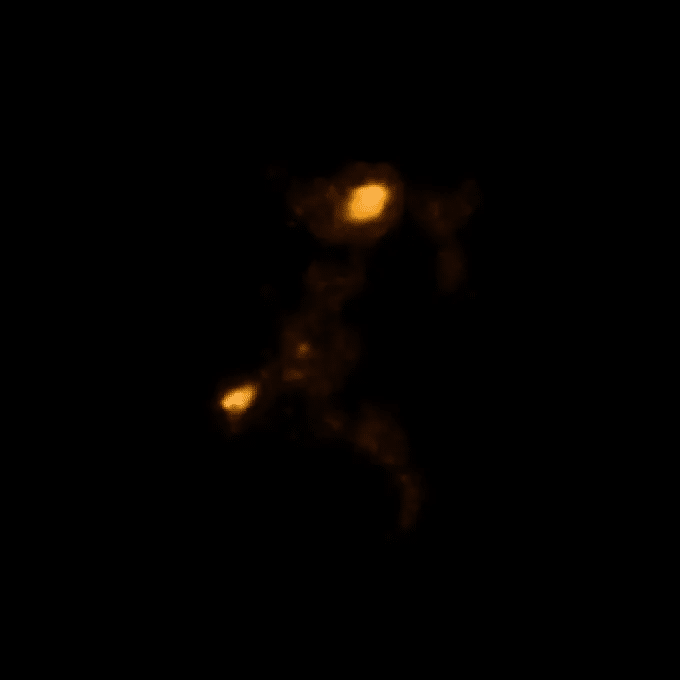
In a groundbreaking article featured in the Monthly Notices of the Royal Astronomical Society, researchers led by Professor Lister Staveley-Smith revealed an extraordinary structure: a vast bridge of neutral hydrogen gas linking the galaxies NGC 4532 and DDO 137. Situated roughly 53 million light-years from Earth, these dwarf galaxies are connected by a colossal gaseous filament. What sets this finding apart is the sheer scale, with the bridge spanning a remarkable 185,000 light-years, making it one of the largest gas connections detected between galaxies.
The colossal gas bridge, accompanied by a tail reaching a further 1.6 million light-years, opens a remarkable window into examining how gas behaves during galactic collisions and mergers. This study deepens our understanding of the gravitational and hydrodynamic forces at play within densely populated regions like the Virgo cluster, a major galaxy cluster in the universe.

The Influence of Gravitational Tides and Galactic Interactions
This discovery is particularly intriguing due to how gravitational tidal forces and the proximity of these dwarf galaxies to the enormous Virgo cluster shape the gas bridge. According to Professor Staveley-Smith,
“Our modeling showed that the tidal forces acting between these galaxies, alongside their proximity to the massive Virgo cluster of galaxies, played a crucial role in the gas dynamics we observed.”
Tidal forces, which result from the gravitational pull between galaxies, can stretch and reshape clouds of gas, leading to the creation of features like the vast intergalactic gas bridge seen here.
Additionally, the powerful gravitational field of the Virgo cluster amplifies this interaction, stripping gas from the galaxies in a process otherwise unattainable. As galaxies traverse this dense, superheated gas environment, they undergo what is called “ram pressure.” This phenomenon effectively sweeps gas away from the galaxies, crafting enormous cosmic structures. This gradual depletion of gas resembles how satellites burn up when re-entering Earth’s atmosphere, yet unfolds over a billion-year timescale as galaxies journey through the Virgo cluster’s dense environment.
Ram Pressure Over Billions of Years: A Cosmic Transformation
The stripping of gas from these galaxies mimics a natural phenomenon observed on Earth but operates on dramatically different scales. Professor Staveley-Smith likens it to “atmospheric burn-up when a satellite re-enters the Earth’s upper atmosphere, but has extended over a period of a billion years.” This analogy clarifies the extraordinary duration over which this cosmic event unfolds. As the galaxies move within the Virgo cluster’s dense gas, they face ram pressure that forces gas away, reducing the material needed for star formation.
This mechanism has significant consequences for how galaxies evolve, especially in gas-poor environments like galaxy clusters. The combined effect of tidal forces and ram pressure alters a galaxy’s internal gas distribution and star-forming potential. The displaced gas, no longer bound tightly by the parent galaxy’s gravity, gathers in the bridge, creating a colossal link between the two dwarf galaxies.
- Categories:
- News



0 comments
Sign in to Comment