
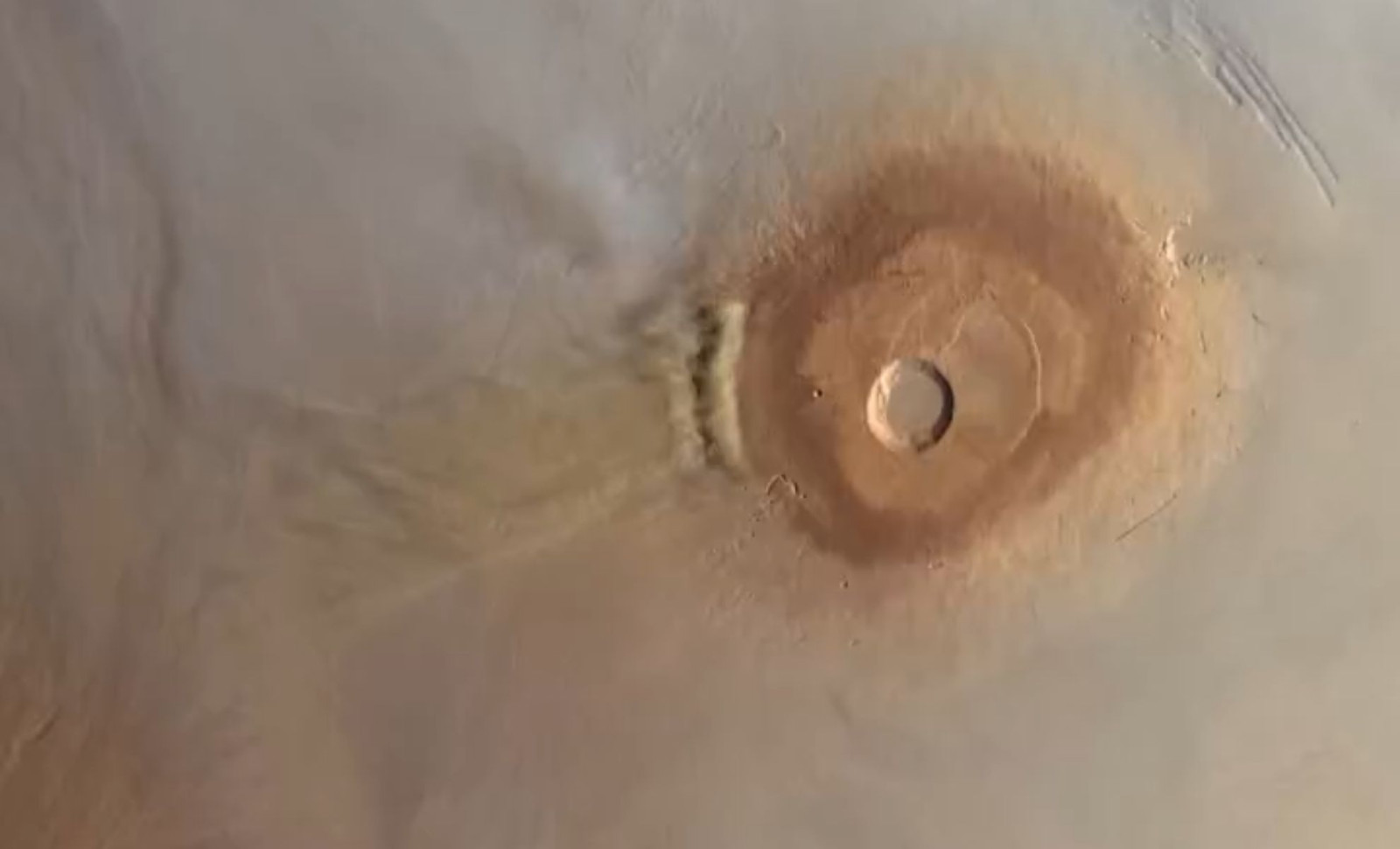
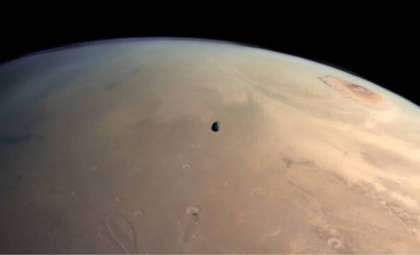
Phobos, Mars’ uniquely shaped moon, has been photographed majestically drifting above the planet’s volcanic landscapes as a fierce dust storm unfolds below. Captured by the European Space Agency’s Mars Express spacecraft and expertly enhanced by an astronomy hobbyist, these images showcase Phobos against one of Mars' most geologically fascinating settings.
Captured initially in June and made public in December 2025, according to EarthSky, the original satellite data were refined by image artist Andrea Luck, elevating them into detailed, high-resolution visuals that have since garnered attention.
An Intimate View of Mars’ Volcanic Landmarks
Phobos intrigues scientists not only due to its unusual form and closeness to Mars but also because it orbits incredibly fast — wrapping around the planet in just 7 hours and 39 minutes.

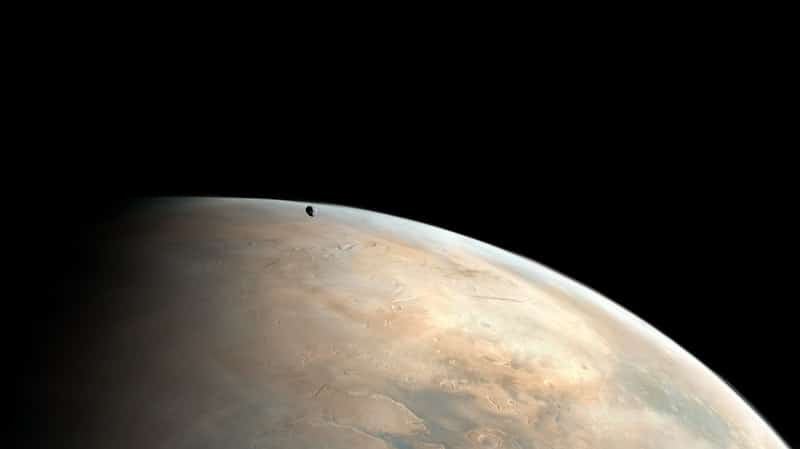
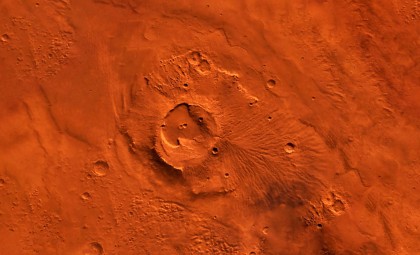
As detailed on EarthSky.com, these shots show Phobos hovering above the expansive Tharsis region, dominated by colossal volcanoes. Prominently visible beneath the moon are the peaks of Ascraeus Mons, Pavonis Mons, and Arsia Mons, gigantic volcanic structures aligned almost linearly. These ancient volcanic formations rank among the tallest in our solar system.
The images also reveal the fringes of Valles Marineris, a canyon stretching approximately 2,000 miles long, up to 300 miles wide, and reaching depths of five miles. This immense Martian canyon, often called Mars’ Grand Canyon, dwarfs its Earth counterpart in scale.
A Rapid Orbit Surpassing Mars' Rotation
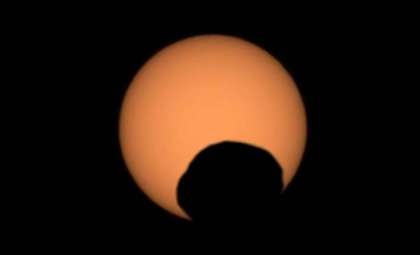
Phobos orbits so close to Mars that it completes over three trips around the planet per Martian day. Positioned at an altitude of roughly 3,700 miles, it seems to skim just above the surface in these photos. From the viewpoint on Mars, Phobos rises in the west and sets in the east, an orbital motion much swifter than the planet’s own rotation.
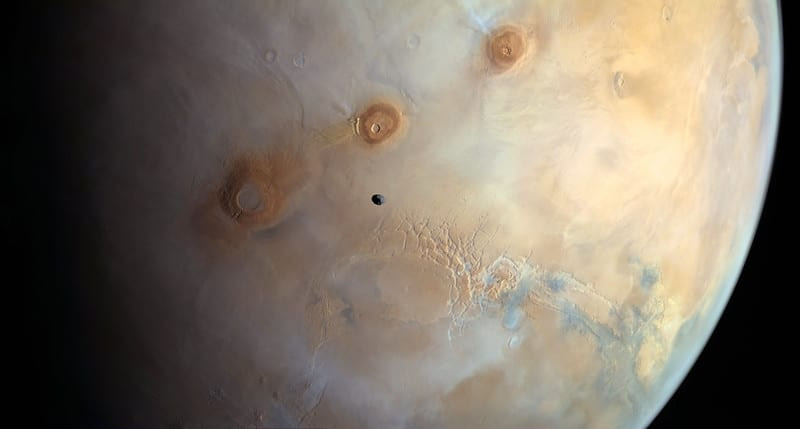
EarthSky notes that Phobos’ fast orbit and low altitude enable unique observational opportunities, particularly for orbiters like Mars Express. However, capturing images of specific features such as active dust storms or volcanic peaks requires precise timing because the moon’s quick passage limits viewing windows.
The Artistic Touch of a Passionate Astronomy Enthusiast
While the original images come from the Mars Express, the enhanced versions were crafted by Andrea Luck, a respected figure within the astronomy imaging community. Luck’s meticulous editing brought out vivid colors and fine details that aren’t apparent in raw data.
Luck also produced a video that illustrates the same phenomenon, which he shared on his Flickr account. This footage presents a captivating view of Phobos appearing to float above the trio of towering Martian volcanoes and the edge of the immense canyon. The video captures the moon’s passage over Pavonis Mons as a dust storm begins to form, offering a scene that feels more like science fiction than planetary reality.
- Categories:
- Astronomy







0 comments
Sign in to Comment