
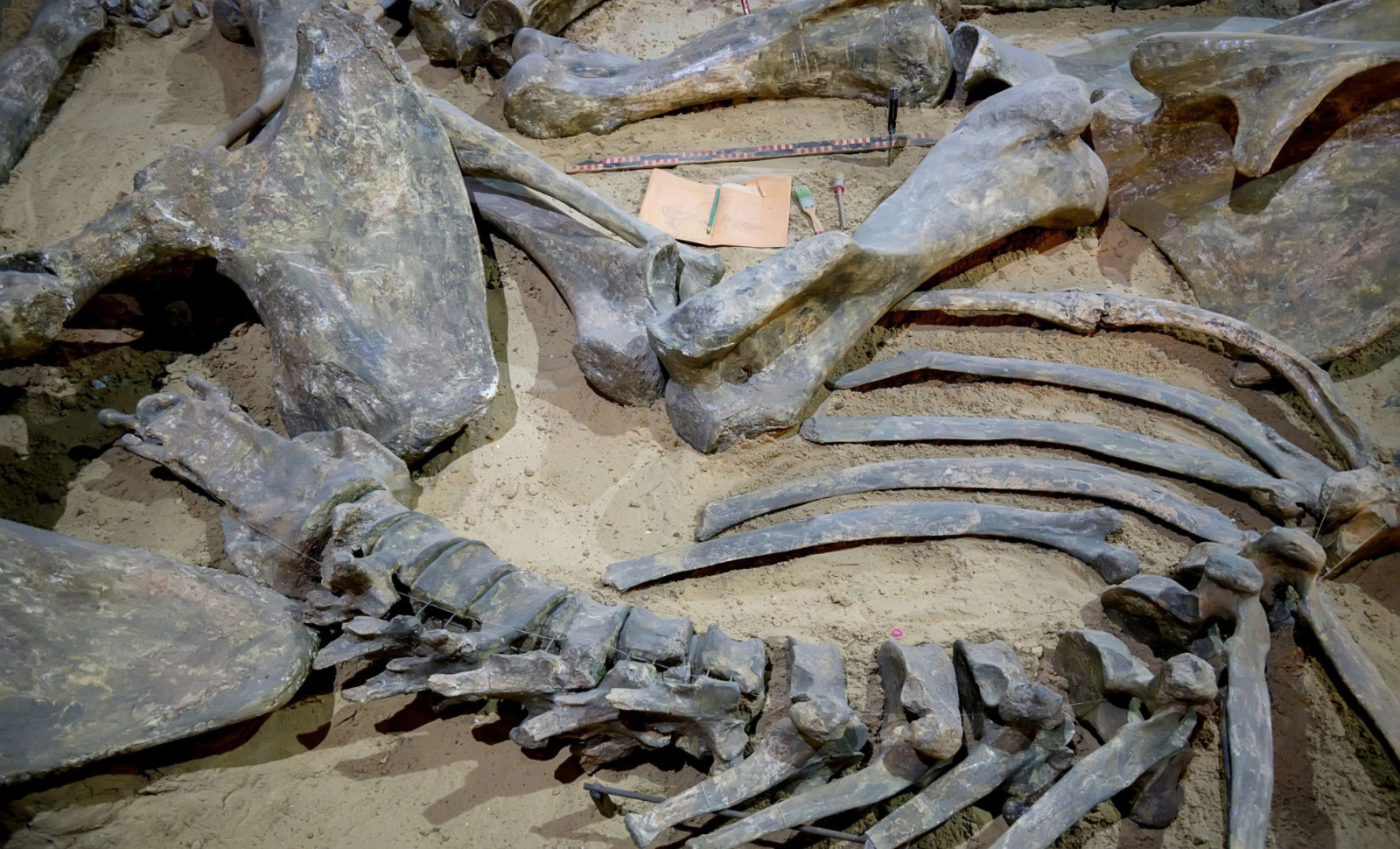
A tiny fossilized foot bone, measuring just 10 centimeters and dating back 75 million years, has challenged long-held beliefs in paleontology. Recent findings show that tyrannosaurs, famed as top predators, were also scavengers who fed opportunistically.
Traditionally, tyrannosaurs have been portrayed as relentless hunters with unmatched power. However, detailed examination of the fossil record reveals a more intricate picture.
The investigation, led by Master’s student Josephine Nielsen from Aarhus University’s Department of Geoscience, was published in the journal Evolving Earth. The study revolves around a metatarsal bone found by an amateur fossil hunter in Montana’s Judith River Formation, a site known for its rich Late Cretaceous fossils.

Evidence of Cannibalism: Sixteen Distinct Bite Marks on a Foot Bone
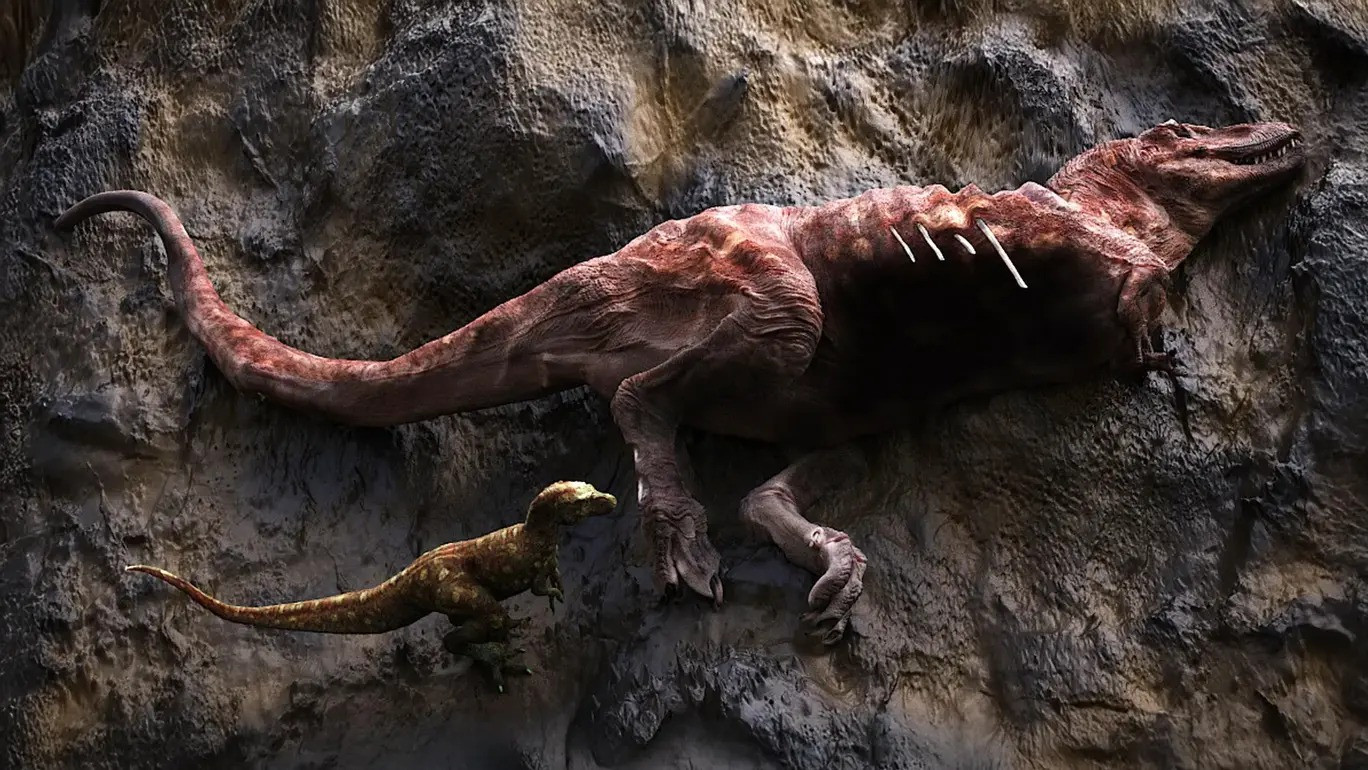
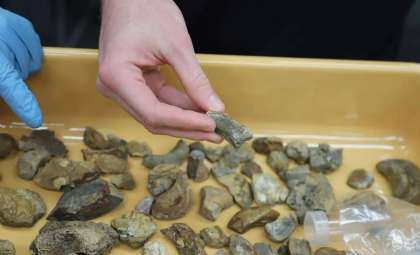
The fossil, belonging to a sizable tyrannosaur, displayed 16 individual bite marks, pointing to a smaller tyrannosaur feeding on the remains of a much larger member of its species. Josephine Nielsen and her team employed 3D scanning technology to analyze the markings, investigating the depth, orientation, and exact locations of each bite.
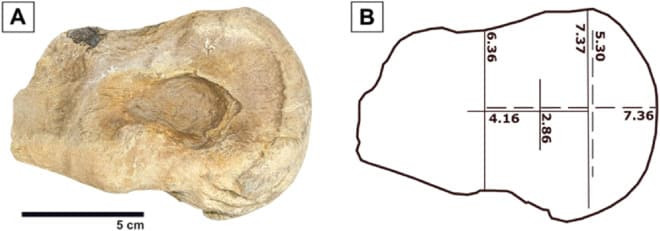
The 3D models indicated the bites were deliberate, showing strategic feeding behavior on dense bones rich in marrow.
“The bone shows no signs of healing after the smaller dinosaur bites into it,” she explained. “Since the marks are located on the foot, where there is very little meat, it suggests that the dinosaur was ‘cleaning up’ the last remains of an old carcass.”
Advanced Scanning Uncovers Intricate Details
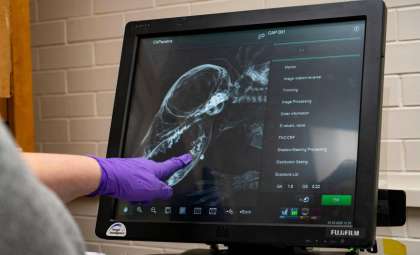
Since the original fossil was fragile and housed in an American institution, direct handling was not feasible. Nielsen used high-precision 3D scans and created 3D-printed models to carry out a meticulous examination. This technology enabled close inspection of subtle surface features. By applying the Category-Modifier (CM) classification system, each bite was cataloged according to shape and depth for a thorough analysis.
“By creating a digital version, I’ve been able to zoom in on very small details,” she explained. “This method categorizes each individual mark based on fixed criteria, allowing us to distinguish everything from glancing tooth strikes to deep crushing bites. It has been like solving an ancient murder mystery, with metatarsal evidence.”
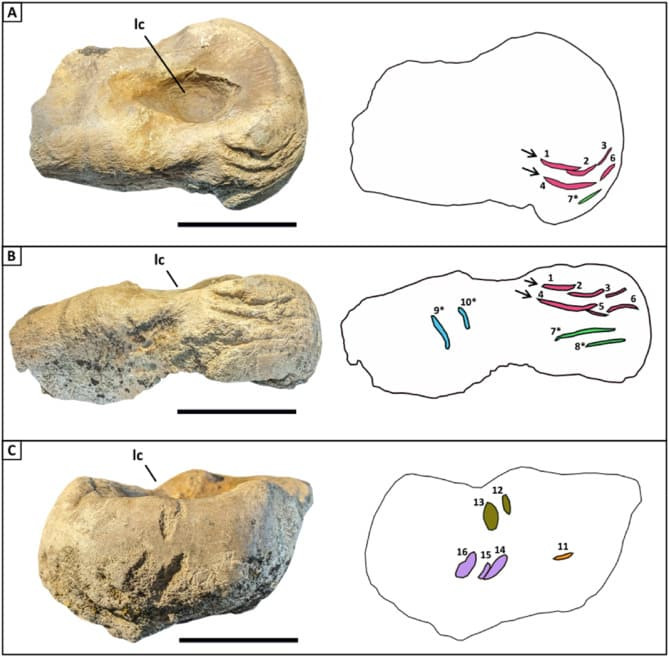
Digital analysis also reduced the risk of damaging the fossil, preserving its condition while enabling in-depth study.
Reassessing Tyrannosaur Behavior Through Collaboration
Traditionally seen as fierce apex predators, tyrannosaurs’ powerful jaws were built for taking down large prey. However, this research, from Evolving Earth, suggests these dinosaurs also scavenged, occasionally resorting to cannibalism. Nielsen highlights that these revelations adjust our comprehension of prehistoric carnivore habits.
“What makes this study special is not just the insight into how the food chain functioned among dinosaurs millions of years ago, but the technique we used to uncover these details.
Such scavenging behavior mirrors that seen in modern predators like lions and hyenas, who opportunistically feed on carrion when available.
- Categories:
- Science










0 comments
Sign in to Comment