
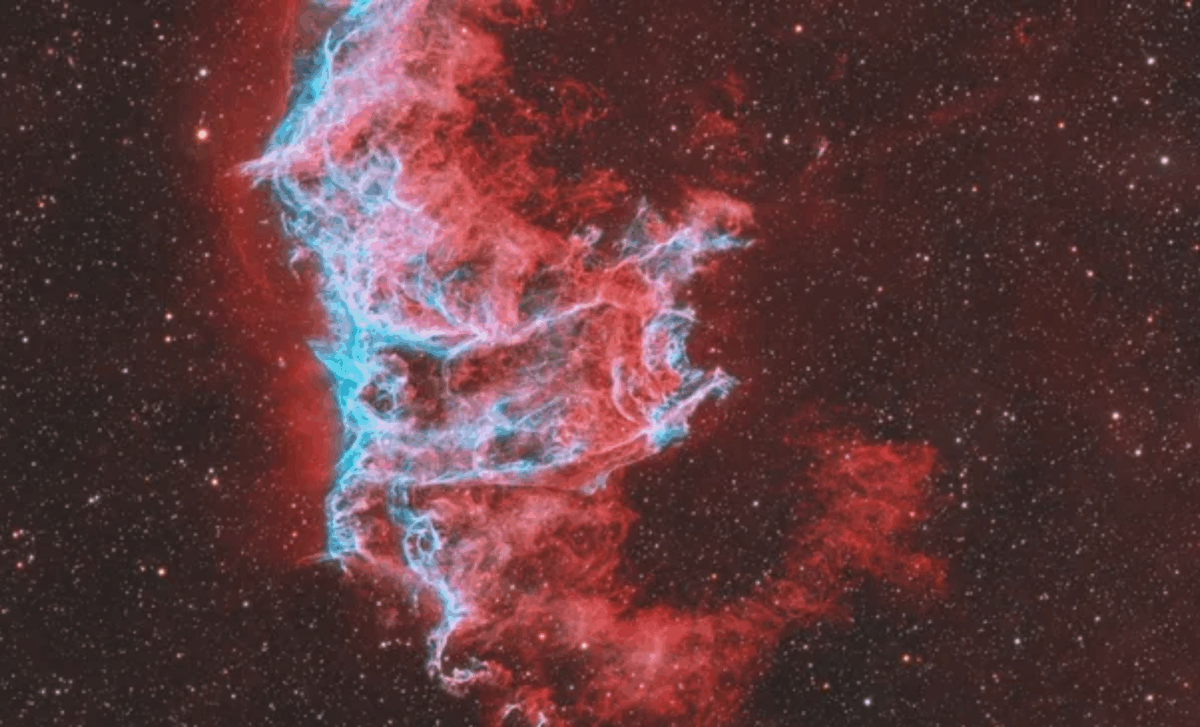
A talented astrophotographer from the Netherlands has captured a breathtaking image of the Eastern Veil Nebula, showcasing the remnants of an immense star explosion. Located about 2,100 light-years away within the Cygnus constellation, this image highlights fine strands of cosmic dust and glowing gas. The creation of this celestial portrait demanded immense dedication and countless hours under the often unpredictable northern night skies.
Tracing the Legacy of an Ancient Supernova
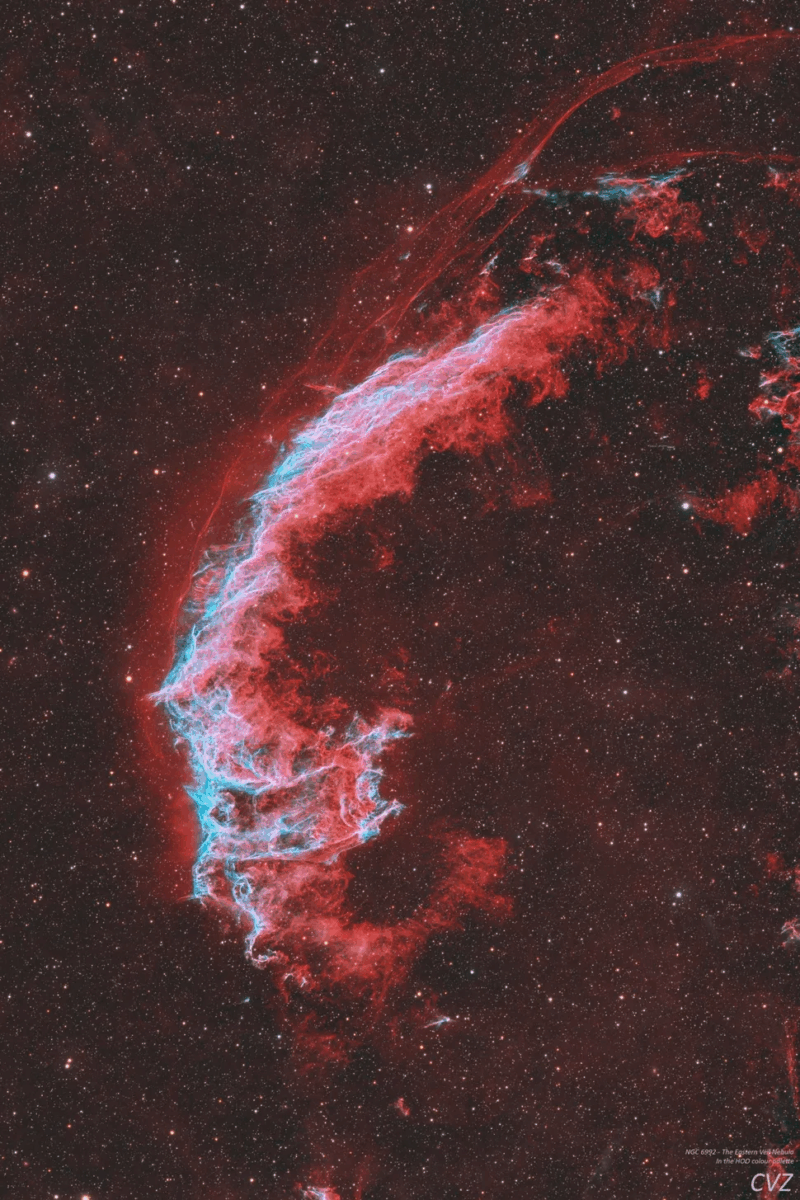
Approximately 8,000 years ago, a star around twenty times the mass of our Sun ended its life with a powerful supernova. The explosion scattered illuminated gas clouds, now visible as the Eastern Veil Nebula, part of a huge structure called the Cygnus Loop. Dutch astrophotographer Cornelis van Zuilen invested an impressive 35 hours of exposure time to unveil the nebula’s intricate tapestry of red and blue plasma, as covered by Space.com.
The significance of this image extends beyond its scientific value, highlighting the remarkable determination behind its creation.

“I’m from the Netherlands and we like to joke here that ‘summer is the best day of the year,’” van Zuilen told Space.com in an email. “It rains a lot, so being an amateur astrophotographer is quite a challenging hobby, it requires patience and good timing. Fortunately I live just outside the city in a Bortle 5 area, which really helps with capturing good data through my telescopes.”
Revealing Light from Millennia-Old Cosmic Debris
To capture the faint glimmers from the nebula, Van Zuilen utilized an Askar 103APO refractor telescope and a ZWO ASI533MC Pro camera. The wispy trails of gas in the Cygnus Loop extend across the sky like strands of ethereal fabric, requiring exceptional accuracy to photograph.
“The most challenging part of editing this image was bringing out the faint hydrogen alpha filaments in the northern region of the image,” explained van Zuilen. “That required careful processing with lots of stretching and noise reduction. It took nine nights to capture enough data to see the filaments clearly and a few more to process the final image, but in the end it was absolutely worth the effort.”
The fine filaments within Van Zuilen’s final image narrate the story of a star that once burned far hotter and brighter than our own Sun. For thousands of years, the shockwaves from that long-past explosion have continued expanding, sculpting the glowing arcs visible today. For astronomers and space enthusiasts alike, this image is a powerful reminder of the universe’s continual cycle of renewal — where destruction eventually gives way to dazzling light.
An Endeavor Fueled by Patience and Precision
Every breathtaking photo is the product of a delicate balance involving weather conditions, timing, and technical skill. From his location near Heiloo, van Zuilen operated beneath the relatively dark Bortle 5 skies, patiently gathering data over many nights often hampered by clouds. The frequently unpredictable Dutch weather makes such astrophotography especially challenging, yet van Zuilen’s dedication succeeded in capturing the faint light signatures of the Veil Nebula with exceptional clarity.
This image stands at the intersection of art and science — a testament to human curiosity meeting the wonders of the cosmos. Each color channel is processed meticulously to highlight the nebula’s elemental makeup, from glowing hydrogen and ionized oxygen to sulfur outlining the contours of this cosmic relic. Van Zuilen’s work not only preserves a piece of astronomical history but also celebrates the perseverance of those who pursue the faintest beams of light in the night.
- Categories:
- News



0 comments
Sign in to Comment