
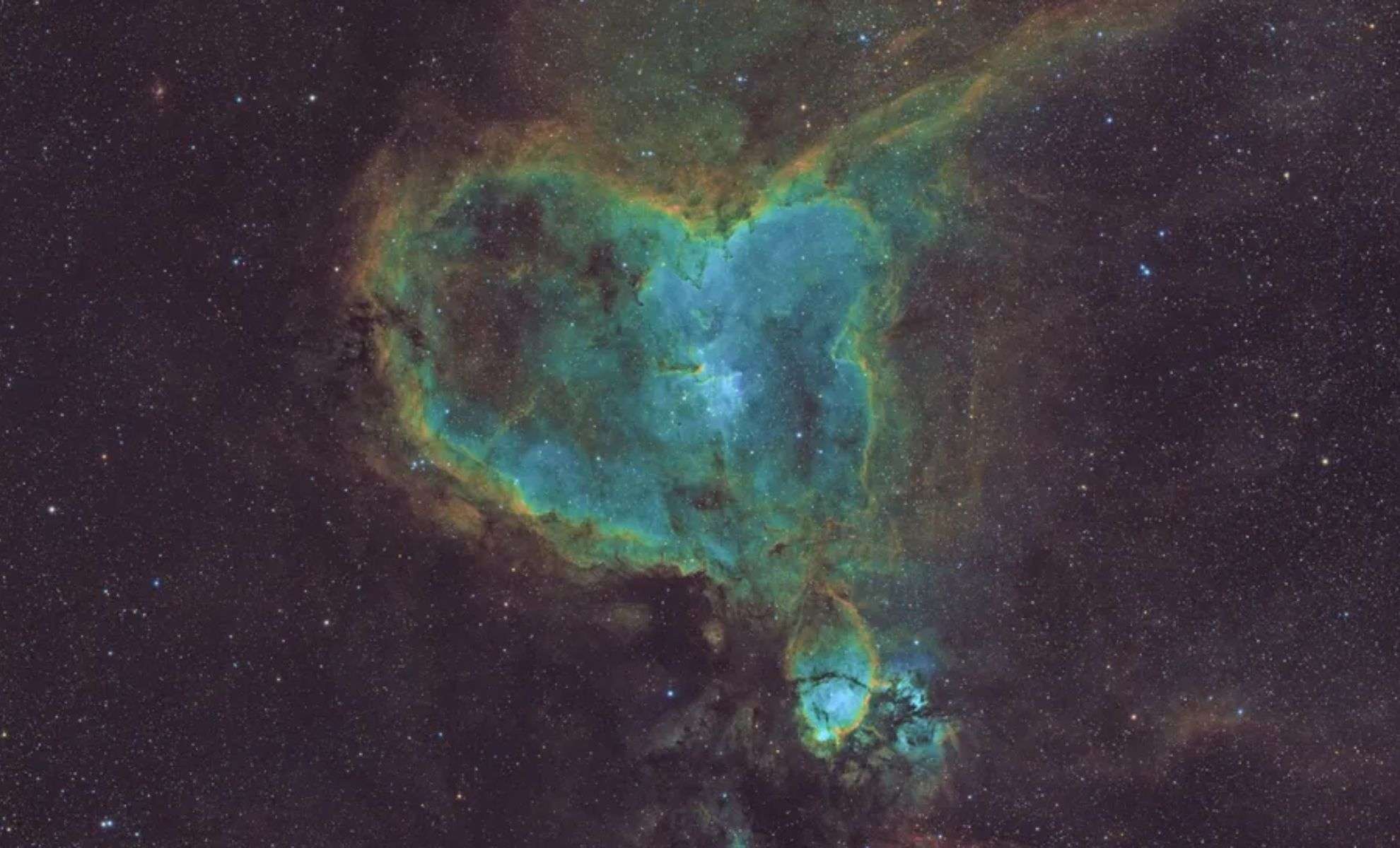
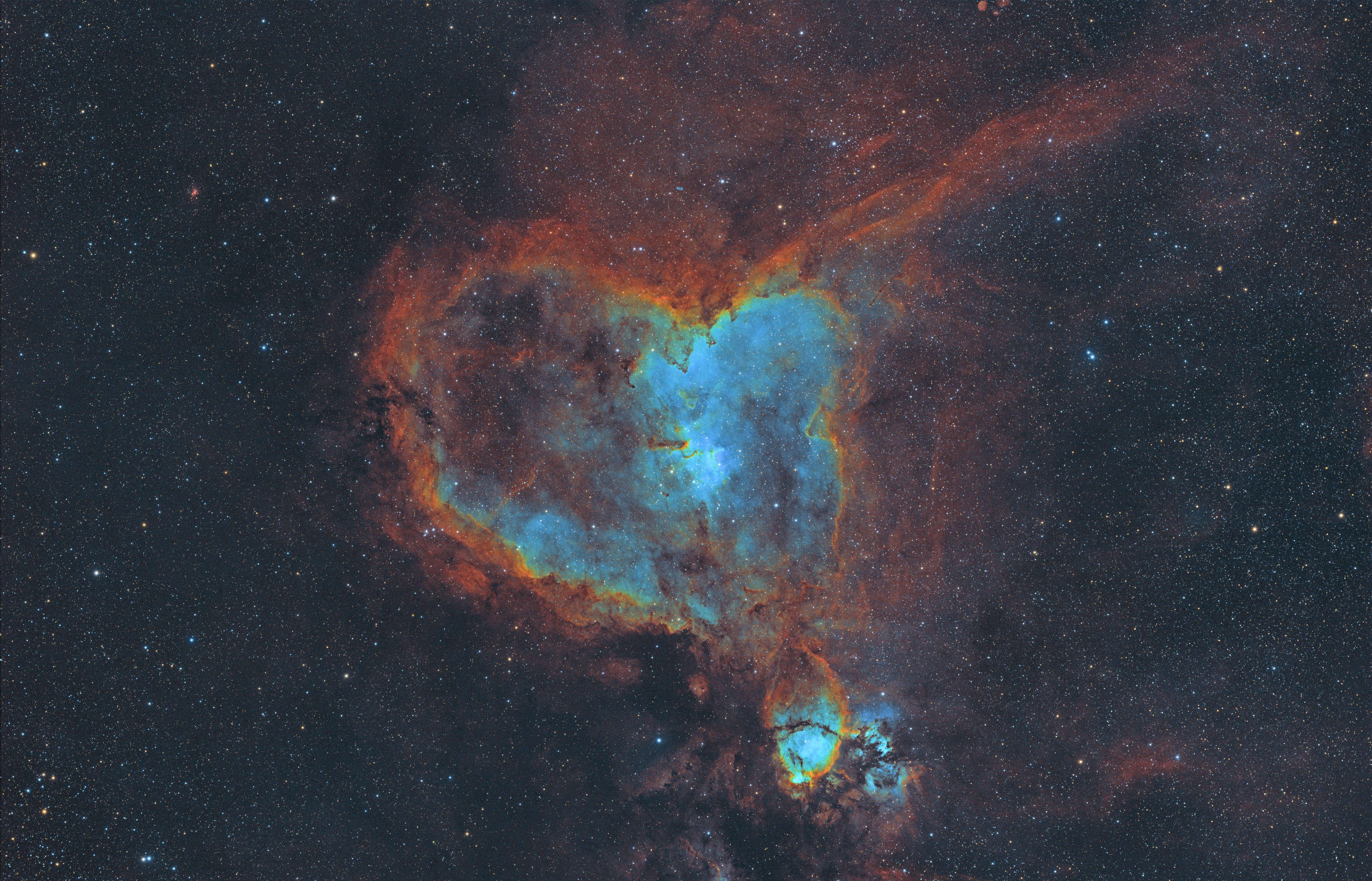
A breathtaking new photograph of the Heart Nebula is captivating space enthusiasts, unveiling a dynamic region of active star formation filled with complex dust formations and radiant gas clouds. Amateur astronomer Ronald Brecher captured this vivid portrait from his private observatory in Guelph, Canada, dedicating over 40 hours of exposure time to achieve this remarkable depth.
An Illuminating Glimpse into the Perseus Arm
Located roughly 6,000 light-years away, the Heart Nebula (IC 1805) is positioned in the Perseus spiral arm of the Milky Way, within the boundaries of the Cassiopeia constellation. Resembling the shape of a stylized heart, this nebula is not just a cosmic symbol but a bustling center of stellar birth and evolution.
Ronald Brecher‘s image highlights the nebula’s energetic core, where young, massive stars emit powerful radiation that carves impressive columns of interstellar gas and dust. Brecher notes that the captured light had traveled “thousands of years” before finally being registered by his equipment.

Capturing Ancient Starlight With Precision Tools
Brecher utilized a Sky-Watcher Esprit 70 EDX refractor telescope paired with a dedicated astronomy camera and narrowband filters to meticulously isolate light from ionized hydrogen, oxygen, and sulfur. Each element was assigned a distinct hue during post-processing to reveal the nebula’s complex composition.
Gathered over several nights in September 2025, the photons forming this image embarked on their journey long before humanity existed. The final image beautifully showcases not only the structure but also the diverse chemistry of this remarkable region.
Detailed insights and technical specifics were initially presented by Space.com on October 18, 2025, with further commentary available at Universe Magazine, praising Brecher’s artistic and methodical capture of cosmic structures.
Exploring the Fishhead Nebula Hidden Below
Nestled beneath the Heart Nebula’s flowing tendrils lies the lesser-known Fishhead Nebula, characterized by a softly defined oval silhouette intersected by a dark streak, evoking imagery of a drifting aquatic creature.
This intriguing feature introduces additional contrast and highlights the diverse shapes and interactions found within active star-forming zones like IC 1805.
Prime Viewing Opportunities in October Skies
Observers in the northern hemisphere can catch sight of the Heart Nebula during the late-night hours of October, as Cassiopeia ascends high in the sky. Positioned about five degrees from the bright star Segin, the nebula’s location can be gauged roughly by the width of three fingers held at arm’s length.
For those with tracking telescopes, specialized filters, and dedication, this stellar nursery offers a rewarding target. Even casual observers under dark skies may detect its faint glow. Images like Brecher’s demonstrate how amateur astronomers continue to bring the wonders of deep space closer to our everyday experience.
- Categories:
- News








0 comments
Sign in to Comment