
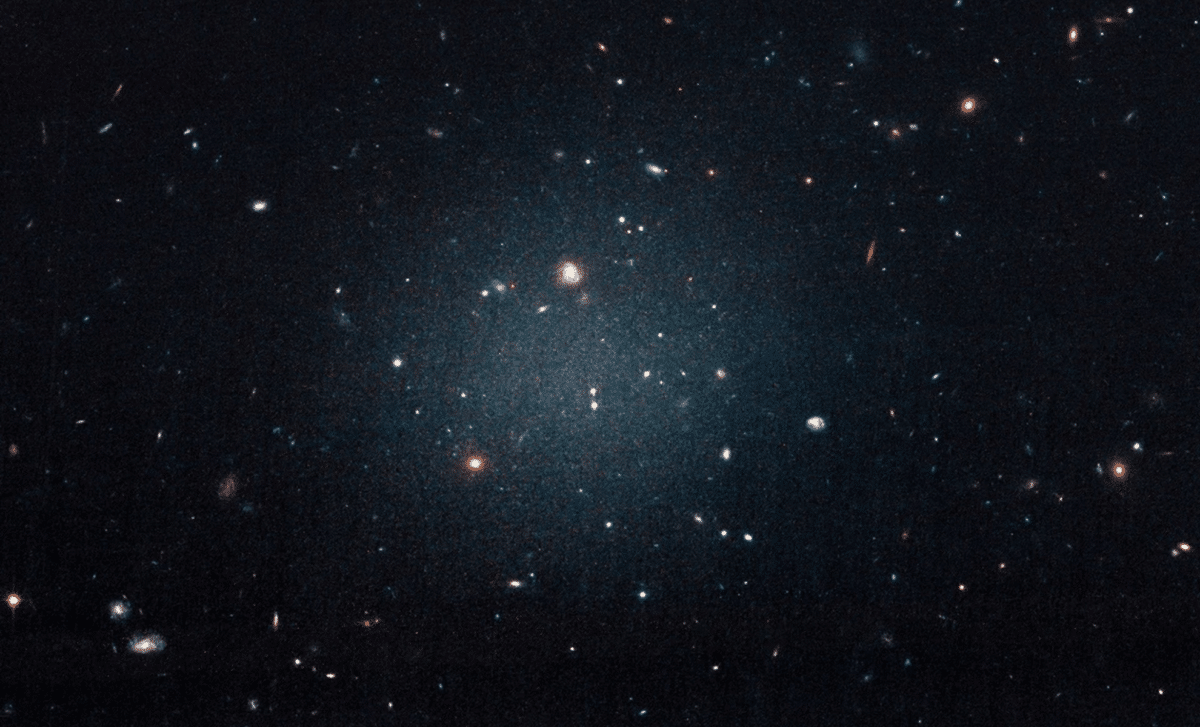
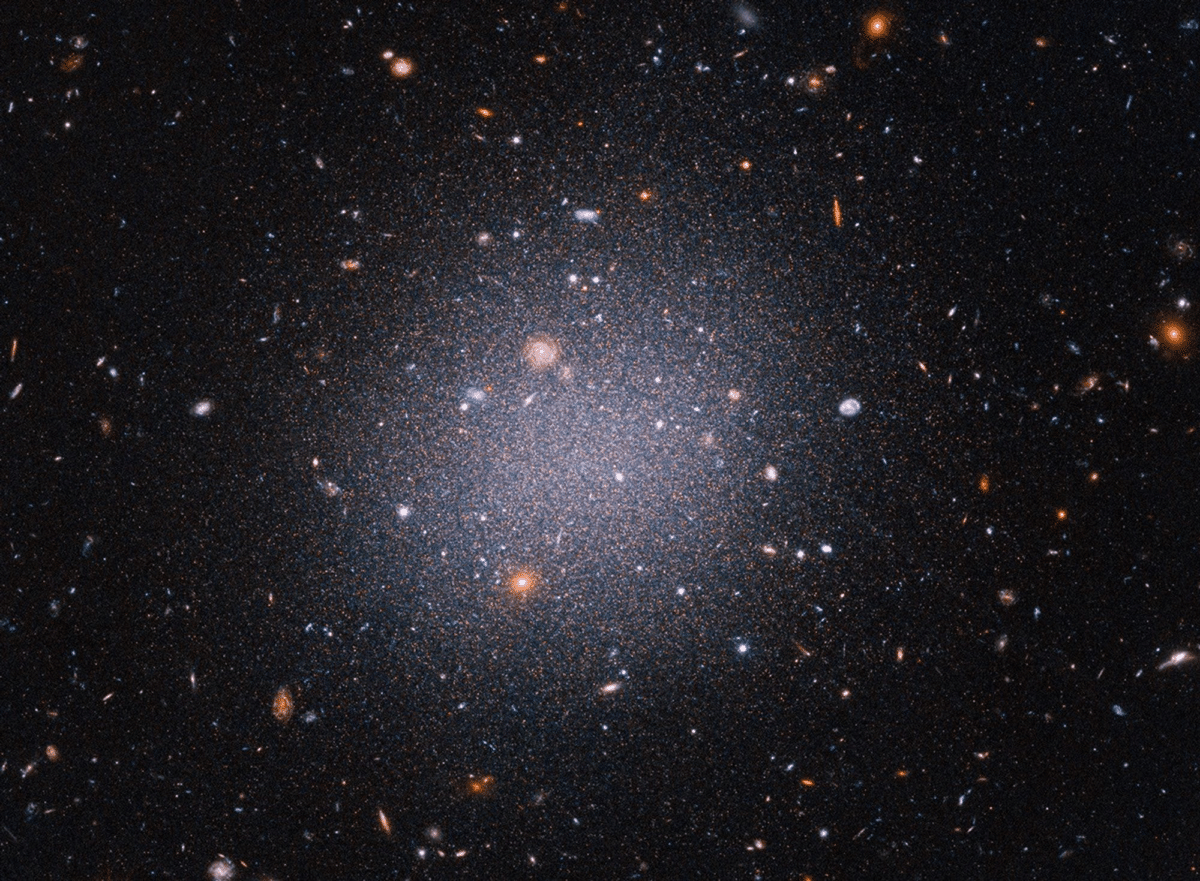
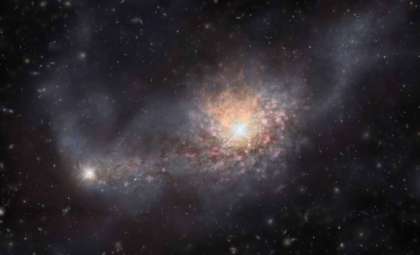
Scientists have identified a third galaxy that appears to be missing dark matter, a finding that challenges long-held assumptions about this elusive component thought to hold galaxies together. Newly released research on NGC 1052-DF9, currently available as a pre-print on arXiv, supports the controversial “Bullet Dwarf” collision hypothesis, which argues that galaxies can lose their dark matter following intense cosmic collisions.
Unraveling Dark Matter’s Role in Galaxy Structure
Dark matter has been considered the invisible framework providing the gravitational pull necessary to keep galaxies from dispersing. Without it, the stars’ gravity alone wouldn't be sufficient to maintain a galaxy’s cohesion. But discoveries of NGC 1052-DF9 along with NGC 1052-DF2 and NGC 1052-DF4 have prompted astronomers to reconsider galaxy formation theories and dark matter’s essential role in cosmic evolution.
Universe Today reports that these ultra-diffuse galaxies without dark matter challenge standard models of galactic development. This groundbreaking evidence suggests galaxies may not always conform to expected gravitational norms.

Understanding the Bullet Dwarf Collision Hypothesis
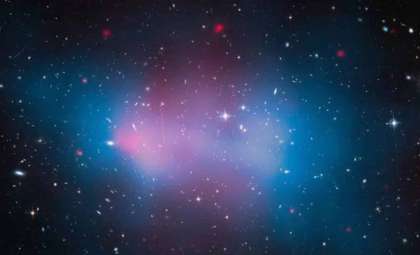
The mystery starts to unravel with the “Bullet Dwarf” collision theory, which has gained momentum from each new observation. According to this idea, when two dwarf galaxies rich in gas crash into each other at high velocity, their dark matter halos pass through unimpeded. Meanwhile, the visible matter, composed mainly of gas clouds, interacts and collides, potentially stripping away the galaxy’s dark matter halo and leaving behind a galaxy seemingly devoid of this invisible matter.
The discovery of NGC 1052-DF9, aligning with galaxies DF2 and DF4, further substantiates this theory. These galaxies likely originated from a single powerful merging event that swept away their dark matter content. Once considered speculative, this explanation now enjoys growing acceptance among researchers.
Significance of NGC 1052-DF9’s Identification
NGC 1052-DF9 marks a crucial step forward in understanding galaxies that lack dark matter. Similar to DF2 and DF4, it reveals an absence of dark matter typically expected in galaxies of comparable size. This challenges prevailing notions and suggests the possibility that some galaxies may form and evolve without dark matter’s stabilizing influence.
Importantly, this galaxy’s inclusion in a series of dark matter–deficient galaxies bolsters the idea they originated from one devastating collision event. The detailed study, shared as a pre-print on arXiv, offers a novel perspective on galaxy formation that contests mainstream theories about how matter and gravity interact in the cosmos.
Implications for Gravity Theories
These findings provide a unique opportunity to examine alternative gravity models like Modified Newtonian Dynamics (MOND). MOND proposes that gravity’s behavior changes in regions of very low acceleration and has been used to explain some galactic anomalies. Yet, observations of DF2 and DF9 reveal stellar motions slower than MOND predicts, suggesting classical Newtonian physics might more accurately describe these systems.
As further data accumulates, scientists might need to refine or reconsider alternative gravitational models. This discovery not only strengthens support for the Bullet Dwarf collision mechanism but also advances fundamental tests of physics governing the universe.
- Categories:
- Astronomy




0 comments
Sign in to Comment